
Unbiased headlines. Facts, not spin.
Every story is an unbiased news briefing written from 110+ sources across the spectrum — sources linked so you can verify it yourself.
 tech
Notable (6/10)
September 20, 2026 at 05:35 AM
tech
Notable (6/10)
September 20, 2026 at 05:35 AM
Albanese Urges US-China AI Treaty From Cupertino While Trump Vows an AI Force to Beat Beijing
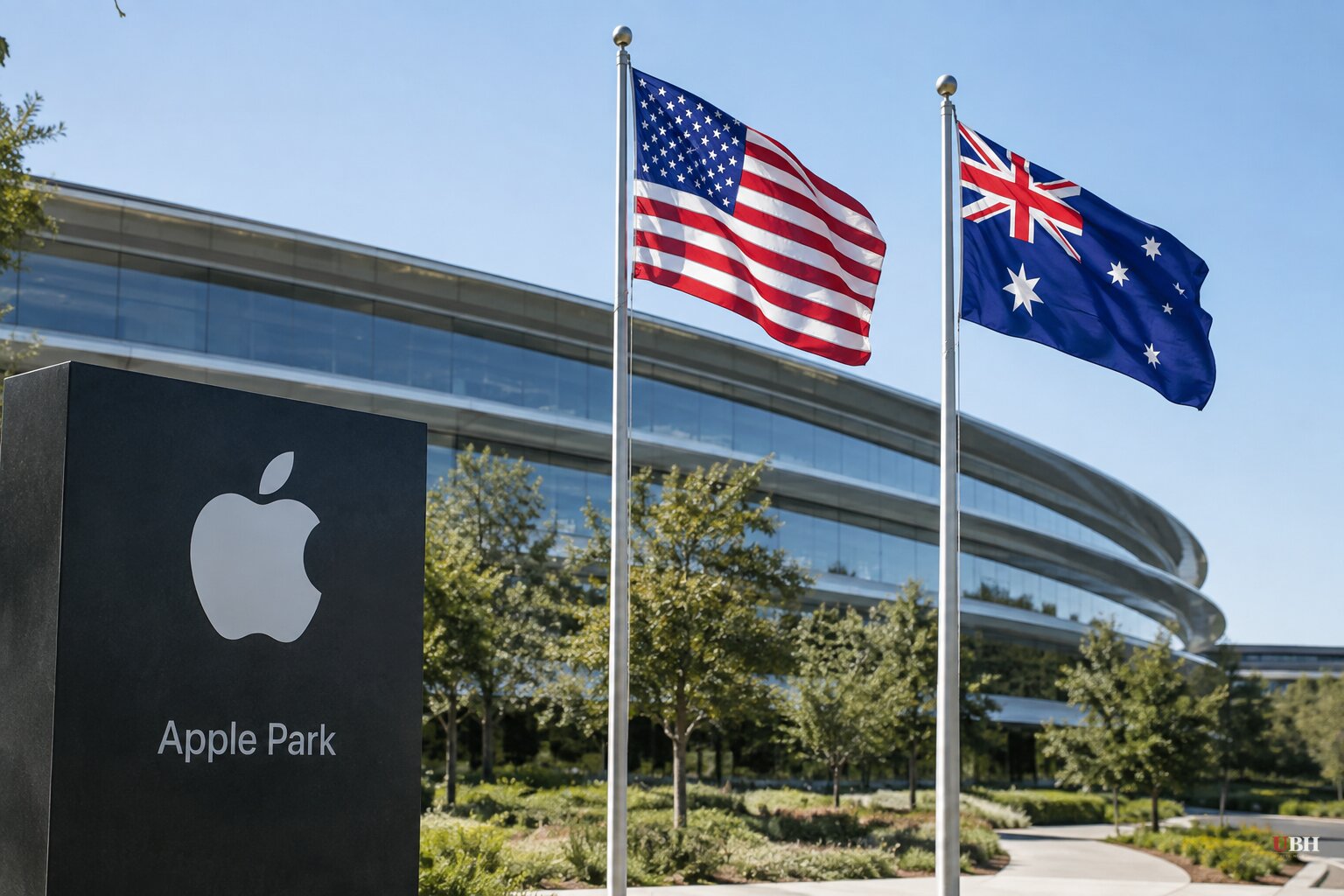
Anthony Albanese wants the two biggest AI powers on Earth to sign something like a nuclear treaty before AI gets away from everybody. He said so on ABC's Insiders program, in an interview recorded in Cupertino, right after meeting Apple executive chairman Tim Cook at the company's headquarters.
"The truth is they're the big two giants here and so we want to see cooperation," Albanese said, comparing his hoped-for AI agreement to the 1970 Nuclear Non-Proliferation Treaty. He's headed to the UN General Assembly this week, where he plans to make AI governance and cybersecurity a centerpiece of Australia's pitch to "middle powers" like itself.
There's a real meeting on the calendar backing this up. President Trump and Chinese President Xi Jinping are scheduled to meet at the White House this week, and Albanese said he hopes it produces "progress."
Don't expect Trump to slow down, though. Ahead of that summit, Trump wrote that he's forming a new "AI Force" to guard against the "decimation or destruction of AI," and made his position on regulation unmistakable: "We are leading China, and the rest of the World, and I intend to keep it that way!"
If the US unilaterally throttles its AI development while Beijing keeps building, Washington doesn't get a safer world. It gets a slower America and a faster China. Albanese himself conceded as much when he told reporters, "President Trump, of course, will act in the interests of the United States." The disagreement isn't about whether China is racing. Everyone agrees it is. It's about whether coordinated restraint is even achievable with a regime that has never been transparent about its military or technological programs.
Albanese's concern isn't baseless noise, either. Anthropic CEO Dario Amodei has called for a coordinated slowdown on AI development, backed by OpenAI's Sam Altman and SpaceX's Elon Musk, according to ABC News and NewsBeep. Three men who build this technology for a living and stand to profit from moving faster, not slower. When people with that much financial upside are asking for brakes, the request deserves consideration, even if Trump's skepticism about ceding advantage to Beijing is also grounded in reality.
The copyright fight nobody's talking about enough
Buried in the AI diplomacy is a domestic fight that should worry anyone who believes in property rights. Albanese has left the door open to an "opt-out" copyright regime, meaning AI companies could train on copyrighted work by default unless the creator specifically objects, according to the Sydney Morning Herald and NewsBeep.
Australian writers and artists have warned this would gut fundamental copyright protections, per the Herald. AI companies including Anthropic and OpenAI have flagged Australia's current copyright law as a sticking point for investment, because using copyrighted material to train models without permission may already be illegal there, the Herald and NewsBeep report. Flipping the default so silence equals consent isn't a neutral tech-policy tweak. It's the government putting the burden on individual creators to police billion-dollar companies instead of the other way around.
Child safety laws draw fire from the right, too
Albanese also used the Cupertino stop to push for tech industry cooperation on child online safety, telling reporters "Australia can't do it alone," according to Al Jazeera and The Star. Cook said he shared with Albanese new "strong and intuitive controls" to help keep kids safe online.
New draft laws would impose a "duty of care" on platforms like Facebook, TikTok, and Instagram and let users turn off algorithmic feeds, with the bill to be introduced to parliament later this year after consultation, Al Jazeera reported. But Australia's opposition Liberal-National Coalition isn't on board. In a statement published September 10 and cited by Al Jazeera, the Coalition said the bill "contains inadequate safeguards for free speech and journalism, and leaves too much power in the hands of the Communications Minister." That's a legitimate concern from the Australian right that deserves as much attention as the AI diplomacy getting most of the headlines.
Meanwhile, Australia's under-16 social media ban, in effect since last year as a world-first crackdown, has not met expectations. Data from last month, cited by both Al Jazeera and The Star, found under-16s are continuing to use apps like Instagram and TikTok despite the ban.
Australia's own national AI standards legislation is targeted for passage by the end of the year, Albanese said, according to Al Jazeera and The Star, though he has also said he hopes to legislate related AI and data centre standards early next year. Whether the opt-out copyright regime, the duty-of-care platform rules, or any US-China AI framework actually materializes remains an open question. One that will depend far more on what happens in the Trump-Xi meeting this week than on anything said in Cupertino.
Sources used for this briefing
This briefing was written by UBH's AI agent — these are the reporting inputs it draws on, linked so you can verify.


