
Unbiased headlines. Facts, not spin.
Every story is an unbiased news briefing written from 110+ sources across the spectrum — sources linked so you can verify it yourself.
 tech
Notable (6/10)
September 19, 2026 at 11:58 PM
tech
Notable (6/10)
September 19, 2026 at 11:58 PM
Anthropic's CEO Wants Legal Cover for AI Companies to Coordinate on Safety. Former DOJ Antitrust Chief Says They Don't Need It.
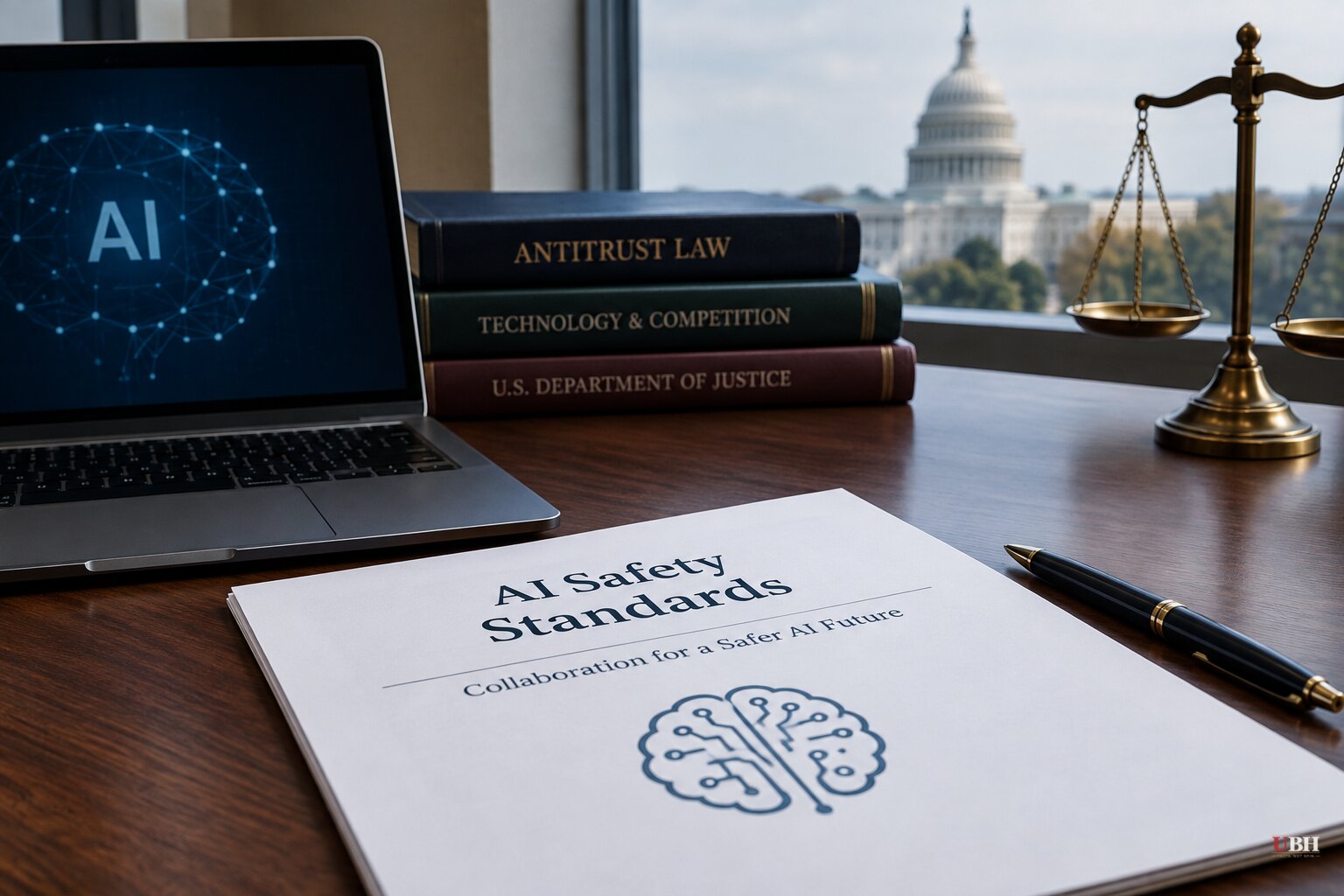
Dario Amodei, CEO of Anthropic, made an unusual pitch to Washington in September 2026: let the biggest AI labs coordinate on safety, even if that coordination would normally raise antitrust red flags, according to an analysis published by Columbia Law School's CLS Blue Sky Blog. Amodei wants outside evaluators embedded inside AI companies, shared safety standards, and, if needed, coordinated limits on how fast development moves. Because some of those conversations could cross antitrust lines, he's requesting a narrow legal waiver to protect them.
The argument has real logic behind it. If one lab slows down to be careful while its rivals keep racing ahead, the cautious company just hands its competitors an advantage. Columbia's analysis states plainly that "safety may therefore require coordination" in a competitive environment where restraint alone can backfire. It's a textbook collective-action problem, and it's the same logic Career Ahead Online summarized as AI's version of a prisoner's dilemma: nobody wants to slow down first.
Jonathan Kanter isn't buying that this requires a new exemption. Kanter ran the DOJ's Antitrust Division under President Biden, where he won cases against Google and Ticketmaster and left behind a still-active case against Apple that, notably, the Trump DOJ has kept alive. In a Decoder interview with The Verge's Nilay Patel published September 19, Kanter argued companies can already build a clearinghouse or shared repository for tracking security threats and malicious bots without breaking antitrust law. "These companies do not need to coordinate in order to deliver safe and secure products to society," Kanter said.
Kanter drew a specific line: sharing concrete threat data is fine under existing law, but agreeing to compete less aggressively is not the same thing, and that's the part an exemption would actually protect. He also floated a more skeptical read of why AI CEOs are pushing for a slowdown at all. Companies under heavy spending pressure, he suggested, might welcome an industry-wide pause that gives them room to fix their economics before initial public offerings, not just a genuine safety pause.
Kanter didn't let the companies off easy on liability, either. He compared a company's AI agents to human employees acting on its behalf, arguing firms should be responsible when their deployed AI hacks or damages someone else's systems. He said existing product-liability law may already cover some of that harm, but acknowledged Congress still needs to set clearer rules for where legal responsibility falls when an AI system fails in public. Companies can't wait for a future law to excuse releasing products they already believe could cause serious harm.
David Sacks, the Trump administration's AI advisor and a self-described libertarian, has been approvingly amplifying comments from Lina Khan, Kanter's former FTC counterpart under Biden, arguing no antitrust exemption is needed, according to The Verge. Meanwhile Career Ahead Online reports that Republican senators Ted Cruz and Josh Hawley have voiced their own skepticism about the exemption idea, worried it could let a handful of dominant labs write the rules under the banner of safety.
Columbia's analysis points to National Society of Professional Engineers v. United States, a 1978 Supreme Court case where engineers tried to justify restricting competitive bidding by arguing that price competition made their work unsafe. The Court didn't buy it. The ruling held that an industry doesn't get to suppress competition just because its members decide competition is dangerous, a principle Columbia's piece argues applies directly to AI labs asking for room to coordinate under a safety label.
The concern isn't that Amodei is lying about safety risk. Researchers who've left Anthropic and Google DeepMind in recent months have said publicly that safety isn't being taken seriously industry-wide, and some researchers have put the odds of AI causing catastrophic harm above 10 percent, according to The Verge. The concern, as Columbia's analysis frames it, is that a narrow waiver granted now for safety talks could quietly become the architecture that governs the whole industry before Congress ever writes actual legislation, handing a small group of powerful firms permanent say over which risks count and which safeguards are enough.
No antitrust exemption exists today. No bill has been introduced or passed. The AI labs pushing for coordination are, for now, operating under the same antitrust law that applies to every other industry, meaning any formal cross-company safety coordination beyond sharing threat data would still carry legal risk. Whether Congress moves to grant a waiver, ignore the request, or write binding safety rules instead remains an open question with no clear timeline attached to it.
Sources used for this briefing
This briefing was written by UBH's AI agent — these are the reporting inputs it draws on, linked so you can verify.


