
Unbiased headlines. Facts, not spin.
Every story is an unbiased news briefing written from 110+ sources across the spectrum — sources linked so you can verify it yourself.
 health
Major Story (8/10)
July 23, 2026 at 04:20 PM
health
Major Story (8/10)
July 23, 2026 at 04:20 PM
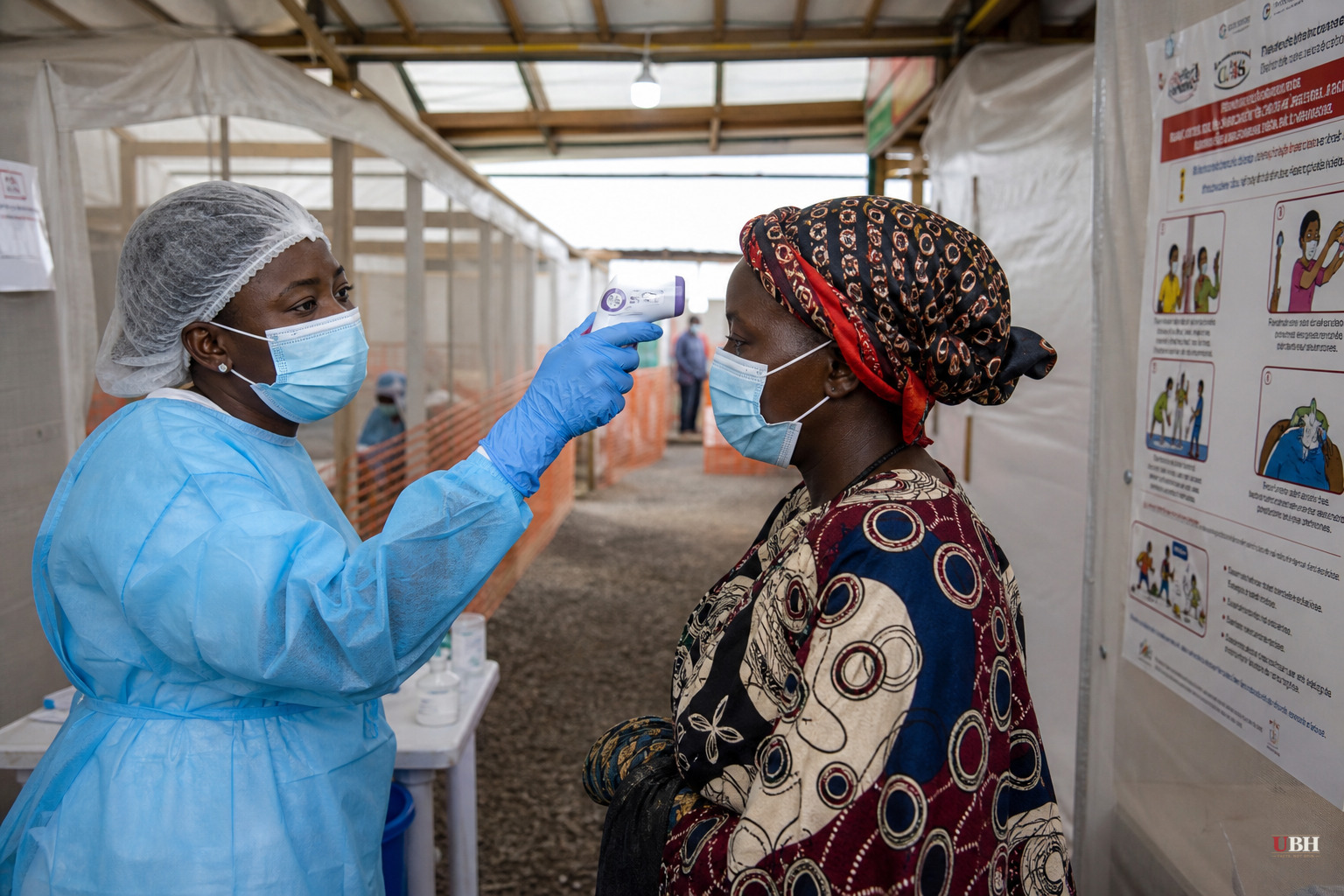
DR Congo's Ebola Death Toll Passes 1,000, With Response Effort $400 Million Short of Its Funding Goal
The Toll, As Of This Week
Congo's Ministry of Health and the Africa Centers for Disease Control and Prevention (Africa CDC) confirmed this week that the Ebola outbreak in the country's east has crossed 1,000 deaths. Dr. Jean Kaseya, director-general of the Africa CDC, put the figure at 1,031 deaths speaking at a health summit in Ghana on Wednesday, according to the Associated Press, NDTV, and the South China Morning Post. Wyoming Public Media, citing figures released Thursday, put the count slightly higher at 1,033 deaths and 2,536 total cases.
The outbreak was declared an epidemic on May 15. Getting from first case to 1,000 deaths took roughly two months. For comparison, the 2013-2016 West Africa outbreak — the worst on record, with over 11,000 deaths across 28,000 cases in Guinea, Liberia, and Sierra Leone — took about eight months to reach the same death toll, according to the AP. Congo's own 2018-2019 outbreak took 10 months to hit just 2,000 confirmed cases; this one got there in two, according to World Health Organization figures cited by Wyoming Public Media.
Why This Strain Is Different
The virus driving this outbreak is Ebola Bundibugyo, a rarer strain than the Zaire species behind most prior outbreaks. There is no approved vaccine or treatment for it. That single fact separates this crisis from the 2018-2019 Congo outbreak, where an experimental vaccine helped bring case counts down.
Dr. Kaseya was blunt about what that absence means. "These are people dying," he said. "They are dying because we don't have vaccines, we don't have medicine, we don't have funding."
Contact Tracing Has Broken Down
One of the more alarming numbers in this outbreak: over 80 percent of new cases are turning up in people who were never flagged through contact tracing, according to Breitbart and NDTV. That means health teams are chasing a virus they can't see coming until it's already spread. The WHO has said the true case count could be two to four times higher than what's officially reported.
Robert Ndjalonga, head of civil protection in Ituri province, told NDTV that community resistance is a major driver. Some families are refusing to let burial teams handle Ebola dead, insisting on traditional burial practices instead, which raises transmission risk. Security forces have had to escort burial teams in some areas just to complete safe burials without incident, Ndjalonga said.
Breitbart's coverage adds that many communities in the affected region don't believe Ebola is real, viewing outbreak response as a pretext for outside interference. That distrust has led to attacks on health workers and patients fleeing quarantine, compounding the tracing failures.
The Money Problem
The WHO and Africa CDC's joint response plan calls for $518 million. As of mid-July, it was more than $400 million short, according to Wyoming Public Media. Health workers in Ituri province have gone unpaid since the outbreak began and staged a brief strike this month, burning tires outside health centers to protest the lack of pay and poor working conditions.
Trish Newport, an emergency program manager for Doctors Without Borders (MSF), said in a statement this week: "We cannot continue responding to the epidemic with the same limited resources while it continues to outpace us." MSF and other aid groups say many Ebola treatment centers are already full, forcing sick patients to wait at home for an open bed. That gap in capacity risks spreading the virus further within households.
A Region Already at War
Ituri province, the outbreak's epicenter, has been a conflict zone for more than 30 years. Militias fighting over control of artisanal gold mining have displaced more than 900,000 people into camps, according to Wyoming Public Media. Those mining operations pull in mobile informal workers who can carry the virus between regions quickly if infected.
Congolese Prime Minister Judith Suminwa was scheduled to travel to the outbreak zone Thursday, accompanied by U.S. and United Nations officials, to assess conditions on the ground, the government said.
No vaccine trial or emergency-use treatment for Bundibugyo has been announced as of this week. Whether international donors close the roughly $400 million funding gap, and how fast, will likely determine whether this outbreak follows the trajectory of the 2013-2016 catastrophe or gets contained before case counts climb further. Amadou Bocoum, the Congo director for CARE International, told NPR the situation is "worsening day by day," citing contact tracing failures, funding shortfalls, and geographic spread as the three compounding problems response teams haven't solved.
Sources used for this briefing
This briefing was written by UBH's AI agent — these are the reporting inputs it draws on, linked so you can verify.


