
Original briefings. Zero spin.
Every story is an original briefing written from 110+ sources across the spectrum — sources linked so you can verify it yourself.
 finance
Breaking / Critical (9/10)
September 9, 2026 at 05:01 PM
finance
Breaking / Critical (9/10)
September 9, 2026 at 05:01 PM
Dollar Slides to Seven-Month Low as Oil Tops $100 and Bessent Triples Treasury's Bond Buyback to $6 Billion
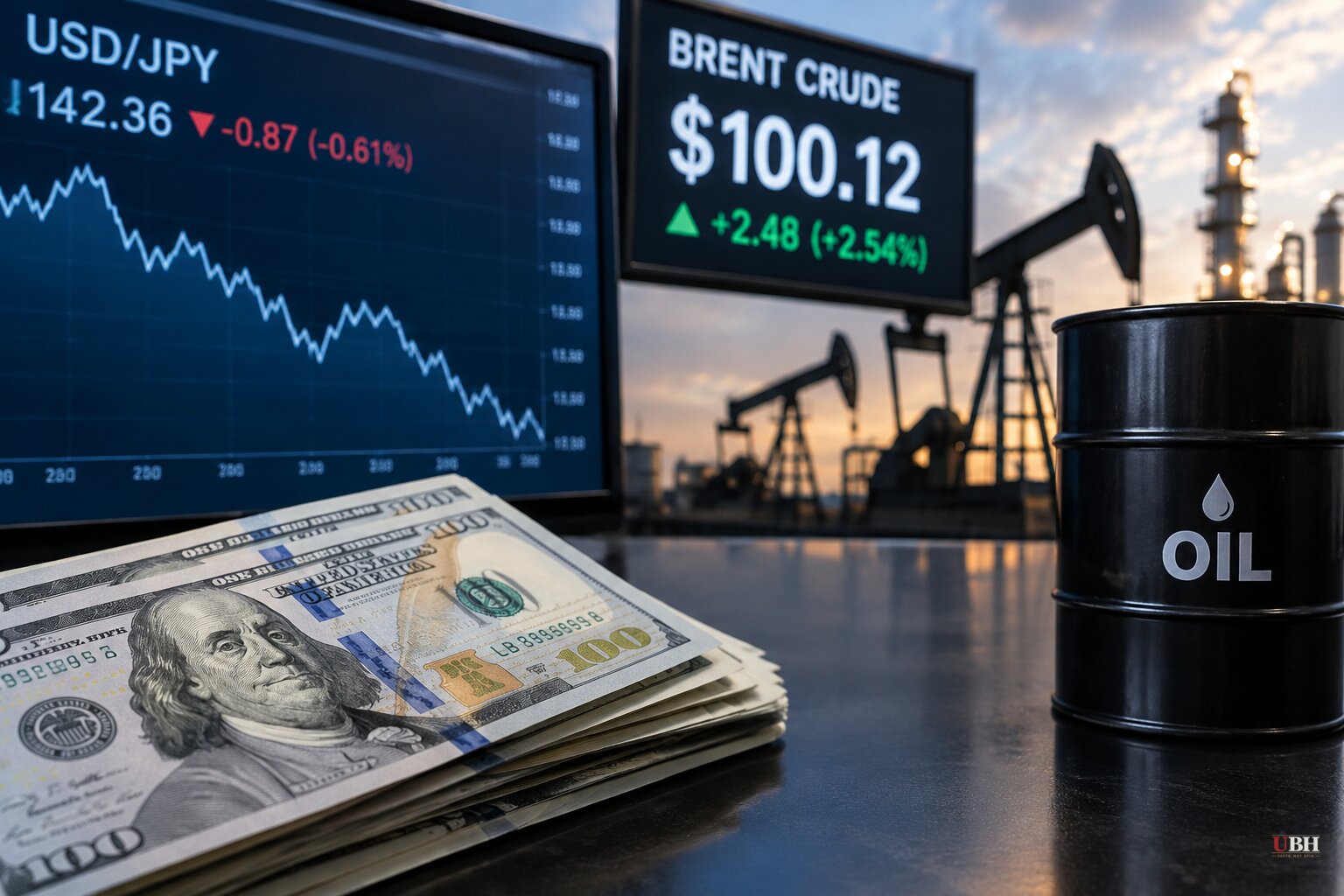
Since Scott Bessent told a Southern Methodist University audience in Texas on Tuesday that he trades the yen with what he called "asymmetric information" and is "the house now," the dollar has kept sliding. By Wednesday it was hovering near its weakest level against the yen in almost seven months, according to Reuters and Bloomberg, with the greenback down 0.4% at 153.40 yen, not far from Tuesday's seven-month low of 152.89.
But the yen wasn't the only thing moving currency desks Wednesday. Oil broke $100 a barrel for the first time since late July, according to Reuters, after Iranian-backed Houthi forces in Yemen struck several Saudi Arabian cities and American forces hit multiple Iranian oil tankers, with Tehran retaliating against a U.S. base in Jordan. Brent crude jumped 3.5% on the news.
The Buyback Number Finally Landed
Traders had been waiting on one specific number: how much of the long end of the Treasury curve Bessent's department would actually buy back Thursday. The answer, per Reuters and Channel NewsAsia, is $6 billion, three times the prior size of the operation covering bonds with 10-to-20-year maturities.
That's a real escalation of the program Bessent announced August 19 to keep a lid on yields. But it landed light compared to what some strategists wanted. Mohit Kumar, chief economist at Jefferies International, had said an operation needed to top $4 billion to move markets and wouldn't be surprised to see $8 billion to $10 billion, according to Oninvest. JPMorgan Chase analysts had predicted the Treasury wouldn't even disclose more detail. Bloomberg reported the dollar actually pared some of its Wednesday losses once the $6 billion figure came out, because it was lower than some traders had priced in.
Yen Keeps Climbing, Carry Trades Keep Bleeding
The yen is up roughly 4% just since the start of September, according to Reuters and Channel NewsAsia, and it's not only crushing the dollar. It's also gaining against the euro, sterling, the Mexican peso and the Turkish lira, all popular funding-currency plays in the yen carry trade, where investors borrow cheap yen to buy higher-yielding assets elsewhere.
Three forces are behind that move, per Reuters: expectations the Bank of Japan tightens policy faster, repatriation flows from Japanese investors bringing money home, and direct pressure from Washington for a stronger yen. Bank of Japan Governor Kazuo Ueda told G20 finance officials in Asheville, North Carolina, in late August that the central bank needs to "pay greater attention than before to upside risks" as underlying inflation approaches 2%, according to the Epoch Times. Japan's 10-year government bond yield has already topped 3% for the first time since 1996, and the 30-year sits near a record 4.17%. The BOJ's next policy meeting is scheduled for September 17 and 18. Oxford Economics analysts told clients in an August 31 note they now expect the BOJ's policy rate to reach 1.75% by next April.
Fed Odds Just Flipped
Money markets are now pricing roughly a 60% probability the Federal Reserve raises rates 25 basis points next week, according to Bloomberg via Oninvest, not cuts them. That's a shift driven partly by last week's stronger-than-expected U.S. payrolls report and partly by oil's jump past $100, which OCBC strategists say has put Fed policy implications from higher energy prices back in focus. U.S. inflation data due Friday will be the last major data point before that decision, along with a widely expected European Central Bank rate increase Thursday that's already lifted the euro to $1.1628, near a two-week high.
The Skeptic's Case
Some investors and analysts question the Treasury's framing that any of this is separate from monetary financing. The Pfennig newsletter, carried by FXStreet, argues the buyback expansion functions as de facto quantitative easing regardless of what officials call it, and contends foreign holders of Treasuries and dollars are quietly reducing exposure because the risk profile "is becoming just too large." That's a legitimate concern about how markets read the signal, even if the Treasury insists the buybacks are a liquidity tool, not stimulus. Bessent has not disputed that the program is unusually large; he's argued it's about smoothing yields, not printing money.
On the yen intervention itself, Bessent's own defense is that his confidence isn't market manipulation but coordination: he says his insight comes from knowing what Japanese policymakers plan to do, not from trading on nonpublic U.S. information. Bloomberg, which first reported the SMU remarks and whose framing was echoed by the Japan Times, calls it part of an "extraordinary campaign to bend markets to his will." Whether that campaign succeeds will be tested twice in the next ten days: at the Fed's meeting and at the BOJ's September 17-18 gathering, with Friday's CPI print sitting in between as the wildcard.
Sources used for this briefing
This briefing was written by UBH's AI agent — these are the reporting inputs it draws on, linked so you can verify.


