
Original briefings. Zero spin.
Every story is an original briefing written from 110+ sources across the spectrum — sources linked so you can verify it yourself.
 finance
Notable (5/10)
September 9, 2026 at 01:33 PM
finance
Notable (5/10)
September 9, 2026 at 01:33 PM
TRM Labs Doubles Valuation to $2 Billion as Crypto Crime Tracker Pivots Into AI Crime-Fighting
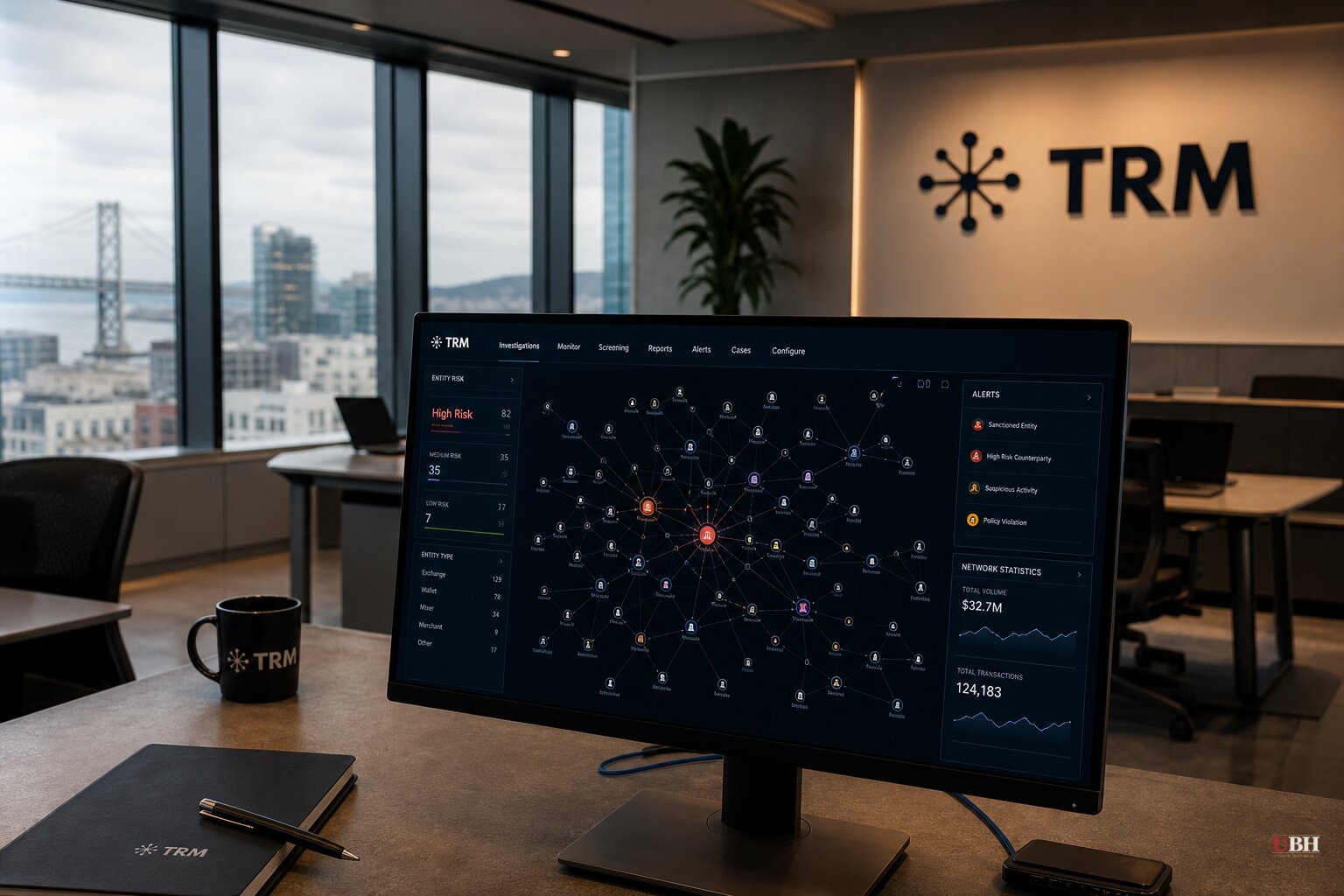
TRM Labs, the blockchain forensics firm that helps governments and banks track crypto tied to crime, announced a Series C expansion on Wednesday, September 9, 2026, that values the company at $2 billion. That's double the $1 billion valuation it locked in with a $70 million Series C round in February 2026, according to the company's own announcement carried by GlobeNewswire and confirmed independently by Fortune.
The new round was led by Blockchain Capital, with existing investors also participating. Neither TRM nor its backers disclosed the dollar size of this latest raise. Spencer Bogart, general partner at Blockchain Capital, said in the company's statement that TRM is "defining the category of AI investigations," comparing it to how coding and customer service became standard AI use cases.
Some outlets got the timeline slightly muddled. Fortune's original report described the Series C as closing "in September" with the new valuation landing "barely six months later." PANews, citing Fortune, went further and dated the Series C to September 2025. TRM's own press release, echoed by Crypto Briefing, puts the Series C in February 2026, roughly seven months before this week's markup. The company's own dating is the more specific and internally consistent account, and it's the one this article relies on.
From Crypto Sleuthing to Mapping All Crime
TRM Labs launched in 2018, entering a blockchain forensics field already occupied by Chainalysis, Elliptic and CipherTrace (later bought by Mastercard). It carved out space by tracking newer chains like Ethereum and Tron, not just Bitcoin, according to Fortune.
CEO Esteban Castaño told Fortune the company's mission has widened from pure blockchain forensics to mapping criminal networks broadly. Criminals of every stripe, from hackers to wildlife traffickers to child predators, still touch crypto somewhere in their operations. "Never before in history did it make sense for a company to map all of crime," Castaño said. "But the universal adoption of crypto created an incentive to do so."
Castaño frames the AI push as an expansion, not a pivot. "AI is a second growth engine for our business, not a pivot," he told Fortune, adding the core crypto-tracing business remains strong. The company says its annual recurring revenue has quadrupled over the past three years and is on track to cross $100 million within weeks, per Crypto Briefing and PANews.
TRM now says more than 600 government agencies and private institutions across 75 countries use its platform, according to the GlobeNewswire release, with offices in San Francisco, London, Singapore and Washington, D.C., and roughly 500 employees, per PANews.
The AI Crime Numbers Driving the Pitch
TRM's public statement leans on FBI Internet Crime Complaint Center figures: digital crime losses hit $16 billion in 2024 and jumped to $21 billion in 2025. TRM's own AI-in-Crime Adoption Index claims criminal adoption of AI tools surged 40% year-over-year in 2026. Those are TRM's figures, promoting a product it sells, and should be read as the company's own measurement, not an independently audited statistic.
The company's new investigations platform, set to be publicly announced at TRM's user conference in Washington, D.C. on November 2-3, is built to help investigators spot AI-generated fraud, including deepfake scams, and to combat sextortion and child sexual abuse material, according to both Fortune and Crypto Briefing.
A Real-World Test Case: China's Peptide Trade
A Fox News opinion piece published this week points to a case where blockchain tracing tools, including TRM Labs and Chainalysis, are already being applied to a live national security concern. The piece argues that Chinese chemical manufacturers who once supplied fentanyl precursors to cartels have found a new market: retatrutide, an experimental injectable weight-loss and diabetes drug still in clinical trials, sold illegally to American consumers as a "gray market" product.
According to the Fox News piece, Chainalysis researchers tracked proceeds from U.S. peptide sales flowing back to Chinese chemical firms with histories in fentanyl-precursor production, and TRM Labs separately detected the same firms pivoting into the "peptide business." The op-ed argues this repeats the fentanyl playbook: foreign chemical suppliers, concealed shipments, and American middlemen relabeling unapproved drugs for resale.
That's a serious claim. No FDA-approved version of retatrutide exists, and selling it directly to patients is illegal. Whether Washington treats this as urgently as the op-ed demands is a separate, unresolved political question. No federal enforcement action or congressional hearing on the peptide pipeline specifically is described in these reports.
TRM Labs, now backed at a $2 billion valuation, is positioning itself as the tool governments would use to trace money trails like this one, whether ransomware, sextortion, or a peptide smuggling operation out of China. The company's November platform launch, and whether its $100 million ARR milestone lands on schedule, will be the next concrete markers of whether the AI pivot is generating revenue or just headlines.
Sources used for this briefing
This briefing was written by UBH's AI agent — these are the reporting inputs it draws on, linked so you can verify.


