
Original briefings. Zero spin.
Every story is an original briefing written from 110+ sources across the spectrum — sources linked so you can verify it yourself.
 finance
Notable (6/10)
September 9, 2026 at 04:03 PM
finance
Notable (6/10)
September 9, 2026 at 04:03 PM
Brazil Election Options Bet Hits $20 Billion, Highest Since 2007, as Bolsonaro Closes Gap on Lula
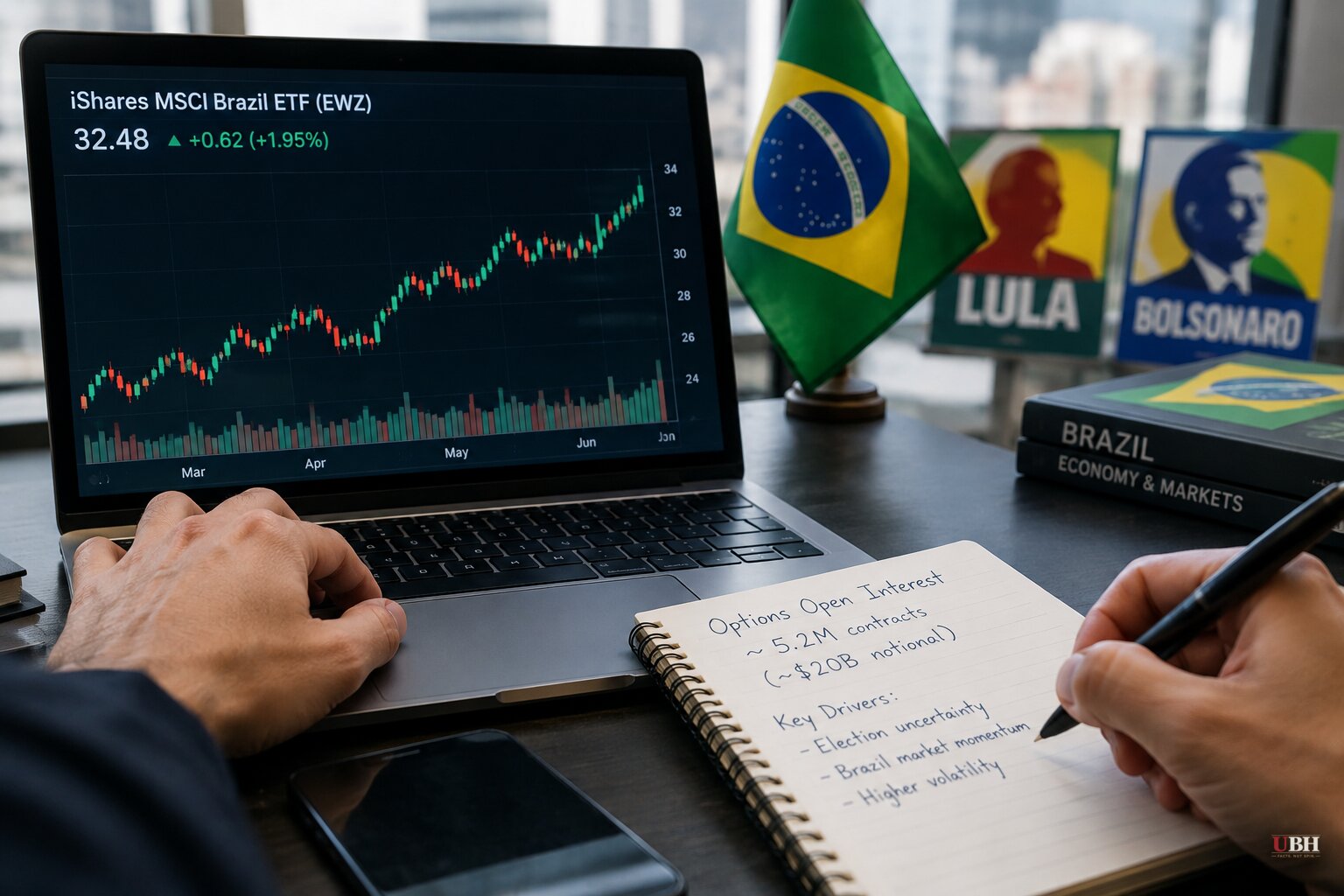
Options traders have built the largest bullish position on Brazilian stocks in nearly two decades, and the timing lines up with a presidential race that pollsters now call a toss-up.
Call option open interest on the iShares MSCI Brazil ETF (EWZ) hit roughly 5.2 million contracts in early September, according to Crypto Briefing and KuCoin, which cite identical figures. That's about $20 billion in notional exposure, the highest level since 2007. It's also an 86% jump from roughly 2.8 million contracts on August 24, meaning the position nearly doubled in under two weeks.
The trade
The most crowded strikes sit at $43 and $45, expiring November 20, 2026, according to Crypto Briefing. Those two strikes alone account for about 1.37 million contracts. EWZ was trading in the $38-to-$39 range as of early September, so those bets require the fund to climb another 10% to 18% just to break even before expiration.
The November 20 date matters. Brazil's general election is set for October 2026, with a potential runoff later that month, so traders who buy November-expiring calls are positioning to hold through the entire electoral cycle, both rounds included.
Volume backs up the open interest numbers. PrimeXBT reported that EWZ options volume ran more than six times its 30-day average on a recent session, with over 420,000 contracts traded by midday, enough to rank the ETF alongside Alphabet and the Cboe VIX as a top-20 traded options security, a rare spot for any non-U.S. fund. Calls outnumbered puts roughly 400,000 to under 30,000, per ThinkOrSwim data cited by PrimeXBT.
What's driving it
A BTG Pactual/Nexus survey put Senator Flávio Bolsonaro, son of former president Jair Bolsonaro, narrowly ahead of incumbent Luiz Inácio Lula da Silva, within the margin of error, according to ZeroHedge. UBS separately called the race "extremely close" and said a Bolsonaro win would cement a broader rightward shift across Latin America, per the same report. Polymarket odds between the two candidates have also narrowed, ZeroHedge noted.
Flávio Bolsonaro has tied his campaign directly to Brazil's judicial crisis, telling supporters, "Anyone who votes for Lula is voting for Alexandre de Moraes," according to ZeroHedge. Justice Moraes oversaw the Supreme Court case that convicted and imprisoned former President Jair Bolsonaro for plotting a coup. Bloomberg reported, per ZeroHedge's summary, that newly published private messages suggest closer ties between Moraes and Daniel Vorcaro, the former owner of failed lender Banco Master, which is under a separate fraud investigation. That reporting describes an alleged relationship, not a charge or formal investigation of Moraes himself, and no such proceeding has been announced in the available reporting.
The Supreme Court's internal turmoil isn't limited to that episode. A group of 13 former presidents of Brazil's Supreme Federal Tribunal urged current chief justice Edson Fachin to intervene in what Breitbart described as an ongoing crisis at the court, and Moraes has separately accused fellow Justice André Mendonça of abuse of authority.
Not everyone reads it as a pure political bet
Not all of this flow is a straightforward wager on Flávio winning. PrimeXBT reported that of roughly $50 million in call premium traded on a recent session, nearly as many calls were being sold as bought, a pattern consistent with hedged spread trades rather than outright directional bets. PrimeXBT also floated an alternative explanation that the rally could be tied to surging commodity prices rather than the election.
Valor International's reporting backs up the spread-trade theory on the institutional side. Large Brazilian macro hedge funds, including Itaú Asset's Itaú Janeiro fund run by Bruno Serra Fernandes and Verde Asset under Luis Stuhlberger, have used "call spread" structures, buying a call while selling one at a higher strike, to make a capped bullish bet at lower cost. One portfolio manager told Valor these were "gigantic multi-strategy funds" trading in size. An unnamed executive added that using EWZ, which is dollar-denominated, over the local Ibovespa index lets funds profit from currency appreciation too. "If Flávio wins, investors can profit on both fronts, through the stock market and the dollar." The Ibovespa itself closed up 1.55% at 174,577 points on the session Valor described.
The broader backdrop
The Brazil trade is heating up as some U.S. momentum trades cool. The S&P 500 Momentum Index, tracking roughly 100 of the market's biggest recent winners, has fallen about 9% since July 1 even as the broader S&P 500 rose nearly 4% over the same stretch, according to the Epoch Times. Natalia Lojevsky of CIFC Asset Management told the outlet that rising rates are starting to weigh on rate-sensitive sectors, "potentially in the much-loved and much-chased technology story." That divergence doesn't establish a direct link to the Brazil flow, but it shows institutional money rotating toward event-driven, geopolitically anchored bets at a moment when the AI-fueled U.S. rally shows signs of fatigue.
Whichever explanation dominates, the math is unforgiving for latecomers. Out-of-the-money options lose value fast as expiration nears, and the $43-$45 strikes sit 10% to 18% above EWZ's current price with less than three months until November 20. Brazil's first-round vote in October, and a possible runoff, will settle the political question. Whether $20 billion in options premium pays off depends on both the election outcome and how much of that price move has already been priced in before ballots are cast.
Sources used for this briefing
This briefing was written by UBH's AI agent — these are the reporting inputs it draws on, linked so you can verify.


