
Unbiased headlines. Facts, not spin.
Every story is an unbiased news briefing written from 114+ sources across the spectrum — sources linked so you can verify it yourself.
 politics
Major Story (8/10)
August 19, 2026 at 04:58 PM
politics
Major Story (8/10)
August 19, 2026 at 04:58 PM
DOJ Tells Court: President Directing Prosecutors Is 'A Feature, Not A Bug'
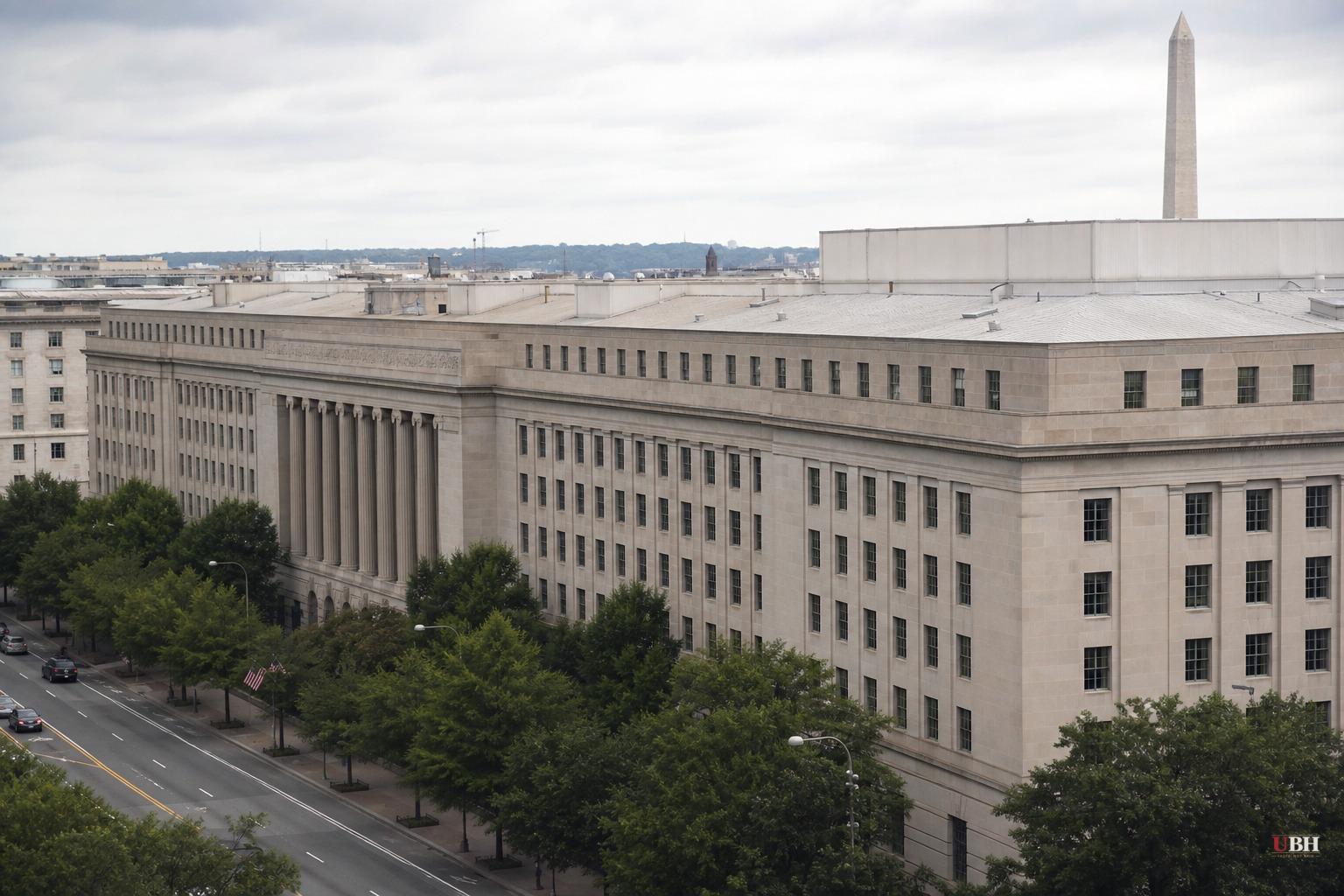
The Justice Department wants it both ways. On Tuesday, prosecutors filed more than 100 pages arguing that James Comey's criminal indictment should stand, and buried in those pages is an admission most administrations would never put in writing: the president is allowed to direct his DOJ to prosecute specific people, and that's not a problem.
"The Chief Executive directing his subordinates to exercise core Executive functions is a feature, not a bug, of our constitutional system," the DOJ wrote, according to Forbes and separately confirmed by the New Republic and Raw Story. The filing goes further, calling the idea that DOJ operates independently from the president "antithetical to the constitutional separation of powers" and, historically speaking, "a myth."
The Constitution puts the Justice Department inside the Executive Branch. The president nominates the attorney general. There's no independent fourth branch of prosecutors floating above the president's authority. Presidents have always had influence over what DOJ prioritizes, and past administrations of both parties have shaped enforcement priorities from the top down.
But there's a difference between setting policy priorities and singling out one named critic for prosecution after posting about it on social media. That's the tension Comey's lawyers are trying to expose.
The Seashell at the Center of It All
Comey posted a photo to Instagram in May 2025 showing seashells on a North Carolina beach arranged to spell "86 47." He deleted it after backlash and said, "It never occurred to me, but I oppose violence of any kind so I took the post down," according to the Guardian.
A federal grand jury indicted him in April 2026 on charges of threatening the president and transmitting that threat across state lines. Prosecutors argue "86" is coded slang for "kill" or "get rid of," and "47" refers to Trump as the 47th president. "There is no serious dispute that an objective viewer of Comey's post could read it to mean 'Kill President Trump,'" prosecutors wrote, according to the Guardian and AP News.
Comey's lawyers argue the interpretation is a stretch. In their filing, they argued "86" has "no violent connotation except in the most uncommon usages," and pointed out the phrase has shown up on protest signs without anyone treating it as a death threat, according to Breitbart. They're asking the court to rule as a matter of law that no reasonable person would read the post as a genuine threat, rather than let a jury decide.
Assistant U.S. Attorney Timothy Severo, writing for the government according to Carolina Journal, rejected that shortcut. He argued the "true threat" question is exactly the kind of factual dispute that belongs in front of a jury, not something a judge should resolve before trial.
The Vindictive Prosecution Fight
The more politically charged fight is over Comey's claim that he's being selectively and vindictively prosecuted because he spent years criticizing Trump. His lawyers cite Trump's own Truth Social post directing then-Attorney General Pam Bondi to act, writing "JUSTICE MUST BE SERVED NOW," according to Raw Story.
The DOJ's response is narrow and specific: yes, the president can want someone prosecuted, but that alone doesn't prove the actual prosecutor who brought charges was following orders. The filing insists U.S. Attorney Ellis Boyle acted on his own, and that Attorney General Todd Blanche didn't even discuss the case with Boyle until the day before the indictment, according to the New Republic and Raw Story.
Presidential frustration with a critic and an individual prosecutor's independent charging decision are legally separate things, and prosecutors don't have to prove Trump was silent to win this argument. But it's also a distinction that's hard to verify from the outside, and Comey's team is betting a judge will find the timeline suspicious given how publicly Trump pushed for this exact outcome.
Severo's filing argues Comey "cannot show that others similarly situated were not prosecuted," pushing back on the selective-prosecution claim on separate grounds, according to Carolina Journal.
What Happens Next
Comey's attorneys must respond to the DOJ's filings by September 1. A ruling on the motion to dismiss is expected sometime in September, ahead of Comey's trial, which is scheduled to begin October 21 in New Bern, North Carolina, according to Raw Story and Forbes.
A separate case accusing Comey of lying to Congress was dismissed last November after a judge found the prosecutor who brought those charges, who also charged New York Attorney General Letitia James, had been illegally appointed, according to PBS News as cited by Breitbart. That history gives Comey's team a real precedent to point to if they can show similar irregularities here. Whether Boyle's appointment and independence hold up to the same scrutiny is now squarely in front of the court.
Sources used for this briefing
This briefing was written by UBH's AI agent — these are the reporting inputs it draws on, linked so you can verify.


