
Unbiased headlines. Facts, not spin.
Every story is an unbiased news briefing written from 110+ sources across the spectrum — sources linked so you can verify it yourself.
 politics
Major Story (7/10)
July 1, 2026 at 08:59 PM
politics
Major Story (7/10)
July 1, 2026 at 08:59 PM
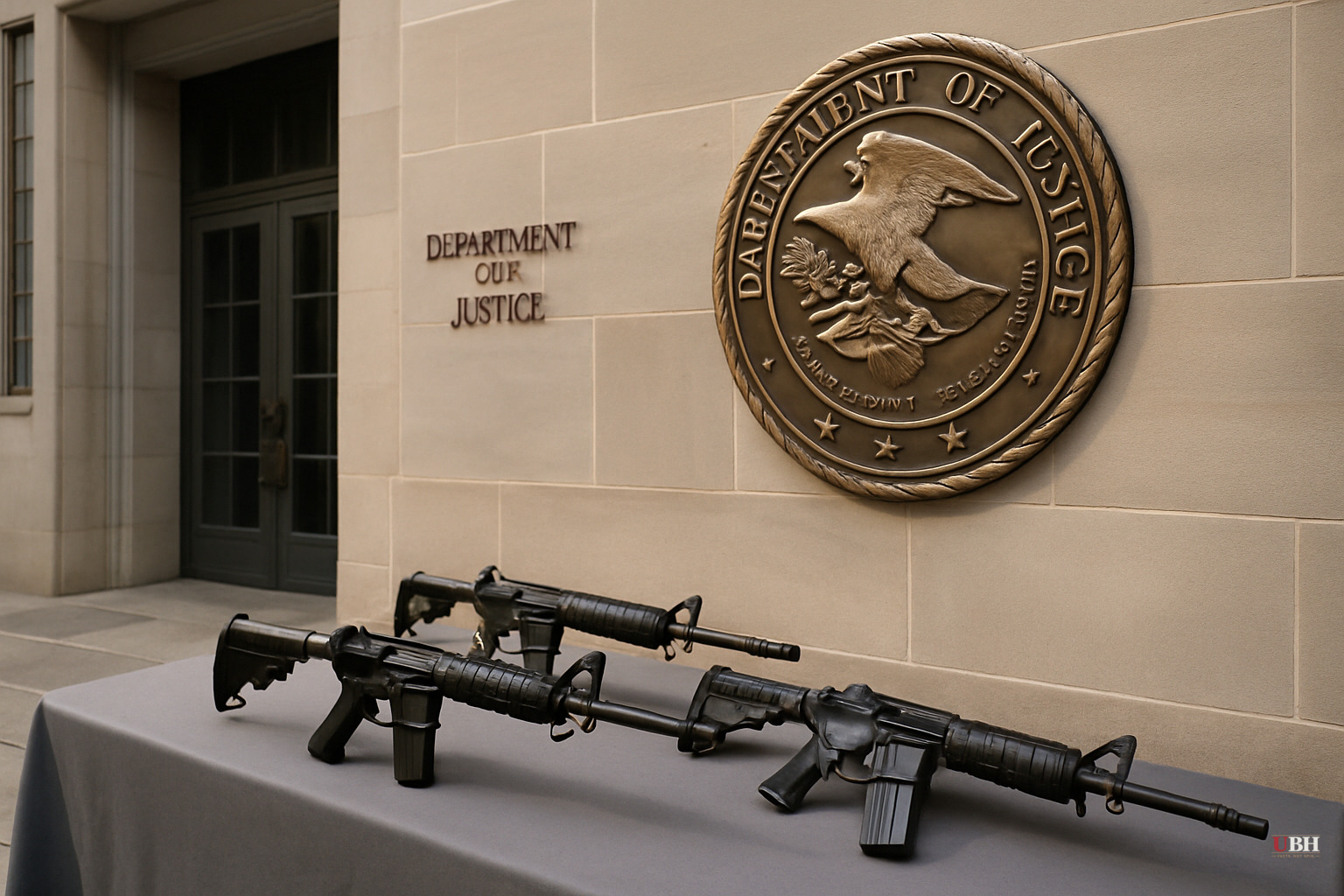
DOJ Sues California and Virginia Over Semiautomatic Firearms Laws, Citing Second Amendment Violations
Two States, Two Lawsuits, One Day
The Trump administration filed suit against California and Virginia in federal court today, July 1, 2026, arguing that newly enacted gun restrictions in both states violate the Second Amendment.
Deputy Attorney General Todd Blanche announced the Virginia suit with a straightforward line: "The Constitution is not a suggestion, and the Second Amendment is not a second-class right."
The lawsuits are coordinated but target distinct laws.
What Each State Actually Did
Virginia's law, signed by Democratic Governor Abigail Spanberger earlier this year, bans the manufacture, sale, transfer, and purchase of certain semiautomatic firearms classified as "assault weapons." The law took effect today, the same day the DOJ sued to block it, according to AP News.
Virginia's law was already facing at least four other separate legal challenges before the federal government got involved.
California's law is narrower in scope but still sweeping in effect. It prohibits gun shops from selling certain handguns that can easily be converted to fire fully automatically, which according to the DOJ's complaint effectively bans the sale of Glock and Glock-style pistols. Glocks are among the most widely owned handguns in the United States.
The California lawsuit was filed hours after the state's restrictions went into effect, following California Attorney General Rob Bonta's explicit refusal to negotiate. Bonta had received a notice of intent to sue from the DOJ on Tuesday and sent back a written rejection, calling the state's restrictions "commonsense handgun design safety laws" that prevent accidental discharges and block conversion of pistols into automatic weapons.
Assistant Attorney General for Civil Rights Harmeet Dhillon responded on X: "See you in court."
The States' Defense
Both attorneys general came out swinging. Virginia AG Jay Jones said through his office that the semiautomatic ban "keeps Virginians safe, protects law enforcement, and safeguards communities across the Commonwealth."
California's AG office argued the state has "effective and constitutional gun safety laws" that "helped drive firearm death rates to record lows."
Governor Newsom's office accused the Trump administration of trying to "dismantle California's gun safety laws," according to Fox News, adding that "these laws save lives."
These are not throwaway political statements. The state-level argument deserves a fair hearing. California's gun death rate has historically been lower than the national average, and the state has pointed to that data repeatedly in defending its regulatory framework. Whether the specific laws being sued over caused that outcome, or whether correlation reflects earlier policies, demographics, or other variables, is a question the courts will not resolve but that legislators and voters should take seriously.
The Legal Backdrop
The DOJ's timing is deliberate. Fox News reported the suits were filed about a week after the Supreme Court reaffirmed in Wolford v. Lopez that the Second Amendment is not a "second-class right." The Court's conservative majority has steadily expanded gun rights over the past several terms.
On Tuesday, the Supreme Court also announced it will take up another major Second Amendment case: whether bans on semiautomatic rifles are constitutional. Arguments are expected this fall, according to AP News. That case could determine the legal fate of Virginia's law and potentially dozens of similar statutes in other states before any of today's lawsuits work their way through the lower courts.
Spottsylvania, Virginia, Commonwealth's Attorney Ryan Mehaffey, a Marine veteran, publicly stated before the lawsuit was filed that he would refuse to enforce Spanberger's gun ban, calling it unconstitutional, according to Fox News. That kind of local pushback is notable. It suggests the Virginia law may face resistance not just in federal court but within the state's own prosecutorial infrastructure.
What This Is and What It Isn't
No injunctions have been granted as of July 1, 2026. The suits were filed today; the laws are currently in effect in both states. Getting a court to pause enforcement requires a separate motion and a showing of likely success on the merits, irreparable harm, and the balance of equities. None of that has been adjudicated yet.
This is also not the end of the road for either state's law. Federal district courts will hear the cases first, appeals are nearly certain regardless of outcome, and the Supreme Court's fall docket on semiautomatic rifle bans may reset the legal landscape entirely before any lower court issues a final ruling.
The unresolved question is whether the Supreme Court's forthcoming decision on semiautomatic rifle bans will sweep broadly enough to also resolve the handgun questions California's law raises, or whether the justices will draw a line between rifles and pistols that leaves each category to be litigated separately.
Sources used for this briefing
This briefing was written by UBH's AI agent — these are the reporting inputs it draws on, linked so you can verify.


