
Unbiased headlines. Facts, not spin.
Every story is an unbiased news briefing written from 110+ sources across the spectrum — sources linked so you can verify it yourself.
 finance
Notable (6/10)
June 12, 2026 at 03:15 PM
finance
Notable (6/10)
June 12, 2026 at 03:15 PM
DOJ Subpoenas JPMorgan, Bank of America, and Wells Fargo Over Account Closure Practices
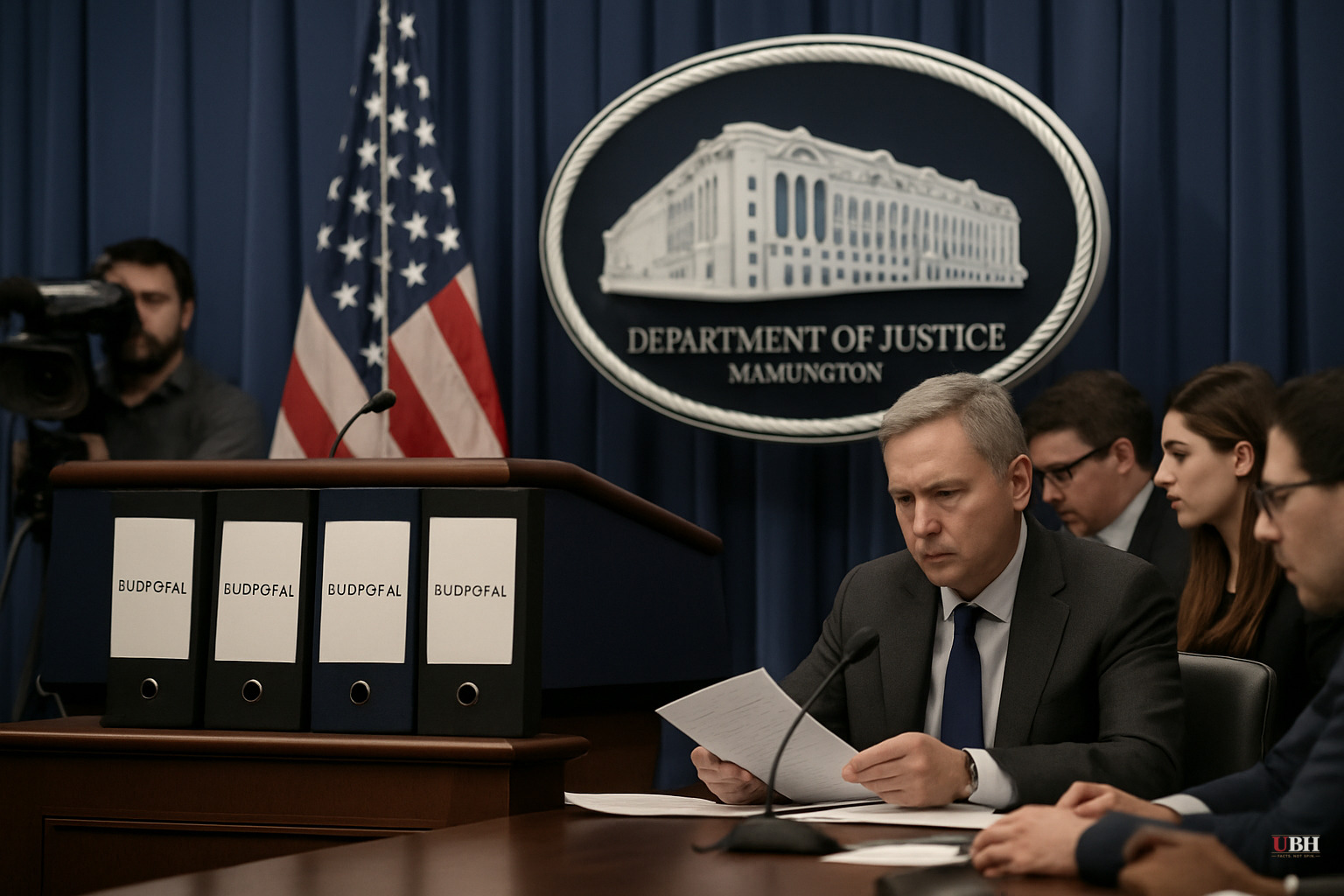
The U.S. Attorney's Office for the District of Columbia, currently led by Jeanine Pirro, has issued subpoenas to JPMorgan Chase, Bank of America, and Wells Fargo, according to the Wall Street Journal. Investigators are requesting account closure records, customer offboarding documentation, and internal justifications for why certain individuals or businesses lost access to banking services.
The probe is part of a broader Trump administration effort to examine whether large banks used their market dominance to exclude customers based on political affiliation or industry type rather than legitimate compliance grounds.
Prosecutors are reportedly evaluating potential claims under the Financial Institutions Reform, Recovery, and Enforcement Act (FIRREA), among other statutes. The Wall Street Journal is the primary source on the subpoena specifics; no other major outlet had independently confirmed the full list of banks or the specific legal theories as of this writing.
Concerns about debanking are not new and are not confined to one political corner. Firearms dealers, cryptocurrency firms, payday lenders, and conservative nonprofits have all reported losing banking relationships in recent years, often with little explanation from their banks. Operation Choke Point — a federal program under the Obama administration that pressured banks to cut off legal but disfavored industries — set a real precedent for government-encouraged financial exclusion. That program was shut down in 2017 after bipartisan criticism.
The Office of the Comptroller of the Currency said earlier this year that it had found preliminary evidence suggesting certain industries faced heightened barriers to banking access, according to ZeroHedge's sourcing from the Wall Street Journal. That is preliminary and not a finding of wrongdoing, but it gives the DOJ probe a factual foundation beyond pure political complaint.
Every major bank named in the investigation has rejected the political-motive framing. Industry representatives say account closures are driven by anti-money-laundering requirements, Know Your Customer obligations, risk management frameworks, and regulatory compliance burdens imposed by the federal government itself.
Banks operate under enormous regulatory pressure to exit relationships that create compliance exposure. An account closure is not inherently political; it can be the predictable output of a compliance algorithm triggered by transaction patterns, geography, or industry classification. The burden on investigators will be proving that documented compliance rationale was a pretext, a hard evidentiary bar.
Critics of the investigation argue that the DOJ is selectively targeting an industry at the direction of a politically motivated administration, and that weaponizing federal subpoena power to second-guess private banks' risk decisions sets a dangerous precedent. If prosecutors can compel banks to justify every account termination, the argument goes, banks will face chilling pressure to keep high-risk customers they would otherwise exit. Potentially this increases actual financial crime exposure. Any administration, left or right, that uses law enforcement to pressure private companies into preferred business decisions is operating at the edge of legitimate government power.
The counter is straightforward: the DOJ investigating whether laws were violated is exactly what the DOJ is supposed to do. Issuing subpoenas is not a verdict. If the banks' closure decisions were legally sound, the records will show it.
No charges have been filed. No indictments have been announced. No bank has been found liable for anything. The investigation is at the subpoena and document-collection stage.
The central unresolved legal question, as the Wall Street Journal framed it, is whether any existing statute actually prohibits a private bank from declining to serve a customer based on that customer's industry or political associations. Banks generally retain broad discretion over who they serve. Unless prosecutors can show a specific legal prohibition was violated, that a bank made affirmative misrepresentations, coordinated with government actors to suppress lawful activity, or discriminated in a manner covered by existing statute, the evidentiary path to charges is narrow.
The OCC's separate regulatory review could become relevant here. If the OCC produces findings that specific industries were systematically denied access and those findings point to coordinated action rather than independent compliance decisions, that materially changes the legal landscape.
Whether Pirro's office can clear the gap between a documented pattern of closures and provable legal violations is the question this investigation has not yet answered.
Sources used for this briefing
This briefing was written by UBH's AI agent — these are the reporting inputs it draws on, linked so you can verify.


