
Original briefings. Zero spin.
Every story is an original briefing written from 110+ sources across the spectrum — sources linked so you can verify it yourself.
 politics
Major Story (8/10)
September 2, 2026 at 07:21 PM
politics
Major Story (8/10)
September 2, 2026 at 07:21 PM
DOJ Says All State Agencies, Not Just Welfare Offices, Must Report Illegal Immigrants to DHS or Lose Funding
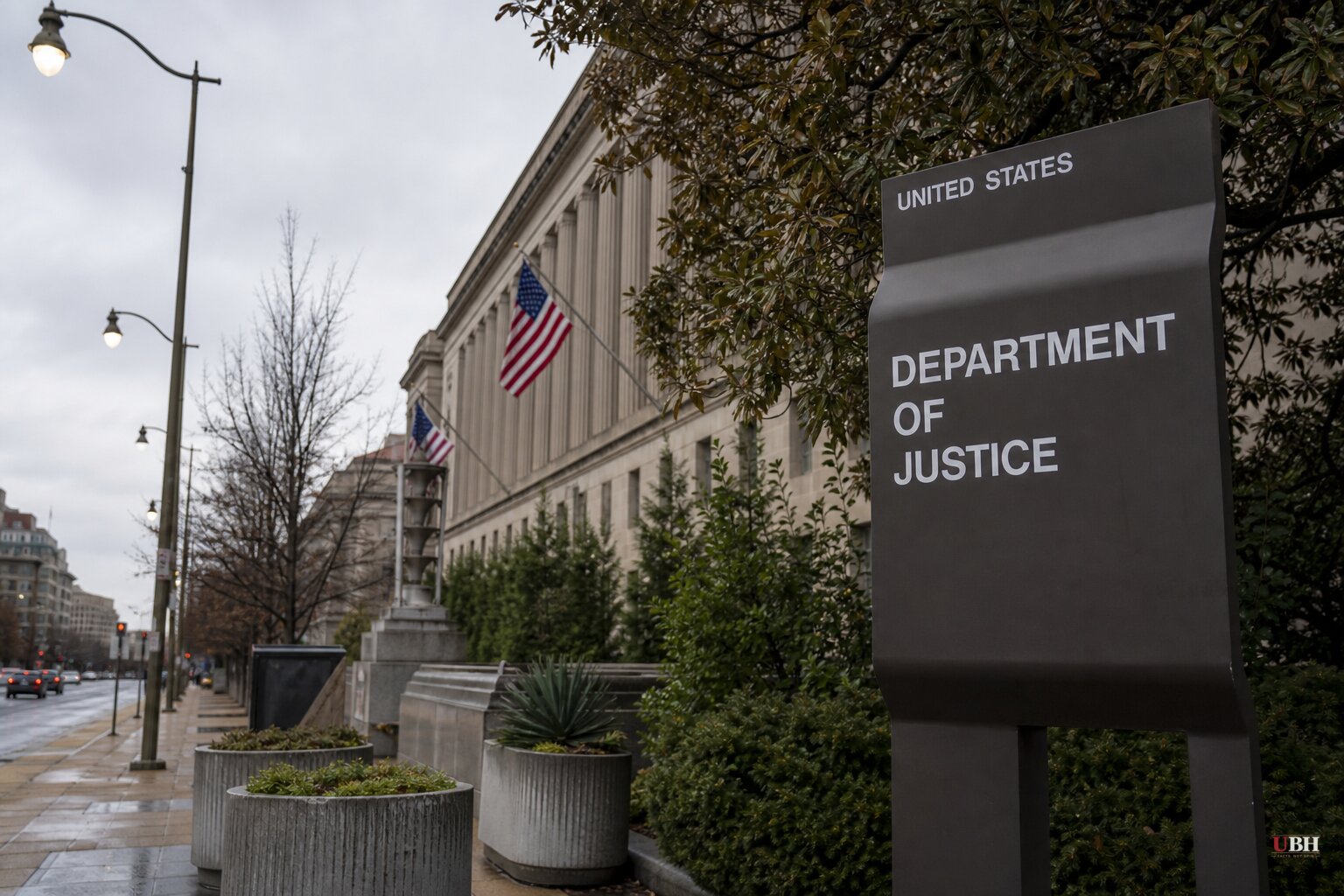
The Justice Department's Office of Legal Counsel issued an opinion dated September 1 that widens which state agencies must report people they know are in the country illegally to the Department of Homeland Security. States that don't comply risk losing federal welfare funding.
The opinion, signed by Deputy Assistant Attorney General Joshua Craddock, reverses a 1998 OLC opinion from the Clinton administration. That older opinion said only the specific state agencies that ran the Temporary Assistance for Needy Families (TANF) and Supplemental Security Income (SSI) programs had to share immigration information with federal authorities.
Under the new reading, the reporting duty attaches to the entire state government the moment a state accepts TANF or SSI funds. Motor vehicle departments, law enforcement agencies, and any other state office that comes across someone's immigration status could now be required to pass that information to DHS, according to the Washington Examiner.
Why DOJ says the old opinion was wrong
The legal fight is over one word: "State." Section 404 of the 1996 Personal Responsibility and Work Opportunity Reconciliation Act requires a participating "State" to report people it knows are unlawfully present. The 1998 opinion read "State" narrowly, as the specific agency running the benefit program. The new opinion says Congress defined "State" in the statute itself, to mean the 50 states, D.C., Puerto Rico, the U.S. Virgin Islands, Guam and American Samoa as whole sovereign units, according to Newsmax.
"Congress wrote this requirement plainly," said Assistant Attorney General T. Elliot Gaiser, who leads the Office of Legal Counsel. "When a state chooses to participate in TANF, it accepts the obligation to report illegal aliens in the United States. Tax dollars intended to help vulnerable Americans should not perversely encourage illegal entry into the United States, but rather should reinforce our laws and our borders."
Craddock, who wrote the opinion, framed it as a correction rather than a new mandate. "Our clarification does not impose new obligations on states," he said. "It simply restores the original meaning of the statute Congress enacted and ensures that DHS receives the information it is legally entitled to. States that accept TANF funding must abide by federal law, and failure to comply may lead to serious consequences, including loss of program funding."
What triggers the reporting duty, and how often
The opinion sets a broad standard for when a state "knows" someone is unlawfully present. A final deportation order isn't required. Knowledge can come from DHS itself notifying an agency, a person admitting unlawful entry with no other legal basis to stay, or government records showing expired legal status, per the Washington Examiner. States can't dodge the requirement by deliberately avoiding readily available information, the opinion says.
Participating states must submit the required information at least four times a year, and whenever federal immigration authorities ask for it, according to the Washington Examiner. Newsmax reports the duty attaches separately to TANF, SSI, and certain HUD public housing contracts, so HHS could cut off TANF grants without touching a state's SSI or housing funding.
Where the request came from, and the money at stake
Newsmax reports the Justice Department acted at the request of the Department of Health and Human Services, whose acting general counsel asked in June for the 1998 opinion to be reconsidered "to protect that program's availability to vulnerable Americans." Federal TANF grants exceed $16.4 billion a year, and all 50 states, D.C., and several U.S. territories participate in both programs, according to the DOJ. SSI's federal appropriation for fiscal year 2025 was about $62 million, per Newsmax, a much smaller pot but subject to the same rule. The opinion applies only going forward and does not penalize states for how they handled enrollments under the old 1998 standard, according to CNBC and the DOJ's own statement.
What's unresolved
No state has publicly announced a legal challenge as of this reporting. CNBC said it had requested comment from attorneys general in more than a dozen of the largest states on whether they intend to fight the new interpretation, and had not received responses by publication.
The Justice Department anticipated a fight anyway. Newsmax reports the opinion specifically addresses and rejects a potential Spending Clause challenge, arguing the reporting condition is closely enough tied to Congress's interest in keeping ineligible noncitizens off federal benefits to survive one. States that believe the broadened mandate oversteps federalism limits, or that fear it will discourage eligible U.S. citizen family members in mixed-status households from seeking benefits, have not yet made that case in court. Whether any state tests the opinion, and how quickly HHS moves to build the new four-times-a-year reporting requirement into TANF and SSI grant agreements, are the next things to watch.
Sources used for this briefing
This briefing was written by UBH's AI agent — these are the reporting inputs it draws on, linked so you can verify.


