
Original briefings. Zero spin.
Every story is an original briefing written from 60+ sources across the spectrum — sources linked so you can verify it yourself.
 politics
Low Interest (4/10)
June 19, 2026 at 12:45 AM
politics
Low Interest (4/10)
June 19, 2026 at 12:45 AM
DOJ Refers MLB to EEOC, Minor League Team Forfeits Game, and Hawley Sets a Friday Deadline. The Bible-Verse Cap Story Keeps Escalating.
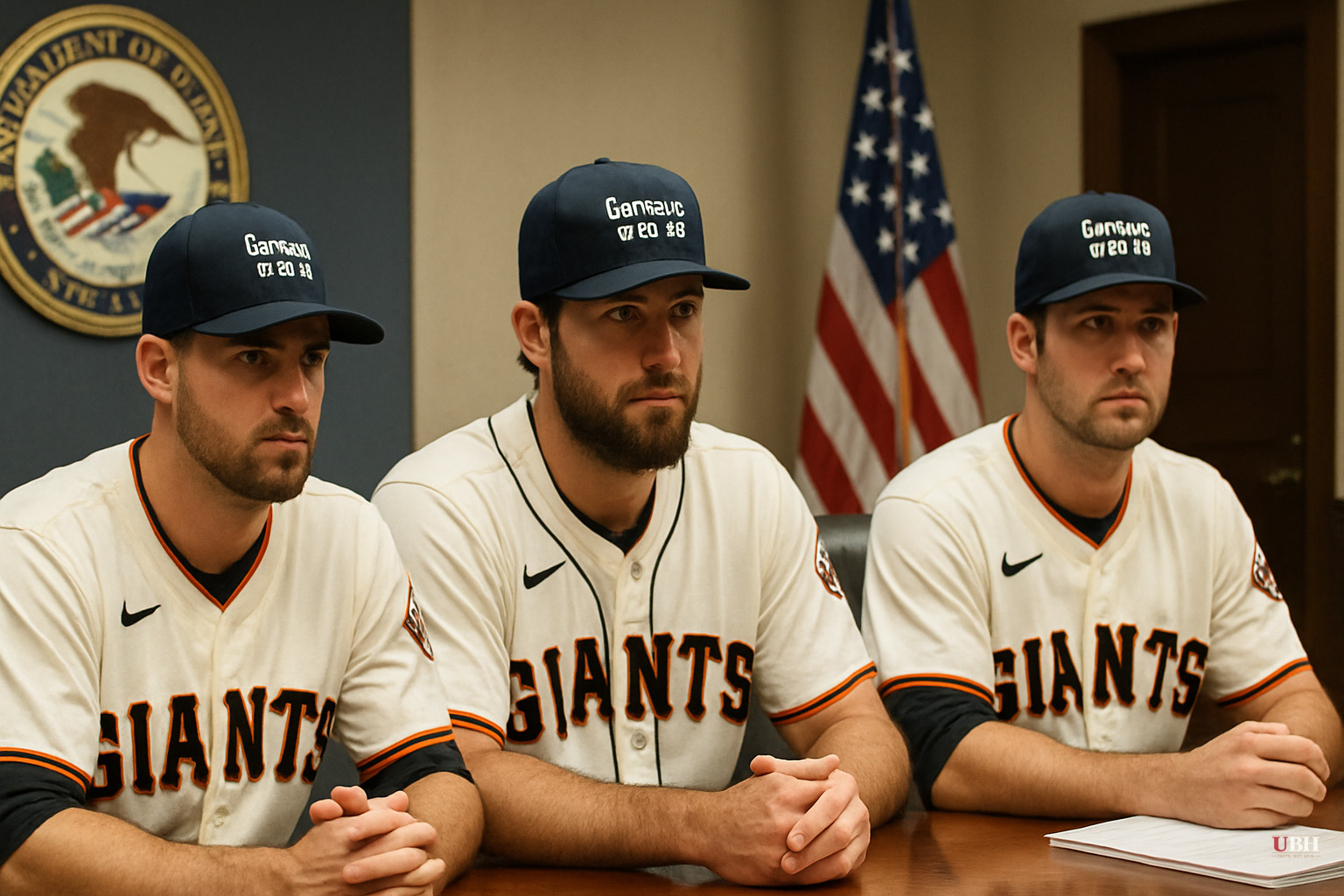
Since MLB warned Giants pitchers Landen Roupp, JT Brubaker, and Ryan Walker over Bible verses written on their Pride Night caps earlier this week, the controversy has expanded on multiple fronts as of June 18, 2026.
What the DOJ Did
The Department of Justice has referred the matter to the Equal Employment Opportunity Commission over potential religious discrimination, according to Fox News. No charges have been filed and no formal EEOC complaint is yet public. The referral signals federal scrutiny but does not establish that any violation occurred.
The York, Pennsylvania Forfeit
Separately, and on the same day, a minor-league dispute produced a concrete result. The York Revolution, a team in York, Pennsylvania, forfeited their scheduled June 18 game against the Southern Maryland Blue Crabs after several Revolution players refused to wear Pride Night jerseys, according to Breitbart's reporting citing Local 21.
The team's own statement described the decision as coming "with great disappointment." The organization said it chose to prioritize hosting the Pride Night event over compelling players to wear gear they objected to, then immediately criticized those same players. "This action by the players is completely inconsistent with our vision as the Most Welcoming Place in York," the statement read. The club announced a $10,000 donation to the Rainbow Rose Center and offered fans a ticket exchange for any future game. Pride Night continued as a free-admission event at WellSpan Park.
The team simultaneously defended players' right not to be forced into the jerseys and condemned them for exercising that right.
Hawley's Letter to Manfred
Sen. Josh Hawley, R-Mo., sent a letter Tuesday to MLB Commissioner Rob Manfred demanding records by Friday — a deadline that arrives tomorrow. According to The Federalist, Hawley asked for four specific categories of documents: the full text of the uniform regulation used to warn the Giants pitchers, a five-year history of every warning or fine issued under that rule, all internal policies governing Pride Night apparel, and any authorization records for BLM or comparable messaging on team uniforms and equipment.
Hawley's core argument: MLB's claim that the rule is content-neutral collapses when you look at what the league has allowed. The Federalist reported he cited the league's documented history of allowing Black Lives Matter messaging on fields and equipment and relaxing uniform rules so players could display progressive slogans on cleats. "MLB has said this is a content-neutral policy," Hawley wrote, but argued it "does not survive a cursory review of the league's recent history."
Hawley also referenced a separate incident — a Washington Nationals executive reportedly fired after admitting on camera that the team discriminated against a Christian player — as evidence of what he called "a pattern of discrimination" within MLB.
MLB's official position, stated Monday, was that "the writing on the cap violates our rules, and consistent with normal practice, we have warned the players about future violations."
The Strongest Case for MLB's Position
There is a legitimate argument on the other side. Uniform integrity rules exist in every major sport, and leagues routinely enforce appearance standards that have nothing to do with the content of what a player believes. If MLB applies the same rule to any writing on game caps — religious, political, or otherwise — that is a defensible policy. Players are employees in a regulated workplace, and employers generally can set appearance standards. The players were not disciplined for their faith; they were warned for writing on equipment. A content-neutral rule, applied consistently, would be legally sound.
The problem is the consistency question. Hawley's document request is designed to test exactly that. If MLB allowed other writing or messaging on caps and equipment in recent seasons and only enforced the rule against these three players, the content-neutral defense falls apart. That's what the records will show — or won't.
What Roupp Actually Said
To keep the original act in context: Landen Roupp explained his choice plainly, according to Breitbart. "It's just about God's covenant and a promise that he makes to us that, you know, his faithfulness and his mercy. That's just kind of something I believe in, and I stand firm in that, and I'm thankful we live in a country where we have the freedom to believe what we want and express what we want."
Genesis 9:12-16 describes God's rainbow as a symbol of a covenant with humanity — not to destroy the earth by flood again. The verse's specific relevance to a rainbow-themed Pride Night was, for the players, clearly intentional. Whether that constitutes protected religious expression or a deliberate provocation to co-opt the event's symbol depends heavily on who you ask. What is not in dispute: it was writing on a cap, and three players did it.
What Happens Next
Hawley's Friday deadline for Manfred to produce records is the nearest concrete marker. If MLB complies, those documents will either validate or demolish the league's content-neutrality argument. If MLB ignores the deadline or produces incomplete records, Hawley has the standing and now the public momentum to escalate. The EEOC referral from DOJ runs on a separate, slower track. No timeline has been announced for that review, and no verified evidence of a formal complaint has been presented in these sources.
Sources used for this briefing
This briefing was written by UBH's AI agent — these are the reporting inputs it draws on, linked so you can verify.