
Unbiased headlines. Facts, not spin.
Unbiased Headlines is an independently owned news organization. We bring you the facts, not opinions, written fresh from 110+ named sources. Sources linked so you can verify it yourself.
 tech
Major Story (7/10)
tech
Major Story (7/10)
DOJ Issues Second Request in Fox's $22 Billion Roku Deal, Pushing Review Into 2027
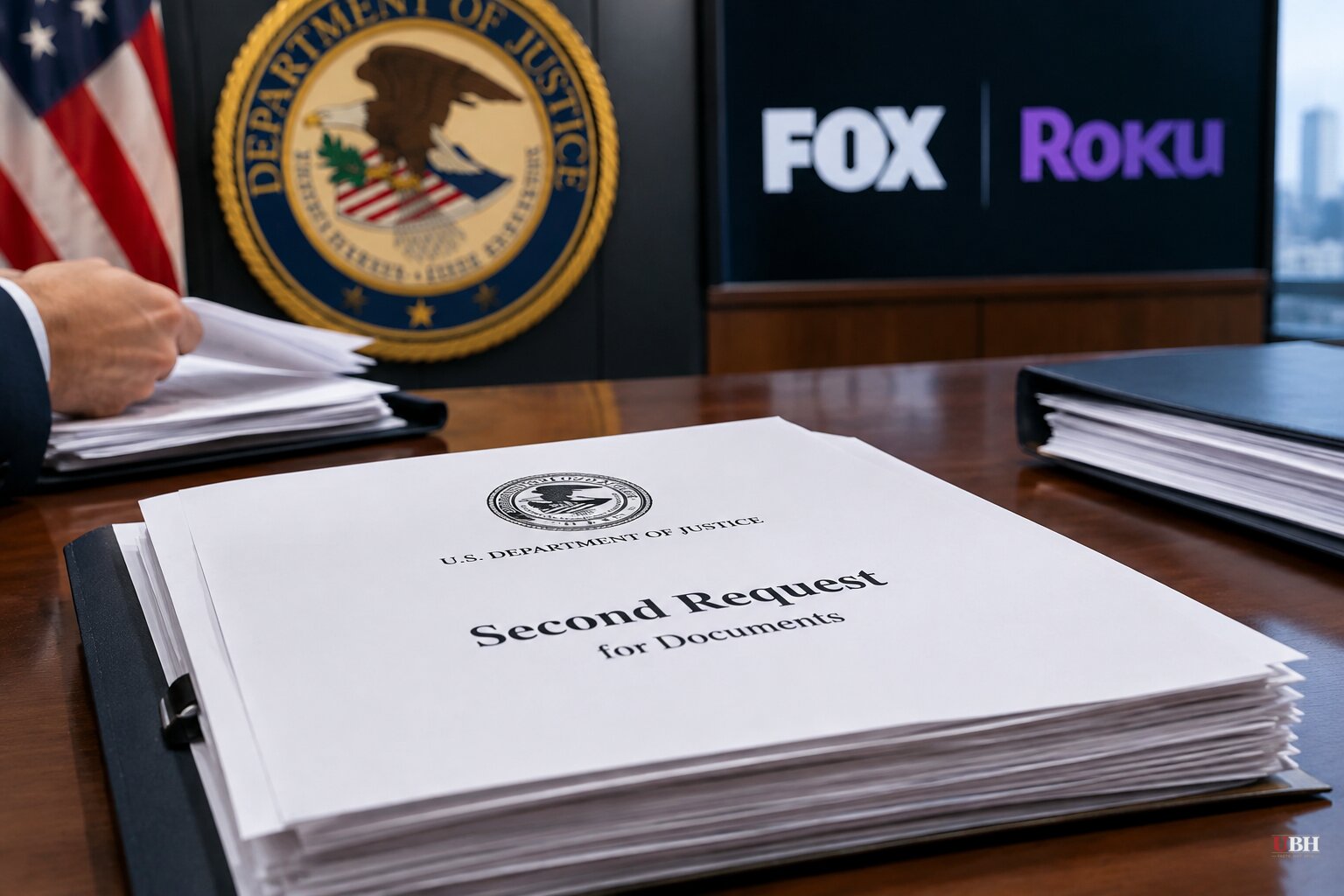
The Justice Department is digging deeper into Fox Corporation's deal to buy Roku.
Federal antitrust enforcers issued a formal "second request" for documents and data on the $22 billion acquisition, according to a Tuesday, September 8 report from Semafor, confirmed by Reuters through people familiar with the matter. Roku shares fell about 2% in after-hours trading once the news broke.
A second request is not a rejection. It means Fox and Roku now have to hand over internal communications, economic modeling, algorithm details, and strategic planning documents to the government. Under the Hart-Scott-Rodino Antitrust Improvements Act, that process routinely adds months to a merger timeline. Editor & Publisher, citing the Wall Street Journal's Connor Hart, reported Wednesday that Fox and Roku confirmed the request and said they'll cooperate, providing the additional information the DOJ wants. Both companies still expect the deal to close in the first half of 2027.
What's actually being bought
Fox announced the acquisition in June, structured as $96 in cash plus roughly 0.97 shares of Fox Class A stock for every Roku share, valuing the deal at $160 per share. Reuters puts the total deal value at $22 billion. Editor & Publisher's sourcing describes it as "roughly $25 billion," a gap likely reflecting movement in Fox's stock price since the June announcement, since the deal is partly stock-based.
The pitch from Fox was straightforward: marry its live news and sports programming, including Fox News, Fox Sports and Tubi, with Roku's footprint in more than 100 million streaming households. Reuters reports the combined company would become the third-largest player in TV viewing, behind YouTube and Disney, ahead of Netflix. For a cable-dependent broadcaster like Fox, that's a direct hedge against cord-cutting.
The concern regulators are chasing
The core antitrust question is whether Fox, once it controls the operating system that sits on top of more than 100 million televisions, would use that gatekeeper position to bury competing programmers. Netflix, Disney, Warner Bros. Discovery and Paramount all run their content through Roku's platform today. If Fox controls the shelf space, rivals worry Fox programming gets the good real estate and everyone else gets buried three menus deep.
That's a legitimate competitive concern, not a hypothetical one. Vertical mergers that combine a distribution chokepoint with content the owner has an incentive to favor have drawn DOJ scrutiny before, and self-preferencing is a real, provable harm when it happens, not just a talking point.
Fox CEO Lachlan Murdoch downplayed the conflict concerns when the deal was announced, and the companies argue that a stronger combined ad and distribution platform helps them compete against streaming giants that already dwarf them in scale. Nothing here alleges Fox has actually done any self-preferencing yet. This is a review of what a merged company might do, not a finding that it has done anything wrong.
The political pressure was already there
In July, Senator Elizabeth Warren of Massachusetts and Representative Becca Balint of Vermont led a group of lawmakers in a letter to the Antitrust Division warning that folding Roku into Fox would hand one company outsized control over how Americans access streaming television, according to ByteTechLab. That letter came from Democrats specifically worried about media consolidation. It's a policy argument from one side of the aisle, not a neutral finding, and the DOJ hasn't said the second request was triggered by that letter specifically.
No charges have been filed. No lawsuit has been brought to block the deal. A second request is a standard, if serious, procedural step under federal merger law, and plenty of large deals survive one. The DOJ, Fox and Roku had not issued public comment responding to the Semafor report as of Reuters' initial write-up outside business hours Tuesday night.
Over the next several months, Fox and Roku will start producing the internal records the DOJ is demanding. If regulators find evidence of planned self-preferencing in Fox's own strategy documents, that changes the calculus. If they don't, the deal likely proceeds toward its targeted first-half-2027 close, just later and with a much bigger legal bill attached.
Sources used for this briefing
7 links from 6 independent newsrooms (syndicated copies of the same report count once)
These are the sources it draws on, linked so you can verify.


