
Unbiased headlines. Facts, not spin.
Every story is an unbiased news briefing written from 110+ sources across the spectrum — sources linked so you can verify it yourself.
 politics
Notable (6/10)
June 20, 2026 at 06:48 AM
politics
Notable (6/10)
June 20, 2026 at 06:48 AM
DOJ Formally Investigates MLB for Religious Discrimination Over Bible-Verse Hat Discipline
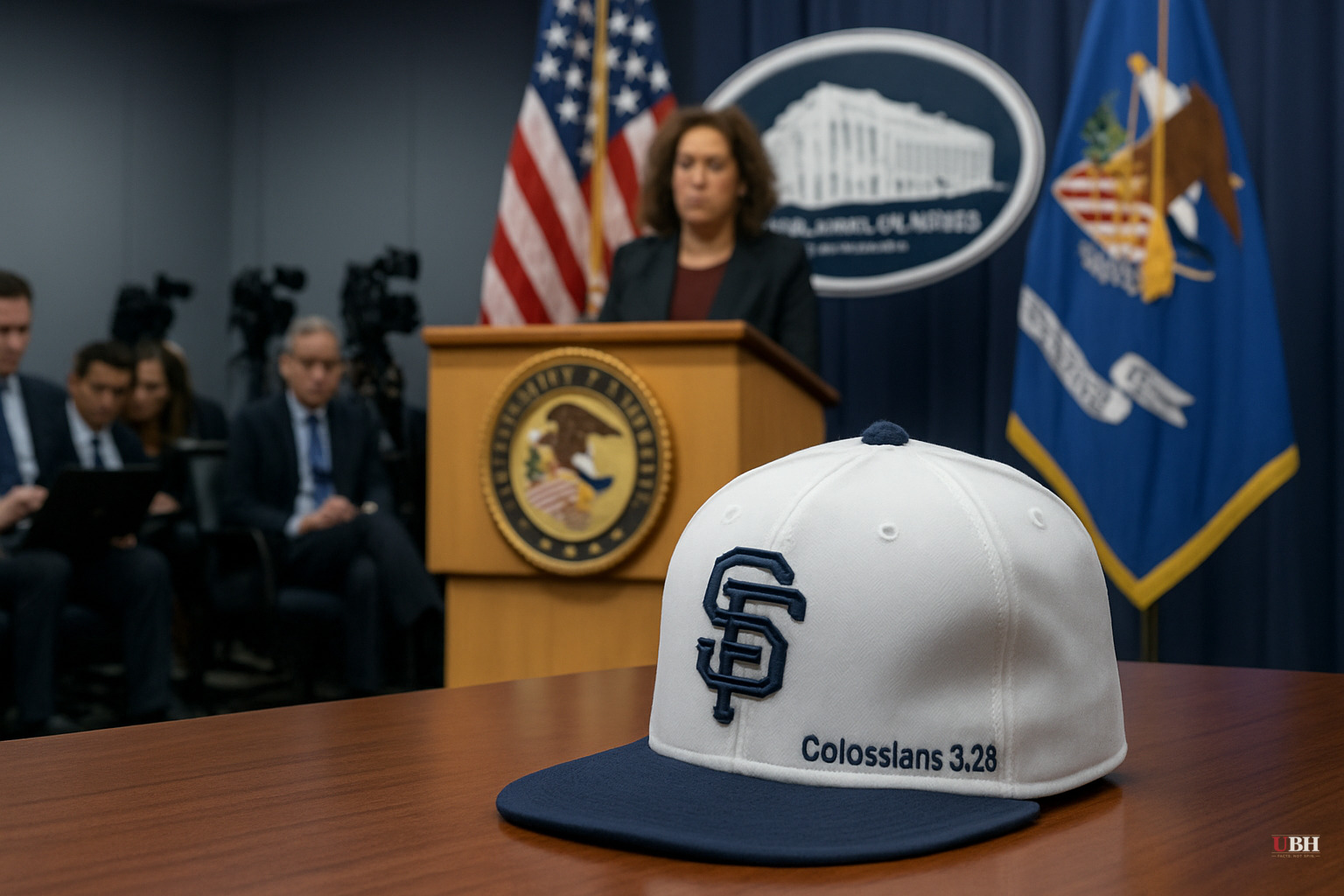
Since the DOJ's EEOC referral on June 18, covered in our previous reporting, the investigation has moved from a letter into a confirmed federal civil rights probe, with both the Justice Department and the EEOC now on record.
What the DOJ Actually Did
Assistant Attorney General Harmeet Dhillon sent a letter to MLB Commissioner Rob Manfred on June 18, informing him the league had been referred to the Equal Employment Opportunity Commission. The referral cites potential violations of Title VII of the Civil Rights Act, according to The Guardian, the Sacramento Bee, and The Independent.
Dhillon's legal argument is specific: employers are required under federal law to reasonably accommodate employees' religious objections to workplace requirements. Her letter states that MLB cannot "unreasonably burden" players with religious objections to acting as "the League's vehicle for pro-Pride messages."
The Players and What They Did
On June 12, Giants pitchers Landen Roupp, JT Brubaker, and Ryan Walker inscribed Bible verses on the inside or front of their Pride Night caps. Pitcher Sam Hentges declined to wear the themed hat entirely. The Giants lost to the Chicago Cubs 5-1 that night.
Roupp wrote "Gen 9:12-16" in silver marker on his cap, a Genesis passage that, according to The Independent, is sometimes cited by Christians to argue that the rainbow symbol predates its association with LGBTQ pride. Roupp said publicly that the choice "was not malicious" and that there was "no hate at all." Hentges said he did not appreciate being told to wear a cap for a cause he did not "morally support."
MLB issued a warning to the players, stating that writing on caps "violates our rules" and that the action was "consistent with normal practice." The league clarified, according to The Independent, that its concern was the physical modification of the cap, not the content of any message.
The Double-Standard Argument
Dhillon's letter specifically calls out MLB's decision to allow players to wear Black Lives Matter patches on uniforms in 2020, framing it as a "double standard." The argument: if MLB permits uniform modifications for one set of social causes, it can't discipline players for religiously motivated modifications without opening itself to a discrimination claim.
If MLB enforced the no-modification rule uniformly and consistently across all messages, the religious accommodation argument would be considerably weaker. But if BLM patches were permitted as an exception and Bible verses were not, that asymmetry is legally significant. MLB has not, as of June 20, publicly addressed the BLM comparison.
The Opposing Case, Stated Fairly
Critics of the DOJ probe argue that this is federal power being weaponized to settle a culture-war grievance, not a genuine civil rights emergency. Title VII religious accommodation typically requires an employee to actually request an accommodation and demonstrate a sincere religious belief that conflicts with a work requirement. It is not automatic. MLB's position is that the rule applies to all uniform modifications equally, and the league did not fire or suspend anyone; it issued a warning. A warning for a first-time rule violation is exactly what any employer would do. Using DOJ resources to escalate a uniform-policy warning into a federal investigation sets a precedent that could politicize every workplace dress-code dispute.
The EEOC's own chair, Andrea Lucas, stopped short of confirming any active charge exists, citing Title VII confidentiality requirements. The agency's involvement is real, but its scope and outcome are unknown.
What the EEOC Chair Actually Said
Andrea Lucas shared Dhillon's letter on X but was precise in her language: the EEOC "cannot confirm or deny any potential action, or the existence of any charge or investigation, absent a court filing or an agreed-upon public resolution," according to The Independent. She added that the agency is "committed to protecting the religious liberty of all workers."
No charges have been formally filed as of June 20, 2026, and no court filing has been made public.
A Note on Coverage
The Guardian framed Dhillon's letter as the DOJ having "launched" an investigation, and the Sacramento Bee and The Independent used similar language. This framing slightly overstates where things stand: a referral to the EEOC is not the same as an active EEOC charge or a DOJ lawsuit. The EEOC chair herself made that distinction. A referral to the EEOC and a notice to Manfred have been issued. The formal investigative phase, if it begins, is the EEOC's to conduct.
Where Things Stand
The unresolved legal question is whether MLB's uniform policy was applied consistently across all message types or selectively enforced. That record — what MLB permitted in 2020, what exceptions it has granted, and whether any player ever formally requested a religious accommodation — is exactly what an EEOC investigation would examine. Until that record is disclosed or MLB responds directly to the BLM comparison, the legal outcome is genuinely open.
Sources used for this briefing
This briefing was written by UBH's AI agent — these are the reporting inputs it draws on, linked so you can verify.


