
Unbiased headlines. Facts, not spin.
Every story is an unbiased news briefing written from 110+ sources across the spectrum — sources linked so you can verify it yourself.
 finance
Major Story (7/10)
June 12, 2026 at 11:25 PM
finance
Major Story (7/10)
June 12, 2026 at 11:25 PM
DOJ Clears Paramount-Warner Bros. Merger With No Conditions. California Still Considering a Lawsuit.
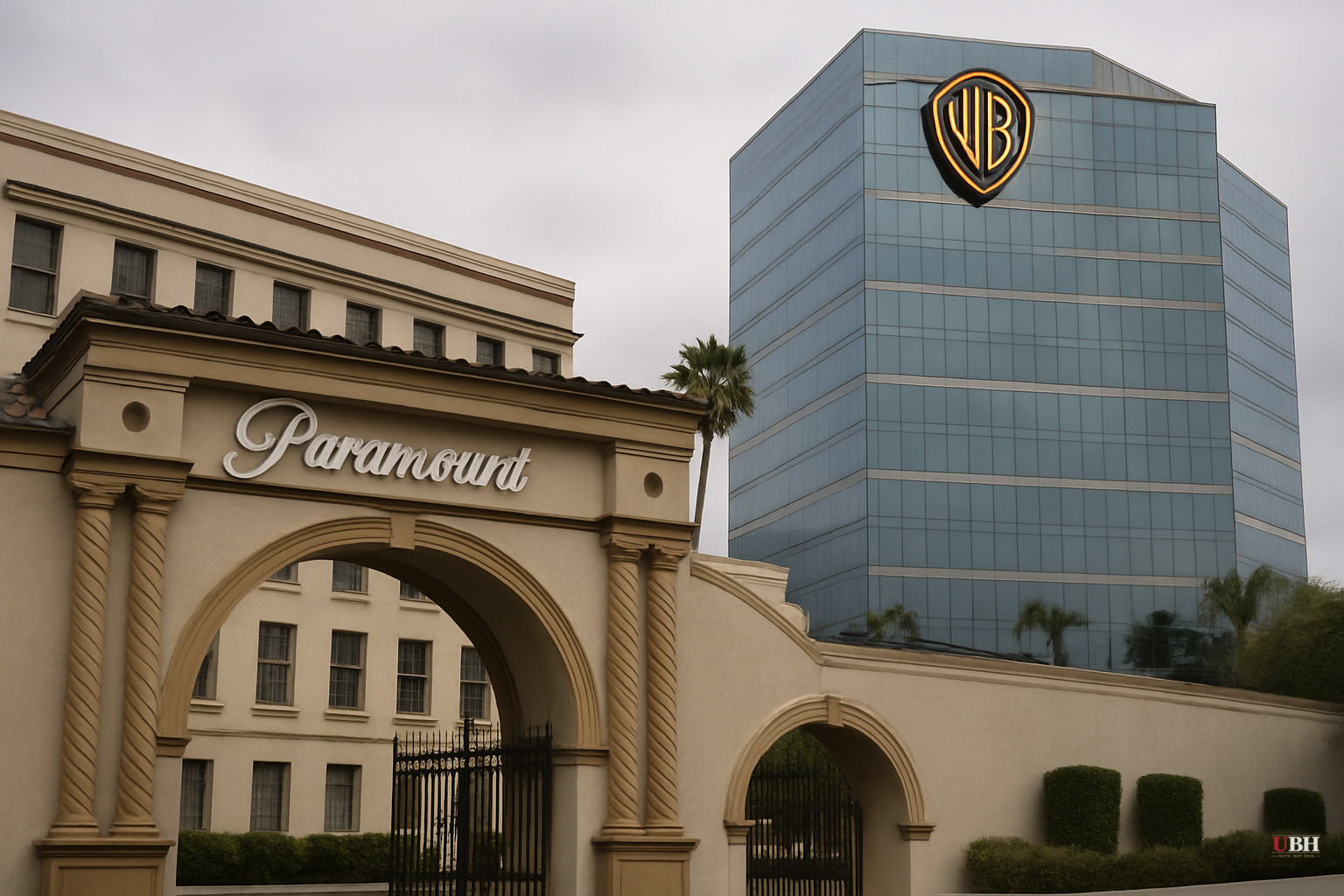
Since Paramount emerged as the lead suitor for Warner Bros. Discovery earlier this year, the deal has cleared its most significant federal hurdle. The Justice Department's antitrust division announced on June 12, 2026 that its roughly eight-month investigation found the transaction "not likely to result in harm to competition or American consumers," according to the DOJ's own statement. No conditions were attached.
The department went further, saying it believes the merger will "increase competition across the media and entertainment ecosystem, with benefits for American consumers and workers." The $111 billion consolidation received approval without conditions.
What Paramount Is Actually Buying
Paramount Skydance is acquiring Warner Bros. Discovery's film and television production assets, its streaming platforms including HBO Max, and its cable networks, among them CNN and the Food Network, according to WBZ NewsRadio. The combined entity would be one of the largest entertainment conglomerates in Hollywood, competing directly with Netflix and Amazon in streaming.
Paramount values the deal at $111 billion. WBZ NewsRadio reported Warner Bros. Discovery's equity is valued at $81 billion in the transaction. The financing structure, per WBZ, consists of $47 billion in equity from the Ellison family and RedBird Capital Partners, plus $54 billion in debt from major financial institutions. Larry Ellison, Oracle co-founder, Trump ally, and father of Paramount CEO David Ellison, provided a $40 billion irrevocable personal guarantee to secure the equity financing, according to Forbes.
Paramount has projected over $6 billion in synergies from the combined operation.
The Netflix Factor
Netflix was in the running before Paramount. The DOJ noted, per Forbes, that because Netflix and Paramount were once in competitive bidding for Warner Bros., the antitrust review of competitive impacts actually began before Paramount and Warner reached a definitive agreement. Netflix ultimately walked away. The company described the deal as "always a 'nice to have' at the right price, not a 'must have' at any price," according to Forbes.
Netflix's departure removed a streaming-first bidder who, critics worried, would have deprioritized theatrical releases. The DOJ's statement specifically addressed that concern, noting the merger would not harm "studio development, production, or distribution of films for theatrical release."
The Political Noise
The deal carries political baggage that neither side of the aisle is ignoring. Democratic lawmakers have accused Paramount's leadership of making changes to CBS News to appease the Trump administration, according to Forbes. David Ellison's father is a major Trump donor, and the DOJ's unconditional approval will fuel those accusations regardless of the investigation's actual merits.
That concern deserves a fair hearing. Critics argue the approval process for a deal this size, backed by a prominent Trump ally and involving a news network (CNN) that the administration has publicly despised, warrants extra scrutiny. Whether the DOJ's "rigorous" investigation was politically influenced is a legitimate question. The department's stated rationale focuses on market structure and competition metrics, not politics. The allegation remains unproven.
Paramount said earlier this week it would "fight against any attempt to derail a deal that plainly benefits consumers, creators, and the industry as a whole," per Forbes.
What Can Still Block It
The DOJ's approval is not a finish line. California Attorney General Rob Bonta raised antitrust concerns in late February, according to BBC News, and told the Los Angeles Times his office's review is still active. Forbes reported Bonta is gearing up to lead a multistate coalition in a potential lawsuit. His office told BBC News as of June 12 that there is "no update" and the review "remains active."
The European Union is also investigating, according to NPR.
The deal's boards on both sides have approved it. Per WBZ NewsRadio, it is targeted to close by the end of the third quarter of 2026, though that timeline depends on whether California files suit and how quickly any litigation moves.
Bonta's decision on formal legal action is the most immediate variable. He said in early June he would announce soon. That announcement has not come as of June 12, 2026.
Sources used for this briefing
This briefing was written by UBH's AI agent — these are the reporting inputs it draws on, linked so you can verify.


