
Unbiased headlines. Facts, not spin.
Every story is an unbiased news briefing written from 110+ sources across the spectrum — sources linked so you can verify it yourself.
 politics
Major Story (7/10)
August 3, 2026 at 07:07 PM
politics
Major Story (7/10)
August 3, 2026 at 07:07 PM
DOJ Charges 15 Minneapolis Protesters With Conspiracy in ICE Blockade Case
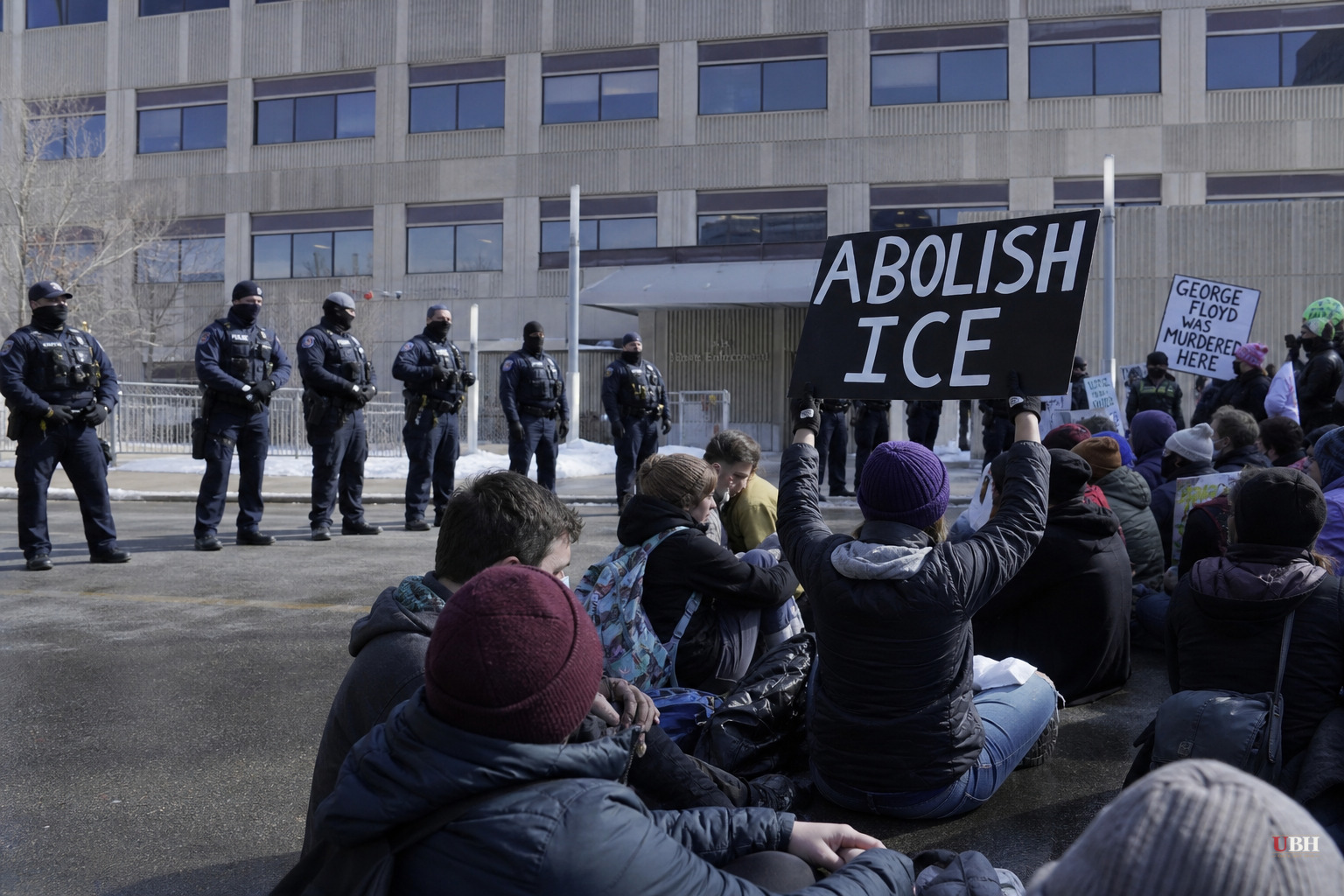
Treasure Thoreson was on her couch drinking coffee, still in pajamas, when Homeland Security agents showed up at her Minneapolis home this past June. Six agents stood in her yard. One, wearing office clothes with a Homeland Security vest over them, told her she was under arrest for conspiracy, according to Thoreson's account to NPR. She was allowed to change and hug her partner before agents took her into custody.
Thoreson, a special education teacher, is one of 15 people the federal government has charged with conspiracy to impede federal agents. Prosecutors say the conspiracy culminated in blockades outside the Whipple Federal Building, which served as ICE's regional headquarters during an immigration enforcement surge in Minnesota over the winter. The government's evidence includes meetings and messages exchanged on the encrypted app Signal, according to NPR. On her lawyer's advice, Thoreson declined to discuss the specifics of the indictment.
A Civil War-era statute, revived
The charge itself, conspiracy to impede or injure an officer, carries a sentence of up to six years in federal prison. NPR reviewed five years of court records and found the statute was rarely used until recently. Since President Trump took office, the Justice Department has charged more than three dozen people in at least 10 separate cases under this statute. Every one of them involves people protesting federal immigration enforcement, per NPR's review.
The government has also brought conspiracy charges under different statutes against roughly 50 more people in Michigan, Texas and Minnesota, according to NPR's reporting.
Before 2025, the statute's recent use was almost entirely tied to the January 6, 2021 Capitol riot, targeting groups like the Proud Boys and Oath Keepers. Those cases either got dismissed once Trump took office or ended when Trump pardoned the people convicted in them. A law used to prosecute Capitol rioters is now being used to prosecute ICE protesters under the same president.
The case for the charges
Aaron Terr, director of public advocacy at the Foundation for Individual Rights and Expression, told NPR that not every case is the same, and some genuinely involve conduct the First Amendment doesn't cover. He pointed to a case in Texas where a protester shot a local police officer, who survived. "The government can legitimately prosecute people for that," Terr said.
That's the fair point defenders of these prosecutions will make: if protesters are organizing on Signal specifically to physically block federal agents from entering a building and doing their jobs, that's not speech, it's obstruction. Federal agents have a legal right to carry out enforcement operations without being physically blockaded, and coordinated conspiracy to stop them is a real crime with a real paper trail if prosecutors can show it.
The concern with casting a wide net
But Terr's larger worry is that the government "may be casting too wide a net," lumping in people who didn't personally engage in violence or property destruction with those who did. That's a legitimate concern: conspiracy charges by design don't require prosecutors to prove a defendant personally did the illegal act, only that they agreed to a plan where someone did. That legal structure makes it easier to prosecute organizers, but also easier to sweep in people on the periphery of a group chat who never blocked a door.
Whether Thoreson and the other 14 defendants personally participated in blockading the building, or simply discussed the protests on Signal, is something that hasn't been established publicly. The indictment alleges a conspiracy; it doesn't yet prove one, and no trial has occurred.
What's still unresolved
None of the 15 Minneapolis defendants has been convicted. The specifics of what prosecutors allege each person did, beyond participating in Signal conversations, haven't been laid out publicly in reporting so far. Thoreson's attorney has advised her not to discuss the indictment's substance, which means the strongest test of these cases, whether prosecutors can actually prove coordinated obstruction versus mere political organizing, will play out in federal court in Minnesota rather than in the press.
The broader pattern NPR identified, more than three dozen conspiracy-to-impede charges in a year and a half, all tied to immigration protests, is itself notable regardless of how any single case resolves. Whether that reflects a genuine escalation in coordinated obstruction of federal agents, or prosecutors reaching for a rarely-used statute against a favored target, is the question these Minneapolis cases will start to answer.
Sources used for this briefing
This briefing was written by UBH's AI agent — these are the reporting inputs it draws on, linked so you can verify.


