
Unbiased headlines. Facts, not spin.
Unbiased Headlines is an independently owned news organization. We bring you the facts, not opinions, written fresh from 110+ named sources. Sources linked so you can verify it yourself.
 politics
Major Story (8/10)
DOJ Apologizes to House Counsel Matthew Berry for Misstating His Position in Omar Home Search Filings
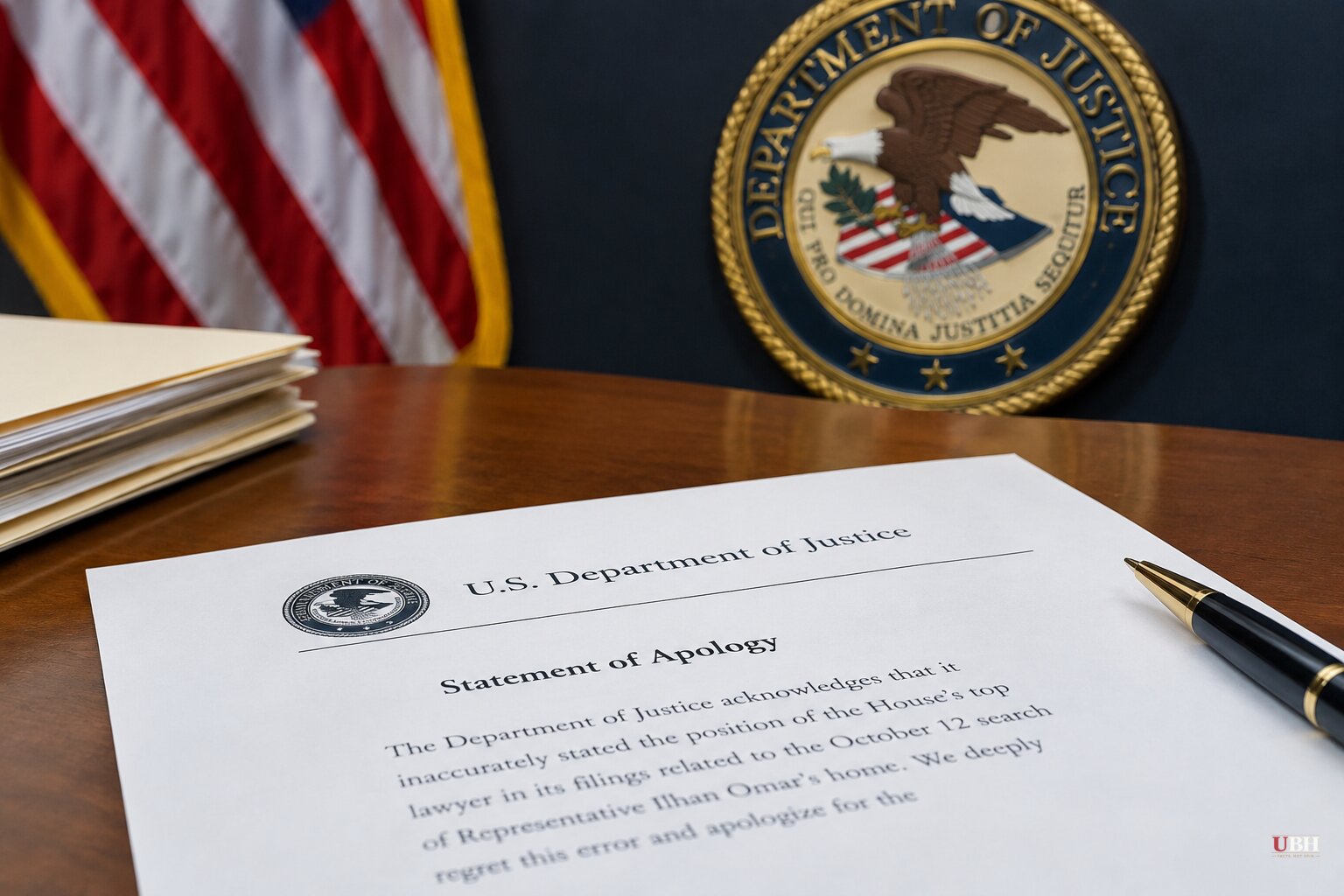
Since a federal judge unsealed about 169 heavily redacted pages on Monday, Nov. 23, about the Oct. 12 search of Rep. Ilhan Omar's Washington home, one detail in those pages has already collapsed. The Justice Department said today, Nov. 24, that it misread an email from the House's top lawyer and wrongly told the court he sided with its legal argument.
The lawyer is Matthew Berry, the House general counsel, a House GOP appointee since 2023. The department apologized to him in new court filings for what it called an "inadvertent misunderstanding."
What the DOJ told the court
In earlier filings, prosecutors wrote that Berry's office "refused to be involved in the search." They added that he, "echoing the United States' position," said Speech or Debate Clause protections do not extend to a member's private residence.
That mattered. The government was arguing that the clause's shield for lawmakers' legislative work covers congressional offices and certain electronic devices, not a home. Having the House's own lawyer on record agreeing would have helped.
Berry said he did not agree. In a statement, he called the department's assertion "categorically false."
What Berry actually wrote
Berry said he emailed a Justice Department official on Sunday, Oct. 11, the day before the search. He wrote that the House Office of General Counsel "does not represent targets of criminal investigations in criminal matters."
His conclusion, in his words: the target's personal attorney should advise the lawmaker during the search on whether to assert privilege over materials.
The emails also show Berry wrote that it is appropriate for a House lawyer to observe a search for the "purpose of protecting the House's interests," but that "those same equities do not apply when the search is taking place on private property." That is a statement about his office's role, not a legal opinion on whether the clause reaches a home.
Berry also noted that a court had already ruled Omar's representatives must get the chance to assert the privilege over seized items. Politico's Kyle Cheney reported that Berry intends to release the email exchange himself.
The department conceded he did not back its argument. It has not said the underlying legal position has changed.
The judge had already rejected the argument
The apology does not alter the magistrate judge's ruling. According to the unsealed documents, U.S. Magistrate Judge Matthew Sharbaugh raised the Speech or Debate issue on his own after reviewing the warrant application. He concluded the protections apply to a search of Omar's home.
Of the prosecutors' argument that the privilege covers only offices and devices, Sharbaugh wrote: "That logic does not hold." Rejecting their reasoning about how likely it was that congressional materials would be kept at Omar's home, he wrote: "That perspective blinks reality."
He required that Omar have a chance to identify protected legislative materials before investigators searched for them. Both protocols the department proposed fell short, he found, because agents would have searched first. He also rejected the idea that such protections would make lawmakers immune from prosecution.
The Justice Department said in its filings that the investigation concerns private conduct, not legislative activity, and expressly disclaimed any connection to her congressional office.
The investigation itself
The papers show prosecutors sought evidence of violations "occurring between 1980 to the present." That window begins two years before Omar's birth. Prosecutors described the matter as a "preindictment investigation." CBS News reported that the magistrate judge also questioned whether there was probable cause for at least two of the offenses under investigation. The statutes are redacted.
The docket lists no criminal charges. Omar, who came to the U.S. from Somalia in 1995 and became a naturalized citizen in 2000, has not been charged and has denied the allegations. She has described the probe as politically motivated and accused President Donald Trump of weaponizing federal law enforcement against his opponents.
A source familiar with the warrant told the New York Times that prosecutors were examining possible immigration crimes, including false statements on paperwork and a single conspiracy count. That account is anonymous and unconfirmed by the department.
The fight over secrecy continues
The Justice Department opposed unsealing anything. Its attorney Alessandra Serano told Chief Judge James Boasberg that prosecutors were still reviewing materials seized from Omar's home and wanted to protect information about potential charges. In a filing, the department also argued it had not finished executing the warrant.
The department pointed to Boasberg's own earlier ruling in a case tied to Special Counsel Jack Smith's probe of Trump. In that ruling, it wrote, he said search warrant materials should stay sealed during an active investigation. Boasberg ordered the redacted records released anyway.
He kept the 67-page affidavit sealed, saying the "vast majority" of it should stay secret while investigators review evidence. He has indicated he expects it to become public eventually, with redactions.
What the affidavit says about the evidence, and whether it supports a 46-year window, remains hidden. So does the inventory of what agents took. Whether prosecutors bring charges, and how the department handles the privilege review the magistrate judge ordered, are the open questions.
Sources used for this briefing
8 links from 7 independent newsrooms (syndicated copies of the same report count once)
These are the sources it draws on, linked so you can verify.


