
Unbiased headlines. Facts, not spin.
Unbiased Headlines is an independently owned news organization. We bring you the facts, not opinions, written fresh from 110+ named sources. Sources linked so you can verify it yourself.
 politics
Major Story (7/10)
Magistrate Judge Says DOJ Rushed Charges Against Ex-FBI Officials to Appease Trump, in 48-Page Opinion
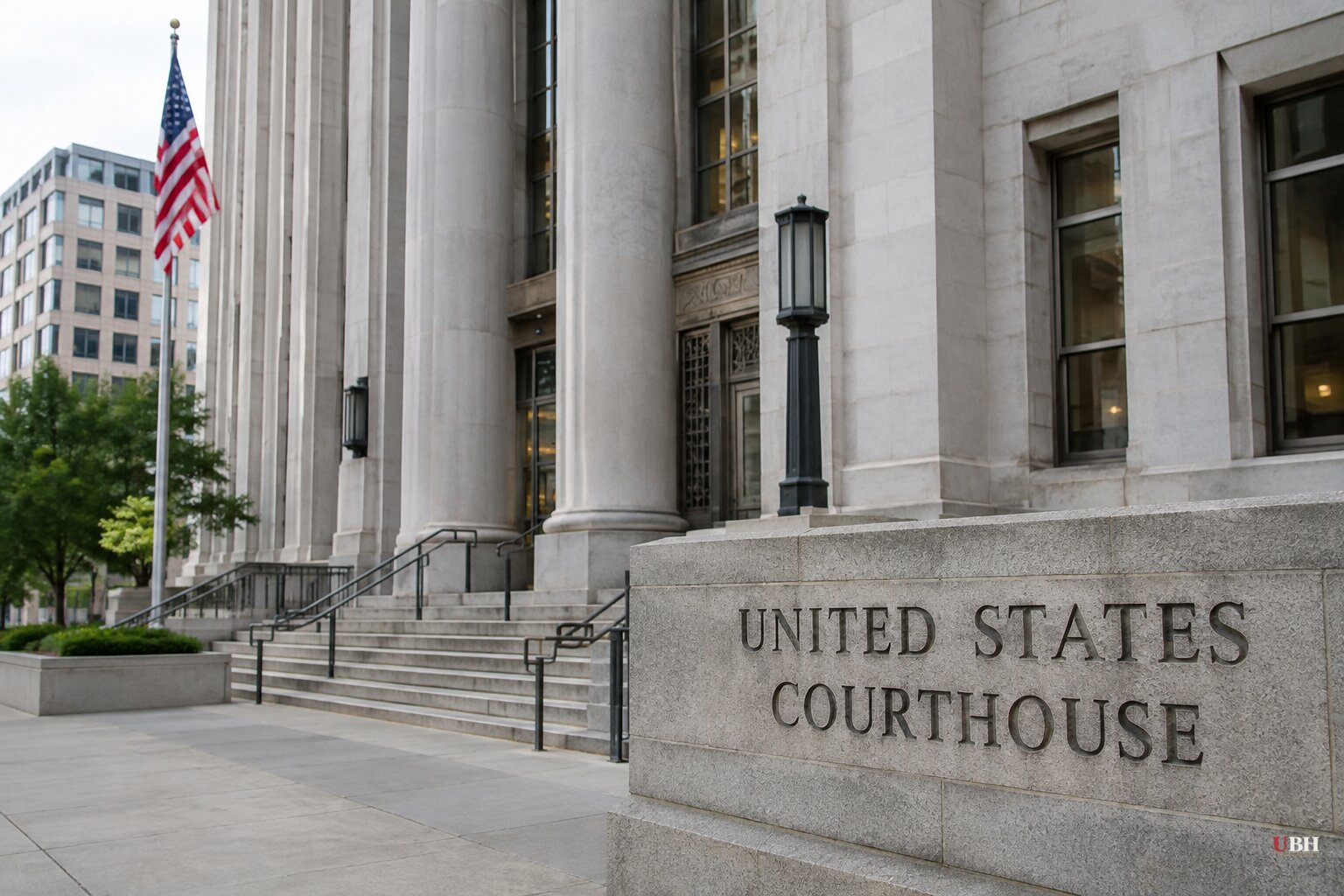
A federal magistrate judge has put in writing what he first said from the bench: the Justice Department's case against two former FBI officials was rushed, error-ridden and driven by politics, not law.
U.S. Magistrate Judge Zia Faruqui released a 48-page opinion Tuesday, Nov. 24. It explains his Nov. 2 ruling dismissing charges against Nikki Floris and Bradley Benavides. Prosecutors accused each of one count of making false statements to Congress in 2023 about the FBI's handling of Hunter Biden-related matters. Faruqui found the government had not established probable cause.
The timeline
The opinion lays out a fast sequence. In a July 16 national address, Trump directed the FBI to investigate and charge bureau staff over perceived slights tied to the 2020 election, according to the opinion. The next day, FBI Director Kash Patel ordered the bureau's Kansas City office to investigate.
Patel announced the charges last month. The case was not brought before a grand jury. After that route was not used, prosecutors went to a preliminary hearing, where Faruqui found they failed to show probable cause.
The alleged false statements were three years old. Faruqui noted there was no looming legal deadline and no sign the two would flee.
"There was no date of legal significance looming that necessitated the urgency of a complaint," he wrote. "However, there was a date on the calendar that cannot be ignored: the midterm elections."
What the judge found
Faruqui cited Justice Department Manual § 9-85.500, which bars prosecutors and agents from selecting "the timing of any action . . . for the purpose of affecting any election, or for the purpose of giving an advantage or disadvantage to any candidate or political party."
"Recent high-profile matters the government has brought in this court alone display a deliberate disregard of § 9-85.500," he wrote. "None more so than this case."
He called it "a case which was so rushed that the investigation and Complaint were full of mistakes." On motive, he was blunt: "The motive for [the rush to charge] is clear: to appease President Trump in his campaign of retribution against the FBI and to score cheap political points to impact the midterm elections."
That is the judge's finding. It is not the result of a trial, and no sworn testimony from the officials who made the charging decisions has tested it in a courtroom.
A statute that cuts both ways
The charge itself, making false statements to a federal official, is the part conservatives have long had reason to worry about. Faruqui noted it can apply to "virtually any statement an individual makes to virtually any federal government official — even when the individual making the statement is not under oath."
"This risk is most acute when the government weaponizes [such prosecutions] against its perceived enemies," he wrote. "This risk is not theoretical. It is an unprecedented reality now before this Court."
He also said: "For years, the administration has treated the weaponization of law enforcement like a horror movie villain coming for them. Now the threat is finally real. Only the call is coming from inside the house -- the White House."
Trump and his allies have spent years alleging a "deep state" plot inside the FBI to suppress allegations of corruption involving Joe Biden and his family. Floris had drawn scrutiny from Republican members of Congress and other Trump allies over recently declassified emails in which she discussed her intelligence work. The case stemmed from an investigation into the now-defunct FBI Foreign Influence Task Force, which was meant to counter foreign interference in the 2020 election.
Those are real grievances with a long paper trail. They are also the same grievances Republicans raised when they said the Justice Department should not be a political weapon. The standard does not change depending on who sits in the Oval Office.
Faruqui argued the cost goes beyond two defendants. "If a high-profile case like this is so poorly executed, what can the public expect in the run-of-the-mill case with far less resources and oversight?" he wrote.
He added that this is not an isolated failure: "This court has seen a line of botched, politicized cases where the government has rushed to charge cases, only to have them fall apart." He tied the pattern to prosecutions brought under the U.S. Attorney's Office for the District of Columbia during Trump's second term.
Other Trump cases moving this week
Trump's legal calendar is crowded beyond this ruling.
On Monday, Nov. 23, a Second Circuit panel of Chief Judge Raymond Lohier and Judges John Walker and José Cabranes vacated U.S. District Judge Alvin Hellerstein's Aug. 28 order. That order had denied Trump permission to file a second notice of removal, which would move his 34-count New York falsifying-business-records case from state to federal court. The panel ordered the lower court to ask state courts to pause proceedings while the request is considered. It said a full opinion will follow.
Hellerstein died Oct. 28 at 92, so a different district judge will take the matter. Trump's lawyers argue prosecutors at his 2024 trial improperly used evidence of official presidential acts. Hellerstein had ruled that the payments to Stephanie Clifford were "private, unofficial acts, outside the bounds of executive authority." The Second Circuit said it could not be confident the district court adequately weighed the "good cause" question.
Separately, U.S. District Judge Jeffrey T. Kuntz rejected the BBC's bid to dismiss Trump's defamation suit over a documentary that spliced two parts of his Jan. 6, 2021 speech. Kuntz tossed Trump's claim under a Florida consumer protection law. Trump has sought at least $5 billion on each claim.
Kuntz wrote that the edit "was not trimming around the edges but creating something different than what was stated in the speech." He left damages for "another day." A BBC spokesperson said the broadcaster was surprised but respects the court's authority. The BBC has apologized for the documentary but denies causing Trump real injury. Trump called the ruling "A Huge Victory" on Truth Social.
Trump now faces a Dec. 11 deadline to sit for a deposition in the BBC case, which a magistrate judge ordered last month. The court warned that missing it could bring sanctions, including dismissal of his suit.
Sources used for this briefing
7 links from 7 independent newsrooms (syndicated copies of the same report count once)
These are the sources it draws on, linked so you can verify.


