
Unbiased headlines. Facts, not spin.
Every story is an unbiased news briefing written from 110+ sources across the spectrum — sources linked so you can verify it yourself.
 economy
Major Story (7/10)
June 25, 2026 at 11:20 PM
economy
Major Story (7/10)
June 25, 2026 at 11:20 PM
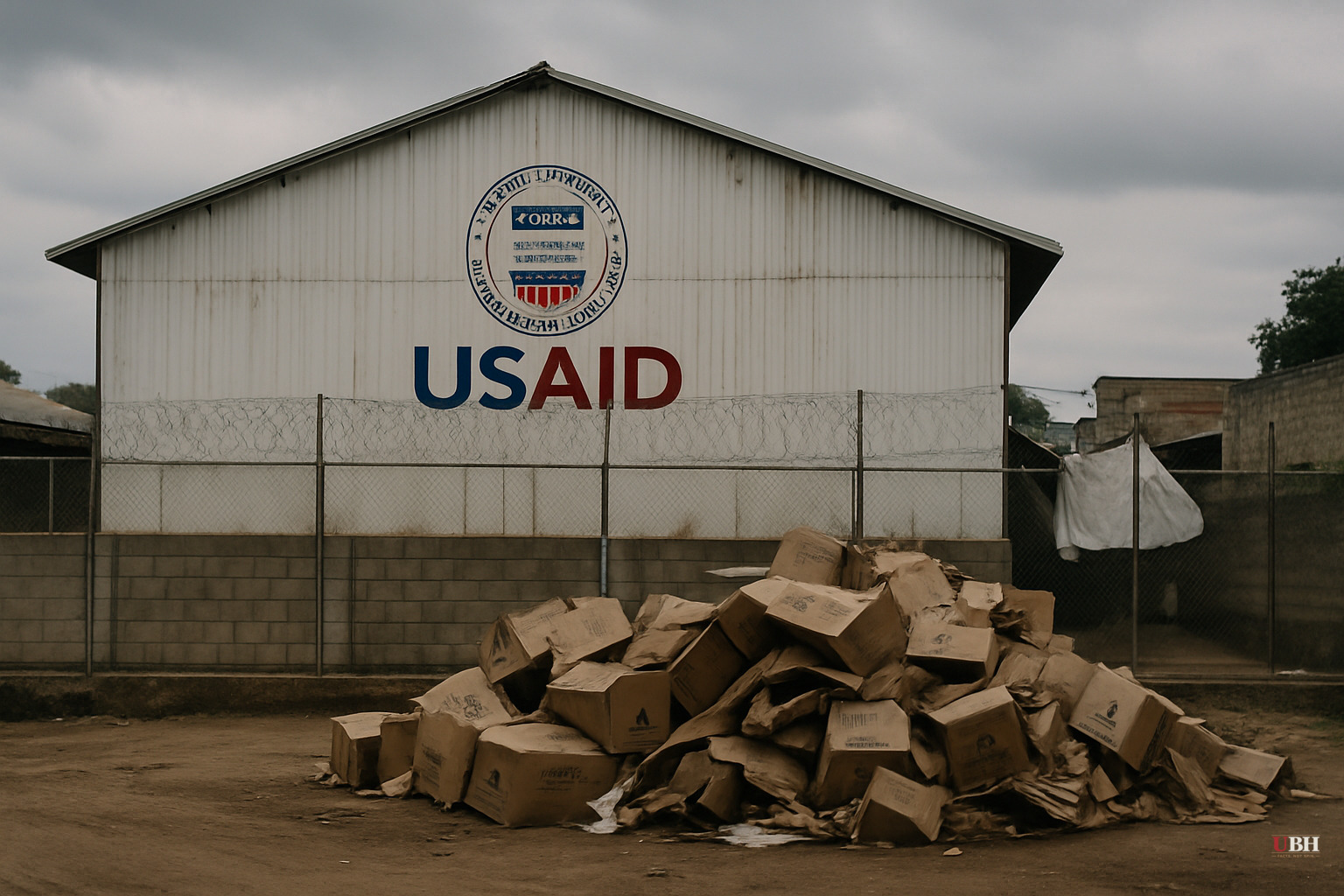
DOGE Dismantled USAID in Early 2025. Estimating the Death Toll Is Harder Than Either Side Admits.
What Khanna Said, and Where That Number Comes From
Democratic Congressman Ro Khanna recently argued that Elon Musk should be held accountable for "4.5 million children around the world who he possibly sentenced to death by dismantling USAID."
That figure originates from a Lancet study that modeled a specific scenario: if USAID cuts became permanent, an estimated 4.5 million children under age five could die between 2025 and 2030. A separate tracker from Boston University's Impact Counter put the estimated deaths in the hundreds of thousands.
Those are projections under worst-case assumptions, not confirmed body counts. Also, "possibly sentenced to death" is Khanna's phrasing, not the Lancet's. The study models a trajectory; it does not establish a verified toll as of June 25, 2026.
What Musk Said, and Why That's Also Wrong
Musk's response has been that "nobody died" and that he would personally call bereaved parents to prove it. He has also claimed that DOGE's only action was to "require contact with the aid recipients to confirm that funds were being used legitimately."
According to the Daily Wire's own opinion analysis, which is editorially conservative, neither of those claims holds up. There is no documented evidence that DOGE attempted to contact a single aid recipient anywhere in the world. Some recipients live in areas that would take an entire weekend to reach by travel. Others have no phone or email access. USAID maintained detailed spending records that DOGE could have reviewed without disrupting active programs.
Musk bragged in February 2025 about putting USAID "through the wood chipper" in a single weekend. Programs funding food aid, HIV treatment, and Ebola monitoring were abruptly cut off. Some funding was eventually restored. Much of it was not.
What USAID Actually Was
Before the cuts, USAID operated on roughly 1% of the federal budget. By most independent assessments, it was one of the more cost-efficient arms of the U.S. government, directing healthcare, food, and education aid to populations that had no alternative source.
There were real problems. Several corruption cases were prosecuted during the Biden administration. Some funding decisions, particularly around arts and culture programs, drew legitimate criticism. Those are valid concerns and reasonable grounds for reform.
None of that justifies dismantling the agency's operational infrastructure overnight without a transition plan, impact assessment, or any verification that life-sustaining programs had been handed off to other providers.
The Strongest Case for DOGE's Approach
The most serious argument in Musk's corner is this: USAID had documented waste and political mission creep. Foreign aid agencies broadly have a long history of funding programs that serve donor-country bureaucracies more than recipient populations. If you believe the agency had become structurally corrupt, a hard stop followed by a rebuilt institution could, in theory, save more lives in the long run than preserving a broken one.
That is a good-faith position. It deserves to be stated plainly before being evaluated.
The problem is that argument requires a replacement plan — something that has not materialized. Cutting HIV monitoring in countries with active outbreaks while promising a leaner future agency is not reform. It is disruption with no demonstrated upside for the people those programs served. The good-faith version of the DOGE argument would have included a funded transition. It did not.
Where the Accounting Actually Stands
As of June 25, 2026, no official death count attributable specifically to USAID cuts has been established by any governmental or intergovernmental body. The Lancet and Boston University numbers are modeling exercises, not confirmed statistics. They are also not invented: they use established epidemiological methods applied to documented program disruptions.
What is documented:
- Thousands of USAID programs were disrupted starting in early 2025, according to reporting on the agency's shutdown.
- Some funding was restored; a significant portion was not.
- Programs covering HIV care, maternal health, food security, and disease surveillance were among those cut.
- No DOGE-led verification of aid recipients — the stated justification for the cuts — has been publicly documented.
Musk's claim that "nobody died" is not a finding. It is an assertion with no evidentiary support. Khanna's 4.5 million figure is a projection, not a confirmed toll, and presenting it as a number Musk "sentenced" people to overstates what the data shows.
The genuine open question: independent researchers and public health organizations are still attempting to track excess mortality in populations that lost USAID-funded services. Whether any eventual count reaches the Lancet's projection, the Boston University estimate, or something lower, the methodology of that accounting will be the real test of what happened — and neither Musk's dismissal nor Khanna's ceiling figure resolves it.
Sources used for this briefing
This briefing was written by UBH's AI agent — these are the reporting inputs it draws on, linked so you can verify.


