
Unbiased headlines. Facts, not spin.
Every story is an unbiased news briefing written from 110+ sources across the spectrum — sources linked so you can verify it yourself.
 economy
Major Story (7/10)
June 25, 2026 at 04:42 PM
economy
Major Story (7/10)
June 25, 2026 at 04:42 PM
Darden Restaurants Beats Earnings Estimates but Olive Garden and Fine Dining Miss Same-Store Sales Targets
The Numbers
Darden Restaurants reported net income of $404.9 million, or $3.51 per share, for its fiscal fourth quarter ended May 31, according to CNBC. That's up from $303.8 million, or $2.58 per share, in the same quarter a year earlier.
Excluding restaurant closure costs and other items, Darden earned $3.66 per share, beating the $3.54 per share analysts surveyed by LSEG had expected.
Net sales climbed 13.7% to $3.72 billion. Darden's fiscal calendar included an extra week this year, which inflated that top-line number. The company acknowledged as much on the earnings call.
Where the Portfolio Split
The headline same-store sales figure across all Darden restaurants was 4.6% growth, beating StreetAccount's estimate of 4.1%. But that aggregate masks a real divergence inside the portfolio.
LongHorn Steakhouse was the standout. Same-store sales grew 9.5%, well above the 7.1% projected by StreetAccount analysts. The chain's annual lamb chop promotion drove serious traffic. Darden executives said LongHorn bought more lamb than the prior year and still sold out in half the time.
LongHorn has now overtaken Olive Garden as Darden's top same-store sales performer, though Olive Garden still generates more of the company's total revenue.
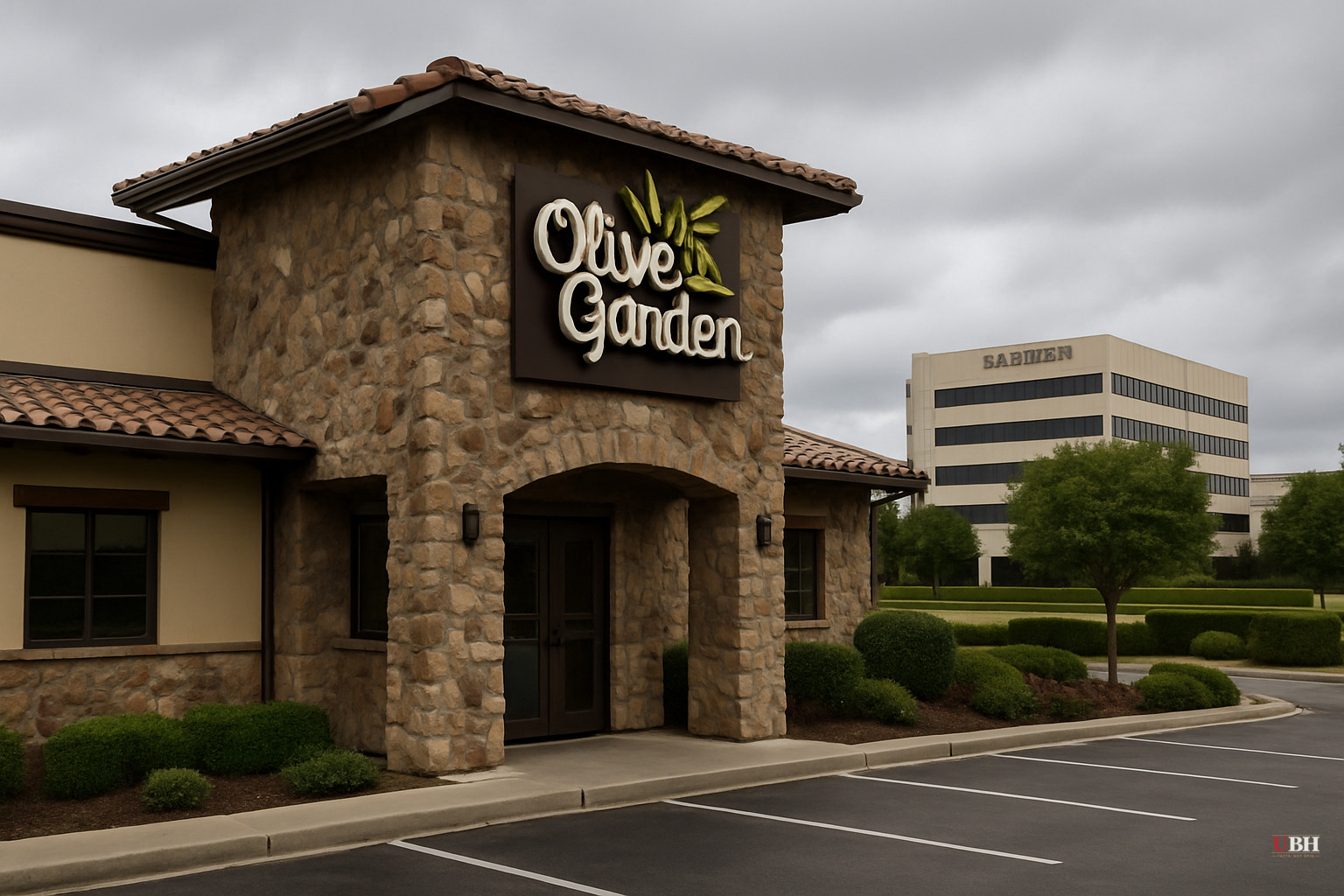
Olive Garden grew same-store sales just 2.4%, missing the expected 3.2%. For a brand that's been Darden's anchor for decades, that's a gap worth watching.
The fine-dining segment — which includes The Capital Grille and Ruth's Chris — posted same-store sales growth of 1.9%, falling short of StreetAccount's 3.1% estimate. High-end diners appear to be pulling back relative to expectations, even if they haven't stopped showing up entirely.
The "other business" segment, which includes Yard House and Chuy's, performed better than expected. Same-store sales were up 4.6% against a 3% projection.
What the CEO Said
Darden CEO Rick Cardenas addressed the consumer environment directly on the earnings call, per CNBC. "Consumer spending remains pretty resilient overall," Cardenas said. "The mood with consumers is still a little cautious, but the weaker consumer sentiment hasn't necessarily translated into reduced spending."
He noted that traffic from consumers under 35 weakened slightly during the quarter, and that some casual-dining brands may have gotten a lift from tax refunds. That traffic bump could be temporary rather than a durable trend.
CFO Raj Vennam kept expectations measured for the year ahead: "We're not expecting any material change to industry performance."
Guidance Below Wall Street
For fiscal 2027, Darden is projecting total sales of $13.60 billion to $13.75 billion and net earnings per share from continuing operations of $11.10 to $11.35, according to CNBC.
Wall Street had been expecting revenue of $13.72 billion and EPS of $11.40. Darden's guidance midpoint on both metrics comes in below that. The gap is not dramatic, but enough to matter to investors pricing in growth.
Darden shares were down more than 1% in Thursday morning trading as of the time CNBC reported the results.
Reading the Quarter
Two of Darden's most important segments missed same-store sales targets, and the company is guiding below consensus for the coming fiscal year. Olive Garden's 2.4% same-store growth looks weak against a backdrop where inflation has artificially boosted menu prices. In real traffic terms, the chain may not be growing at all. Fine dining missing by more than a full percentage point suggests that higher-income consumers, who held up restaurant spending longer than expected during the post-pandemic period, may be starting to moderate. If LongHorn is carrying the portfolio, Darden has a concentration risk it didn't have two years ago.
Cardenas's point about sentiment not translating into spending cuts has held true for longer than most economists expected. Darden's total same-store sales beat, combined with the EPS outperformance, suggests the business is not deteriorating. It's just not accelerating uniformly.
The fiscal 2027 test for Darden is whether Olive Garden can close the gap with LongHorn or whether the brand has structurally lost pricing power with its core customer base. Cardenas flagged that younger consumers under 35 are already pulling back on visits. If that cohort doesn't return as tax refund effects fade, Olive Garden's same-store sales trajectory could weaken further, putting Darden's full-year guidance at risk before the fiscal year is halfway done.
Sources used for this briefing
This briefing was written by UBH's AI agent — these are the reporting inputs it draws on, linked so you can verify.


