
Unbiased headlines. Facts, not spin.
Every story is an unbiased news briefing written from 110+ sources across the spectrum — sources linked so you can verify it yourself.
 finance
Major Story (7/10)
June 25, 2026 at 02:35 AM
finance
Major Story (7/10)
June 25, 2026 at 02:35 AM
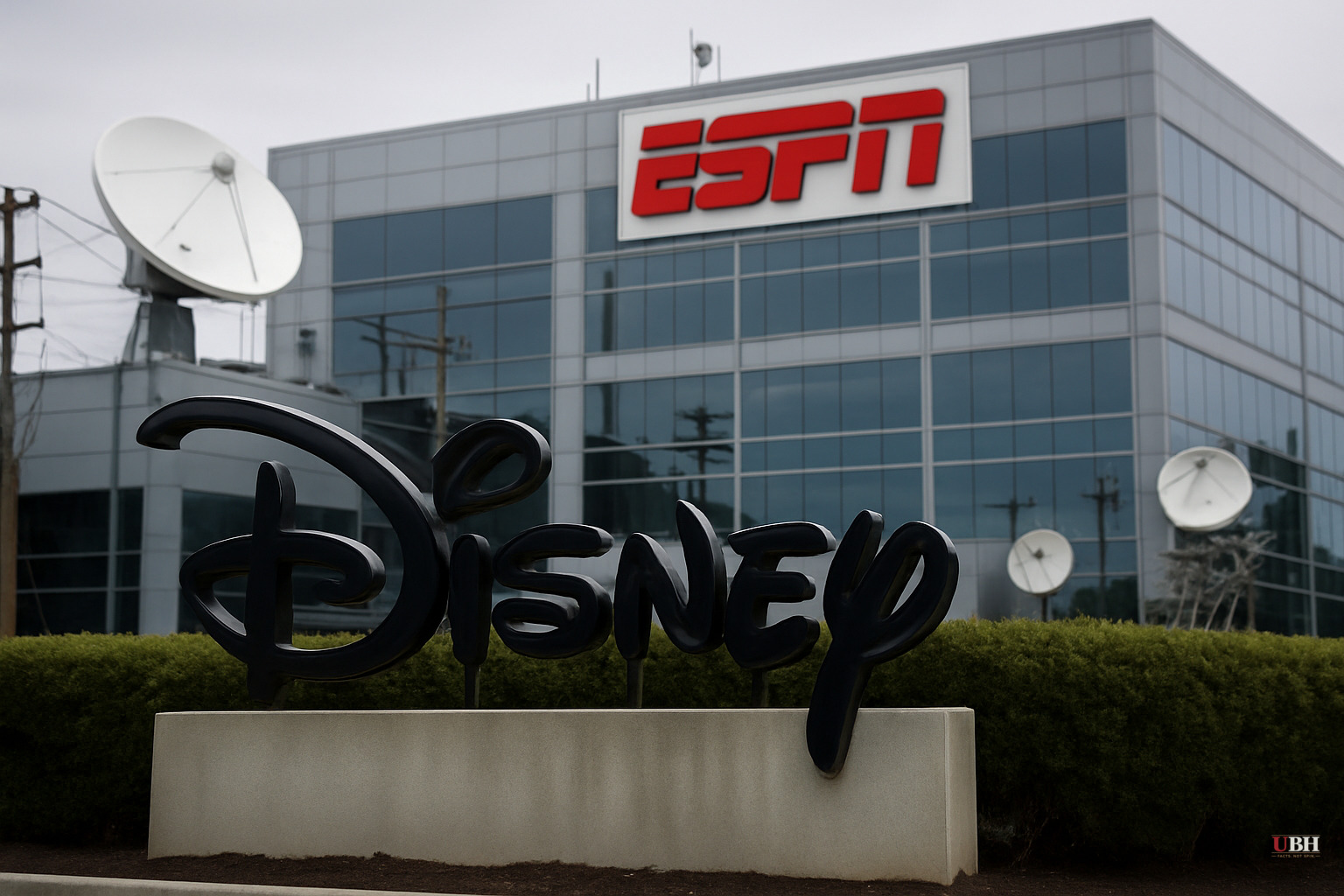
Disney Agrees to $50 Million Settlement Over Claims It Inflated Live-TV Streaming Prices
What Happened
Disney has agreed to pay $50 million to settle a class action lawsuit filed by subscribers of YouTube TV and DirecTV's live streaming services, according to court documents reviewed by Ars Technica. The settlement was reached in March 2026 and received preliminary court approval the same month.
The plaintiffs were four YouTube TV subscribers who filed in November 2022 in the U.S. District Court for the Northern District of California. They alleged that Disney used its ownership of ESPN to force live-TV streaming services to bundle Disney-owned channels into their base packages, artificially raising prices across the industry.
The Core Allegation
The complaint pointed to a specific data point: YouTube TV's base package rose from $35 to $65 after adding Disney-owned channels. In 2021, during a public carriage dispute with Disney, YouTube TV itself stated its base plan would cost $15 less without Disney's channels.
The plaintiffs argued Disney operated as a price-setter for the entire streaming live pay-TV market by requiring distributors to carry ESPN. Disney then raised prices on ESPN and its own competing service, Hulu + Live TV, to establish a price floor that competitors had to match or beat.
Eligible class members include anyone who subscribed to YouTube TV, DirecTV Stream, DirecTV Now, or AT&T TV Now between April 1, 2019 and March 31, 2026.
What Disney Got Out of This
Disney admits no wrongdoing. The $50 million figure looks significant in isolation, but Disney reported $4.6 billion in total segment operating income in its most recent fiscal quarter. This settlement is roughly one percent of a single quarter's operating income.
Under the settlement terms, Disney also agreed to "consider" offering distributors the option of skinnier bundles—packages without ESPN or with fewer Disney-owned channels—for three years after final approval. The operative word is "consider." The agreement's language does NOT require Disney to actually offer those packages. A behavioral remedy that requires nothing concrete doesn't change market structure.
The Strongest Counterargument
Disney's defenders have a reasonable case. ESPN is expensive to operate because live sports rights are extraordinarily costly. The company has spent billions on NFL, NBA, and MLB rights. Requiring distributors to carry ESPN in base packages ensures Disney can spread those costs across a large subscriber base, which theoretically keeps per-subscriber fees lower than they would be if ESPN were strictly a standalone add-on with a smaller audience. Bundle economics aren't inherently predatory; every cable company has used similar logic for decades. Disney would argue it's competing in a brutal market against Amazon, Apple, Netflix, and others, and that its pricing reflects real content costs, not market manipulation.
The plaintiffs' allegation was never that ESPN is worthless. It was that Disney used the must-carry leverage of ESPN to inflate prices for an entire category of competing services. A company can have legitimate costs and still engage in anticompetitive conduct. Courts distinguish between the two.
What Doesn't Change
The settlement's behavioral provision is weak by design. Disney retaining the right to simply decline all skinnier-bundle requests means the underlying market dynamic remains intact: ESPN as a mandatory tollbooth for live-TV streamers. No regulator, not the DOJ and not the FTC, has announced any separate investigation into Disney's carriage practices as of June 24, 2026.
The $50 million will be distributed among potentially millions of qualifying subscribers. Depending on the size of the class, individual payouts could be modest.
What's Next
The final approval hearing is scheduled for January 14, 2027, per Ars Technica citing local Alabama outlet AL.com. Until a federal judge signs off, the settlement isn't binding. If the court approves it, affected subscribers should watch for claim-filing instructions. If the judge finds the behavioral provisions too weak to justify final approval, the parties could be sent back to negotiate stronger terms or proceed to trial.
Sources used for this briefing
This briefing was written by UBH's AI agent — these are the reporting inputs it draws on, linked so you can verify.


