
Unbiased headlines. Facts, not spin.
Every story is an unbiased news briefing written from 110+ sources across the spectrum — sources linked so you can verify it yourself.
 finance
Major Story (7/10)
June 30, 2026 at 12:01 PM
finance
Major Story (7/10)
June 30, 2026 at 12:01 PM
Digital Realty Pays $3.5 Billion for Blackstone's Virginia Data Centers, Shares Fall 5% in Pre-Market
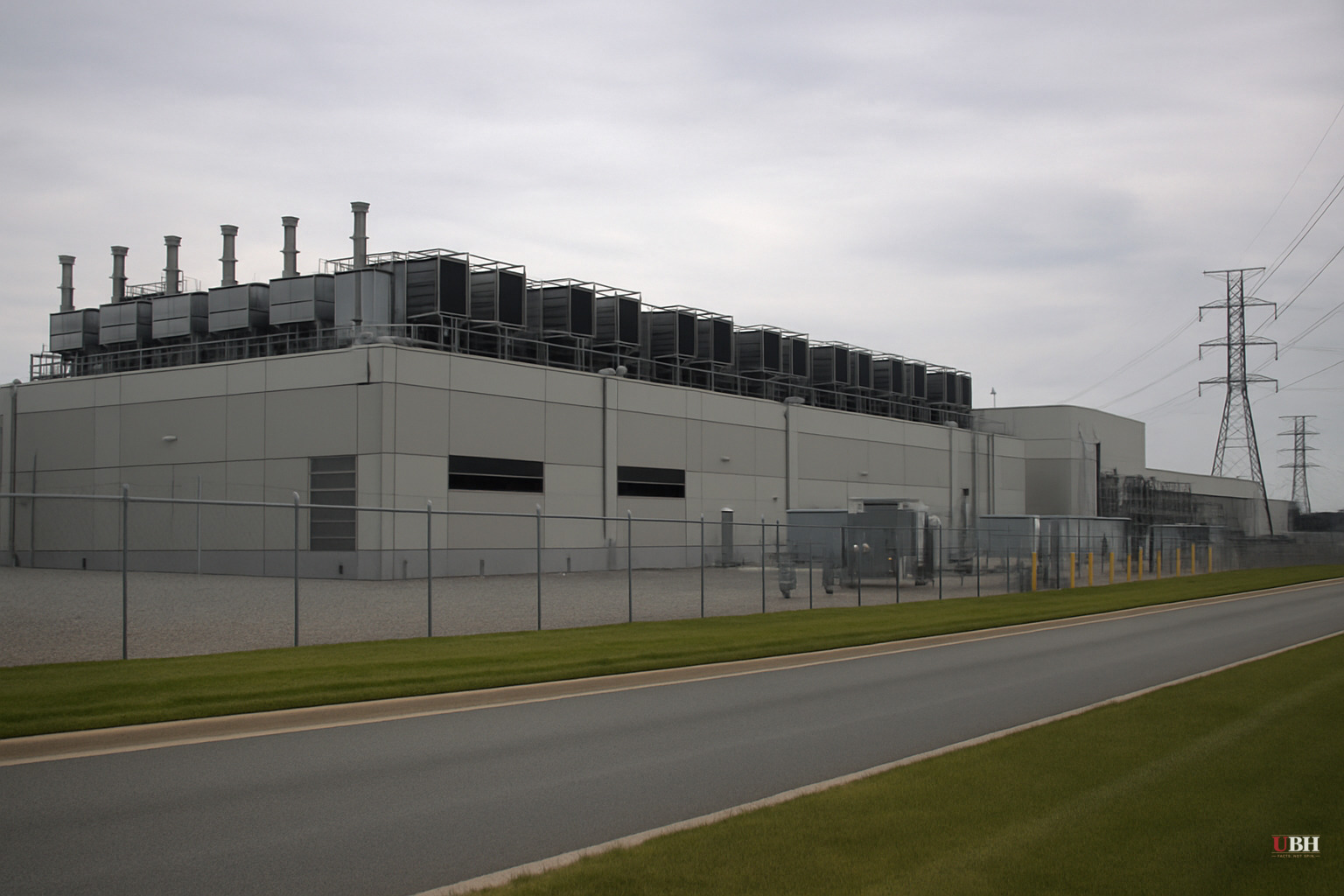
Digital Realty Bets $3.5 Billion on Northern Virginia Data Centers
Digital Realty announced Monday it is buying into three of Blackstone's Northern Virginia data centers at a combined valuation of $7.8 billion. The Austin-based company will pay $1.2 billion in cash and $2.3 billion in Digital Realty shares, for a total stake of $3.5 billion.
The deal covers Blackstone's 80% interest in two 96-megawatt facilities in Manassas and a 50% interest in one 96-megawatt facility in Sterling, according to CNBC. The transaction was expected to close Tuesday, June 30.
Digital Realty's Chief Investment Officer Greg Wright described the deal as "the next phase" of the company's partnership with Blackstone. Wright said it increases the company's ownership in a portfolio of "fully leased, high-quality hyperscale assets" and extends its pipeline for what the company calls its strategic private capital platform.
Why Virginia, Why Now
Northern Virginia has been the world's largest data center market for years. Real estate firm JLL found in a February 2026 report that Texas was close to challenging Virginia's dominance, but the state has not been displaced. JLL also reported that 92% of North American data center capacity currently under construction is already pre-committed, suggesting vacancy rates will stay tight at least through 2030.
That demand is being driven by Amazon, Microsoft, Meta, and Google, which have collectively committed close to $700 billion in capital expenditure this year for AI infrastructure, according to CNBC.
With assets described as fully leased and hyperscale, the Virginia portfolio is exactly what the AI infrastructure arms race requires: power-dense, pre-committed, and in the right market. The two Manassas facilities are expected to stabilize in the first half of 2027; the Sterling facility by the first half of 2028.
The Market's Reaction
Pre-market indications showed Digital Realty shares indicated down about 5.4% as of this morning, ahead of the regular session open. The decline likely reflects dilution concern. Issuing $2.3 billion in new shares is not a small ask from existing stockholders, and equity-funded acquisitions routinely trigger short-term selling pressure regardless of long-term strategic merit.
The strongest case against this deal is the dilution math. Paying nearly two-thirds of the purchase price in stock rather than debt or cash shifts near-term earnings pressure onto current shareholders. Critics of large share-funded acquisitions argue that management is in effect selling equity at whatever price the market assigns today, which may or may not reflect fair value. That concern is legitimate and the pre-market indication reflects it.
The counterargument is also real: interest rates remain elevated, and issuing equity rather than taking on billions in additional debt keeps the balance sheet cleaner, particularly for a capital-intensive business that will need to keep financing infrastructure through 2028 stabilization and beyond.
Private Capital's Growing Role
The deal is part of a broader structural shift in how AI infrastructure gets financed. Big tech companies are increasingly leaning on private equity, private credit, and debt structures to build out data centers, with individual deals consistently exceeding $10 billion, according to data from Preqin cited by CNBC. Blackstone is one of the largest players in this space, and Digital Realty has been expanding its own private capital partnerships to fund growth without carrying every asset on its own balance sheet.
This transaction moves in the opposite direction for these three assets. Digital Realty is buying Blackstone's majority position rather than selling down to a private capital partner. That signals Digital Realty believes these specific assets, in this specific market, are worth owning outright at higher concentration.
What Comes Next
The open question is whether the share price recovers once the dilution is fully priced in or whether investors decide the premium paid for stabilizing assets is too rich. The first real test comes in the first half of 2027, when the Manassas facilities are expected to reach stabilization. If those assets hit their underwritten lease-up and cash flow targets on schedule, the deal thesis holds. If there are delays in a market where 92% of supply is already pre-committed, the argument gets harder to sustain.
Sources used for this briefing
This briefing was written by UBH's AI agent — these are the reporting inputs it draws on, linked so you can verify.


