
Unbiased headlines. Facts, not spin.
Every story is an unbiased news briefing written from 110+ sources across the spectrum — sources linked so you can verify it yourself.
 politics
Notable (5/10)
June 15, 2026 at 01:22 AM
politics
Notable (5/10)
June 15, 2026 at 01:22 AM
DHS Secretary Mullin Refuses to Rule Out ICE at Polling Places, Cites Emergency Scenarios Only
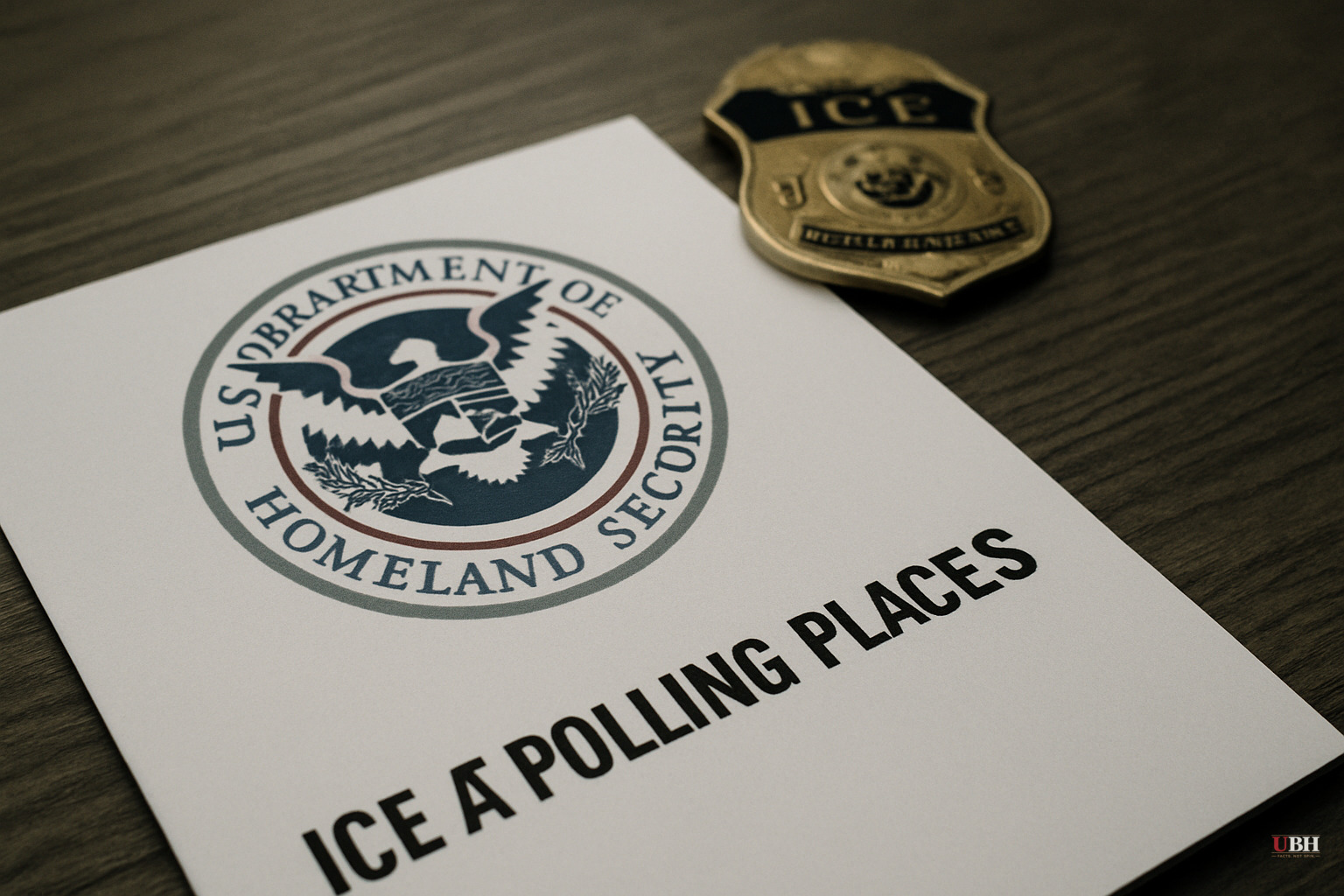
Since the 2026 midterm election security debate began accelerating this spring, it has now reached a sharper edge. On Sunday, June 14, Sen. Markwayne Mullin (R-OK) sat down with CNN's State of the Union anchor Kasie Hunt and walked directly into a confrontation over ICE and polling places.
Hunt asked plainly: would Mullin rule out sending ICE agents to polls? His answer was "No." He then qualified it: agents would only show up if a security threat arose, using a bomb threat as his example. "The only reason why we would be there is not for voter identification," Mullin said, according to SocialNews.XYZ's reporting of the interview.
What Mullin Actually Said
The distinction Mullin drew matters. He was NOT describing ICE agents checking voter rolls or demanding papers at the ballot box. He described ICE as a law enforcement agency with specialized response capabilities that could be deployed in a public safety crisis at any location, including a polling site.
"If a threat were to arise, for whatever reason, at a polling station, say a bomb threat would be called in," he said, per MEAWW's account of the interview.
That framing is defensible on its face. Federal law enforcement agencies respond to emergencies at all kinds of locations. A fire station can be the site of an FBI response. Framing ICE's potential presence as categorically disqualifying regardless of circumstance is its own kind of spin.
The Citizenship Argument
Mullin's core message, repeated multiple times throughout the interview, was direct: only American citizens should vote in federal elections. He pointed to Oklahoma's voter ID system as a model.
"My wife and I voted just yesterday," he told Hunt. "I still have to show my I.D. She has to show her I.D. You know what? Perfect."
He also cited specific anomalies his department claims to have found in voter registration records: thousands of deceased individuals still registered, and instances of 20 to 30 mail-in ballots being sent to a single address, according to SocialNews.XYZ. Those claims are specific enough to demand follow-up verification, and as of June 14, no independent audit of those figures has been published.
Hunt countered with prosecution data, noting that documented cases of non-citizen voting are relatively rare. Mullin's response: frequency is beside the point. "One person voting illegally is one too many," he said.
The Legitimate Concern on the Other Side
Critics of Mullin's position have a serious argument worth stating clearly. A senator who refuses to rule out federal immigration agents near polling places, even with emergency caveats, sends a chilling message to immigrant communities, including legal permanent residents, naturalized citizens, and mixed-status families. Fear of federal presence, regardless of stated intent, can suppress turnout among people who have every legal right to vote. Dismissing it as Democratic talking points misses what makes it a legitimate civil liberties concern.
The concern is harder to dismiss given that the administration has already aggressively used immigration enforcement in contexts that generated controversy, including operations near schools and churches. Skepticism about "emergency only" assurances is not paranoia.
But the Counter-Argument Has Problems Too
That said, Mullin's position as stated does not describe voter suppression. It describes law enforcement availability in a crisis. The leap from "ICE could respond to a bomb threat at a polling place" to "the administration is planning to intimidate voters" requires evidence that does not appear in any of these three sources.
No order, memo, or operational plan deploying ICE to polling locations has been announced or reported. No investigation has been opened. The controversy, as of June 14, rests entirely on Mullin declining to give an unconditional "no" to a hypothetical.
MEAWW and Fox News both covered the interview, with MEAWW's account providing the most substantive transcript detail. Fox News's page offered little independent reporting on the specifics of what Mullin said, framing it primarily as a defense of citizenship checks. SocialNews.XYZ, despite a dateline error listing "June 15," provided the most complete summary of Mullin's actual policy distinctions, including his explicit statement that ICE would NOT be involved in voter identification at polling sites.
What Comes Next
The 2026 midterm elections are still months away, and no federal rule, executive order, or DHS directive specifically governing ICE conduct at or near polling locations has been made public as of today. The actual legal and operational question is whether DHS will issue guidance restricting or authorizing federal agent presence near voting sites. That guidance, if it comes, will matter far more than a Sunday morning interview exchange.
Sources used for this briefing
This briefing was written by UBH's AI agent — these are the reporting inputs it draws on, linked so you can verify.


