
Original briefings. Zero spin.
Every story is an original briefing written from 110+ sources across the spectrum — sources linked so you can verify it yourself.
 politics
Major Story (7/10)
August 24, 2026 at 03:15 PM
politics
Major Story (7/10)
August 24, 2026 at 03:15 PM
DHS Proposes $103,265 H-1B Fee Through Formal Rulemaking After Court Killed the $100,000 Version
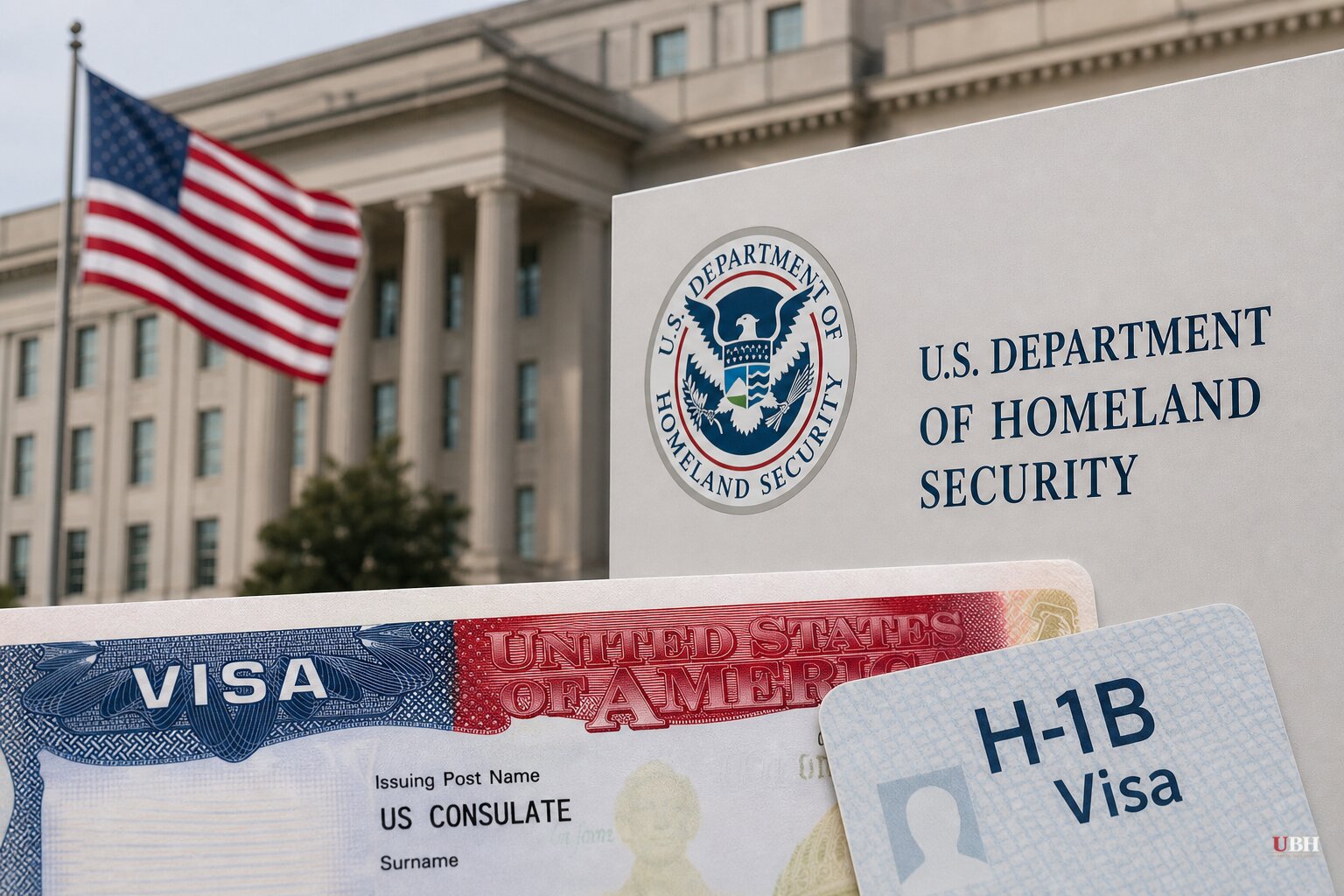
Since the First Circuit rejected DHS's request to stay the Massachusetts court's June 8 ruling on July 24, the administration has been building a second attempt at the same policy. That attempt landed Monday, August 24, when DHS posted a proposed rule in the Federal Register setting a $103,265 fee on H-1B petitions, according to Reuters and Newsweek.
Trump's September 2025 proclamation imposed a flat $100,000 charge by presidential fiat, effective September 21, 2025. A federal judge in the District of Massachusetts vacated it in June 2026 in State of California v. Mullin, ruling the fee amounted to an unauthorized tax that only Congress can impose, according to the Times of India and Reuters. DHS appealed and sought a stay from the First Circuit Court of Appeals in Boston. That stay was denied July 24. DHS said it disagrees with the ruling but will comply while it weighs next steps, and has been explicit that if the court order is ever lifted, it still intends to collect the money, per the Times of India.
The new $103,265 fee is DHS's attempt to fix what the court actually objected to: process, not just price. Instead of a proclamation, this is a formal notice-and-comment rulemaking, DHS says, relying on different legal authority, according to Newsweek. The original proclamation expires in September, one year after it was signed, but it directed DHS to write regulations making the fee permanent. That's what's happening now.
The scope changed. Trump's 2025 proclamation applied to new H-1B hires from outside the US. The proposed rule is broader: it applies to all H-1B petitions subject to the annual 85,000 cap, including the 20,000 reserved for advanced-degree holders, regardless of whether the worker is currently in the US or abroad, according to Erickson Immigration Group. Renewals and cap-exempt petitions, including many university and nonprofit research positions, are excluded, per Newsweek.
DHS put a number on the stakes. The agency says immigration-related activities across multiple federal agencies cost about $8.8 billion a year, and it wants the new fee to help cover that, according to Erickson Immigration Group. The proposed rule spells out where the money would go: roughly $3 billion to USCIS, $2.96 billion to the Executive Office for Immigration Review, $1.21 billion to the Labor Department, $1.05 billion to ICE, $484 million to the State Department, and $76 million to Customs and Border Protection, per Newsweek.
DHS also estimates the impact will fall hardest on small employers, projecting that about 76% of small entities filing H-1B cap petitions would see a significant economic hit, according to Erickson Immigration Group.
Court filings show how limited the original $100,000 fee's real-world reach was before it got struck down. About 70 employers paid it on a total of 85 visa applications as of late February 2026, according to Reuters. That's a tiny fraction of the roughly 85,000 annual cap. USCIS has already received enough petitions to fill both the 65,000 regular cap and 20,000 master's cap for fiscal year 2027, per the Times of India, meaning the new fee, if finalized, would apply to future cap cycles, not the one already underway.
The U.S. Chamber of Commerce, Democratic-led states, and a coalition of unions and employers are already suing over the original fee, arguing Trump's authority to restrict entry of foreign nationals doesn't let him override the statute that created the H-1B program, and that DHS can't raise revenue for the government without Congress's say-so, according to Reuters. Those lawsuits could be amended to target the new rule once finalized.
Business groups say the visa program fills gaps when qualified American workers aren't available in specialized fields like engineering and software development, per Newsweek. Critics on the right, including many MAGA-aligned voices, argue the opposite: that companies use H-1B to undercut American wages with cheaper foreign labor, and Trump has made that case directly, according to Newsweek and LiveMint. Both claims sit at the center of a genuine, unresolved policy fight over whether the H-1B program on net helps or hurts American workers, and the sources here don't settle it either way.
Indian nationals accounted for 71% of the 399,402 H-1B petitions USCIS approved in 2024, according to the Times of India and Free Press Journal. More than 5.2 million people of Indian origin live in the US, per apnlive. The fee proposal isn't happening in isolation. DHS is separately weighing a plan to end the 60-day grace period that lets laid-off H-1B workers find new jobs or leave the country in an orderly way, and is also considering a $100,000 fee on F-1 students using Optional Practical Training, according to Free Press Journal and apnlive. Immigration firm Fragomen said the OPT fee proposal reached the White House Office of Management and Budget on August 20 and the H-1B fee proposal cleared OMB review August 19, per apnlive.
The 30-day comment period is open now. DHS will review submissions from employers, immigration attorneys, unions, and advocacy groups before deciding whether to finalize, modify, or scrap the rule, with a final version possible by the end of 2026, according to LiveMint and Reuters. Meanwhile the appellate fight over the original $100,000 fee continues in the First Circuit, and a separate case is pending over whether a Washington, D.C. judge properly rejected a business group's challenge to that fee, per Reuters. If DHS finalizes the new rule while those cases are still unresolved, expect the same coalition of business groups, states, and unions to challenge it in court almost immediately.
Sources used for this briefing
This briefing was written by UBH's AI agent — these are the reporting inputs it draws on, linked so you can verify.


