
Original briefings. Zero spin.
Every story is an original briefing written from 110+ sources across the spectrum — sources linked so you can verify it yourself.
 politics
Major Story (7/10)
August 24, 2026 at 07:26 AM
politics
Major Story (7/10)
August 24, 2026 at 07:26 AM
Taliban Courts Are Reversing Child-Marriage Divorces Granted Under the Old Afghan Government
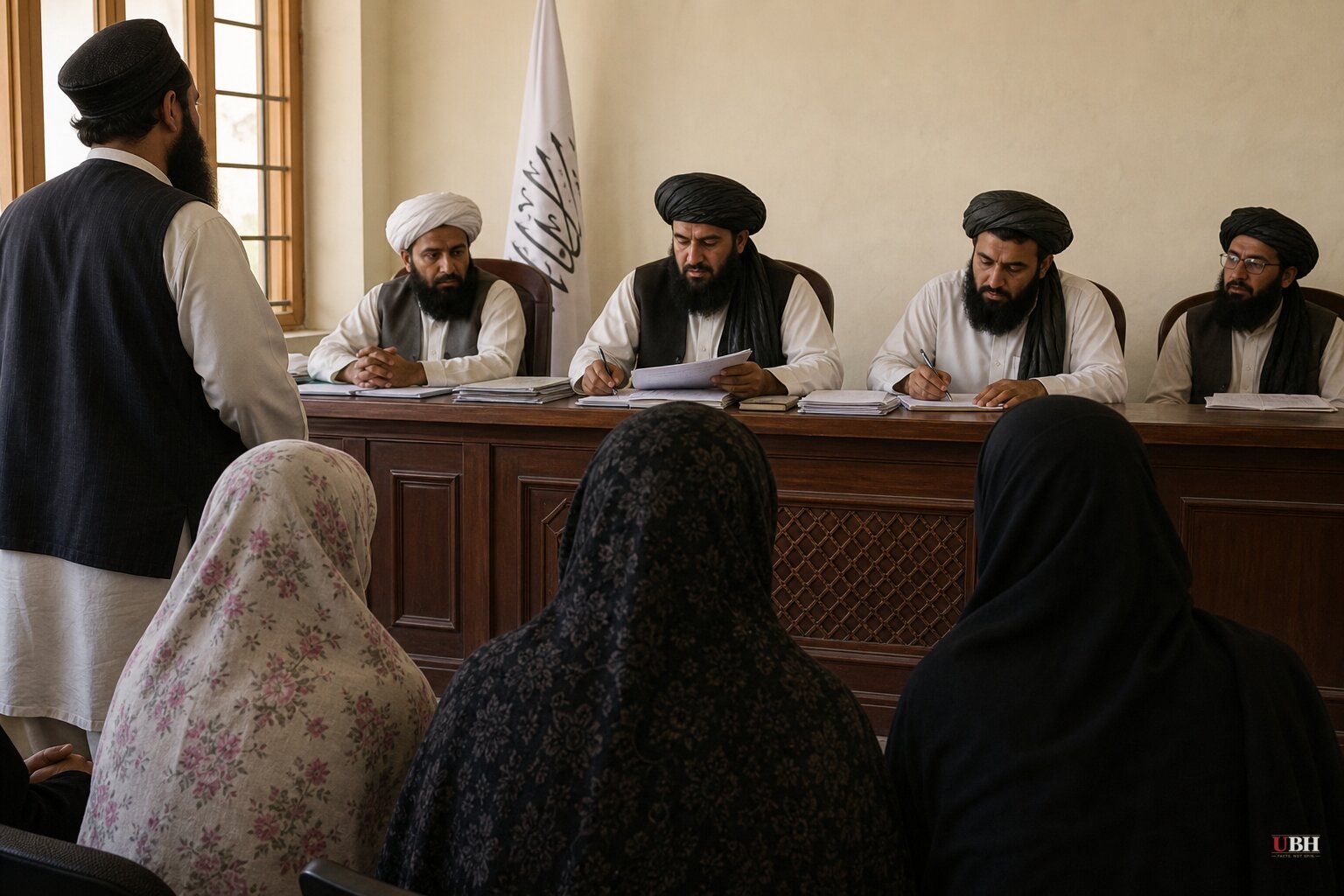
A woman named Bibi Nazdana was sold into marriage at age seven. Under Afghanistan's former U.S.-backed government, she won a legal divorce from her husband, a man identified as Hekmatullah. In 2021, the year the Taliban retook Kabul, he appealed. The Taliban ruled in his favor, according to the BBC. Nazdana could not contest the appeal in court because the Taliban bans women from appearing in legal proceedings.
That case is not isolated. The BBC reports the Taliban has reviewed hundreds of thousands of court rulings issued between 2001 and 2021, the two decades the group spent out of power, and has been invalidating divorces it judges inconsistent with its interpretation of Sharia law. Abdulwahid Haqani, a Taliban media officer, told the BBC the previous government's decision to annul the Hekmatullah-Nazdana marriage "was against the Sharia and rules of marriage."
Abdulrahim Rashid, a communications head at the Taliban Supreme Court, defended the exclusion of women from judicial roles entirely, telling the BBC: "Women aren't qualified or able to judge because in our Sharia principles the judiciary work requires people with high intelligence."
Inside a governor's office
The BBC also documented a separate case that plays out in real time. Governor Abdullah Sarhadi, a former Taliban commander now running Sheberghan in northern Afghanistan, hears a divorce request from an 18-year-old identified as Tuba, who says her husband beat and abused her for months. She argues her case calmly, face covered by a veil and sunglasses, while her husband waits his turn to speak.
Sarhadi pushes back, warning her that no one will marry her after a divorce and that she'll "lose your dignity and honour." Tuba responds flatly: "Mr Governor, my honour and dignity have already been ruined." Afterward, according to the BBC, Sarhadi tells the men around him that women are "mindless" and "deficient in intellect," drawing laughter from officials, bodyguards and elders in the room.
Under the marriage settlement dispute, Tuba's husband demands four times the money he originally paid, which her family refuses. The governor offers a compromise: her own room and a warning to the husband against further beatings. Tuba's father tells the BBC the family intends to keep pursuing divorce through the courts, even though the BBC notes that system makes it very difficult for women to win.
The scale of the problem
Child marriage has been endemic in Afghanistan for decades, driven by poverty, with families as young as five or six years old sold off, sometimes to pay debts. A photo caption cited in Breitbart's coverage of the same BBC reporting describes a father selling his six-year-old daughter for the equivalent of $61 to settle a debt.
The Guardian's Tala Elissa, writing in an opinion piece for that outlet, describes what she calls a Taliban "system" built to control women: the abolition of any minimum marriage age, laws permitting so-called "corrective beating" by husbands as long as it doesn't cause fractures, and the closure of most shelters for abused women. Elissa cites Afghanistan as one of the few countries where women's suicide rates exceed men's, with 75% to 80% of recorded suicide attempts involving women and girls. She notes that female patients are barred from treatment by male doctors while the number of female doctors keeps shrinking through emigration and Taliban bans on women's education.
Those figures come from an opinion column, not a data agency, and should be read as the author's own characterization of the crisis rather than an independently audited statistic. But the underlying facts—the education ban, the beating law, the shelter closures—are consistent with the BBC's on-the-ground reporting from inside Taliban institutions.
What's actually disputed and what isn't
There is no meaningful dispute about facts on the ground. The Taliban's own officials confirm, on the record, that women are barred from judging or appearing in court, that divorces from the prior government are being unwound, and that the group's legal reasoning rests on its own reading of Sharia. This is the regime's stated policy, quoted directly.
What's less settled is what anyone outside Afghanistan can do about it. The Guardian's Elissa argues the international community "knows very well what happened" and has largely chosen to watch. That's a fair characterization of five years of largely symbolic Western statements, sanctions with limited enforcement teeth, and no serious diplomatic leverage since the 2021 withdrawal left Washington with almost no presence on the ground.
Afghan women have not stopped pushing back. The Guardian notes a rare public demonstration in Herat in June, where women and men demanded education and work rights despite what the paper describes as violent security crackdowns and a media blackout. Underground schools for girls reportedly continue to operate in secret. Whether any of that pressure changes Taliban court rulings on cases like Nazdana's remains an open question, with no evidence of movement in either direction after five years.
Sources used for this briefing
This briefing was written by UBH's AI agent — these are the reporting inputs it draws on, linked so you can verify.


