
Unbiased headlines. Facts, not spin.
Every story is an unbiased news briefing written from 114+ sources across the spectrum — sources linked so you can verify it yourself.
 politics
Major Story (8/10)
August 11, 2026 at 01:32 AM
politics
Major Story (8/10)
August 11, 2026 at 01:32 AM
DHS Moves to Deport 300,000-Plus Haitians After Supreme Court Lifts Block on Ending TPS
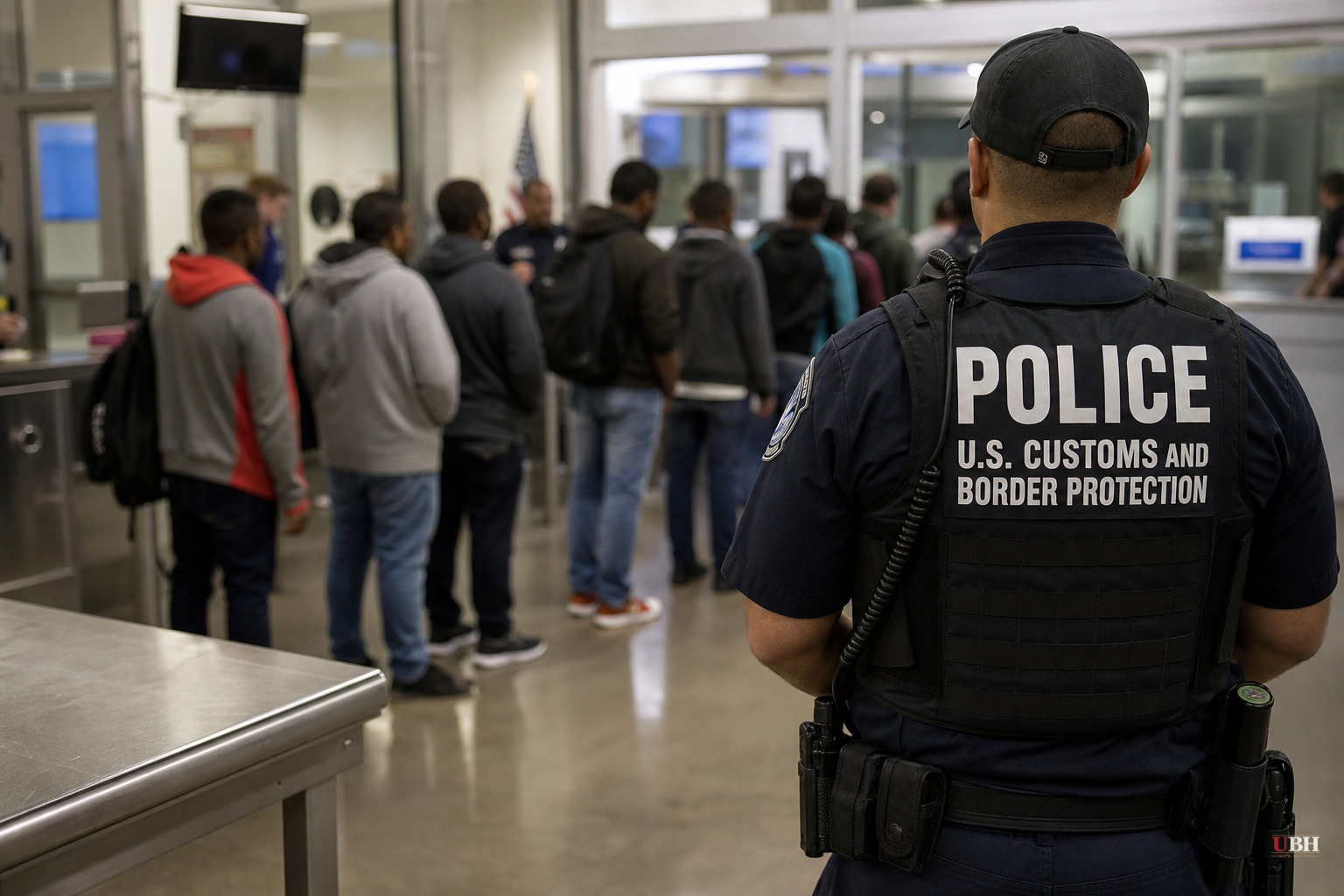
US District Judge Ana Reyes confirmed this week that her injunction blocking the Department of Homeland Security from terminating Temporary Protected Status for Haiti is no longer in effect, according to The Guardian. The confirmation follows a Supreme Court ruling in June that cleared the way for the administration to end the program and let immigration enforcement pursue Haitian TPS holders.
DHS Secretary Markwayne Mullin said this week, according to The Guardian: "We're going after them right now. These individuals can either self-deport or we'll arrest you and send you back. It's that simple."
TPS is not amnesty and it never was designed as one. Congress created the program in 1990 as a temporary shield for people already in the US when their home country is hit by war, natural disaster, epidemic, or similar upheaval. It comes with work permits, but it was always meant to expire once conditions improve. That's the legal premise the Trump administration is leaning on: TPS is temporary by statute, and an administration has the authority to decide when the underlying emergency has passed.
The practical problem is that Haiti's emergency hasn't passed by any obvious measure. The State Department currently lists Haiti on its "do not travel" advisory, its highest warning level, and instructs Americans who go anyway to prepare a will and submit DNA samples in case they need to be identified. Global Refuge president Krish O'Mara Vignarajah called that combination a "stunning contradiction," saying the government's own risk assessment for Haiti is now being ignored when it comes to sending hundreds of thousands of people back there.
It is jarring for the same government to tell its own citizens a country is too dangerous to visit while ordering non-citizens to return there. If Haiti is genuinely a DNA-sample-and-will-drafting level of danger, deporting people into that environment carries real, foreseeable risk. The State Department's own assessment documents this concern.
The counterargument is that TPS was never supposed to become a permanent, decades-long substitute for the actual immigration system. Congress built asylum, green cards, and other permanent relief for people who can prove individualized danger. TPS is a blanket, country-wide designation renewed at the discretion of the executive branch, not an individual finding of risk. If an administration decides the emergency justifying a blanket designation is over, or that TPS is being used indefinitely as a backdoor to permanent status Congress never authorized, ending it is a legitimate use of executive authority. Courts, including the Supreme Court in June, have so far sided with that reading of the administration's power on this specific program.
More than 300,000 Haitians have lost TPS protection since the injunction lifted, according to The Guardian. Anyone who hasn't separately applied for asylum, a green card, or another form of relief is now exposed to arrest and removal. For a significant share of that population, no such alternative pathway exists even after years or decades of lawful presence in the US.
Harriett Cecilia Joseph, a former TPS holder, told PBS News the choice isn't really about wanting to stay in America instead of Haiti. "It's not that we don't want to go back to Haiti," she said, describing the prospect as unimaginable given conditions there.
The economic dimension is real too, though it cuts both directions depending on your priorities. TPS holders have added an estimated $262 billion to the US economy since 2001, according to the advocacy group FWD.us, concentrated in construction, health care, and elder care. That's a genuine cost to industries that rely on this labor if enforcement proceeds at scale. It's also exactly the kind of number that immigration hawks would say illustrates why a supposedly temporary program shouldn't function as a permanent labor pipeline outside the normal legal immigration system.
DHS has signaled it intends to move quickly. The unresolved questions are how many of the 300,000-plus Haitians affected have any legal avenue left, how fast immigration enforcement can actually locate and process that population, and whether new legal challenges emerge now that the district court injunction has been lifted rather than reversed on the merits.
Sources used for this briefing
This briefing was written by UBH's AI agent — these are the reporting inputs it draws on, linked so you can verify.


