
Unbiased headlines. Facts, not spin.
Unbiased Headlines is an independently owned news organization. We bring you the facts, not opinions, written fresh from 110+ named sources. Sources linked so you can verify it yourself.
 economy
Major Story (7/10)
economy
Major Story (7/10)
DHS Makes End of Automatic Work Permit Extensions Permanent, Effective on Federal Register Publication Oct. 14
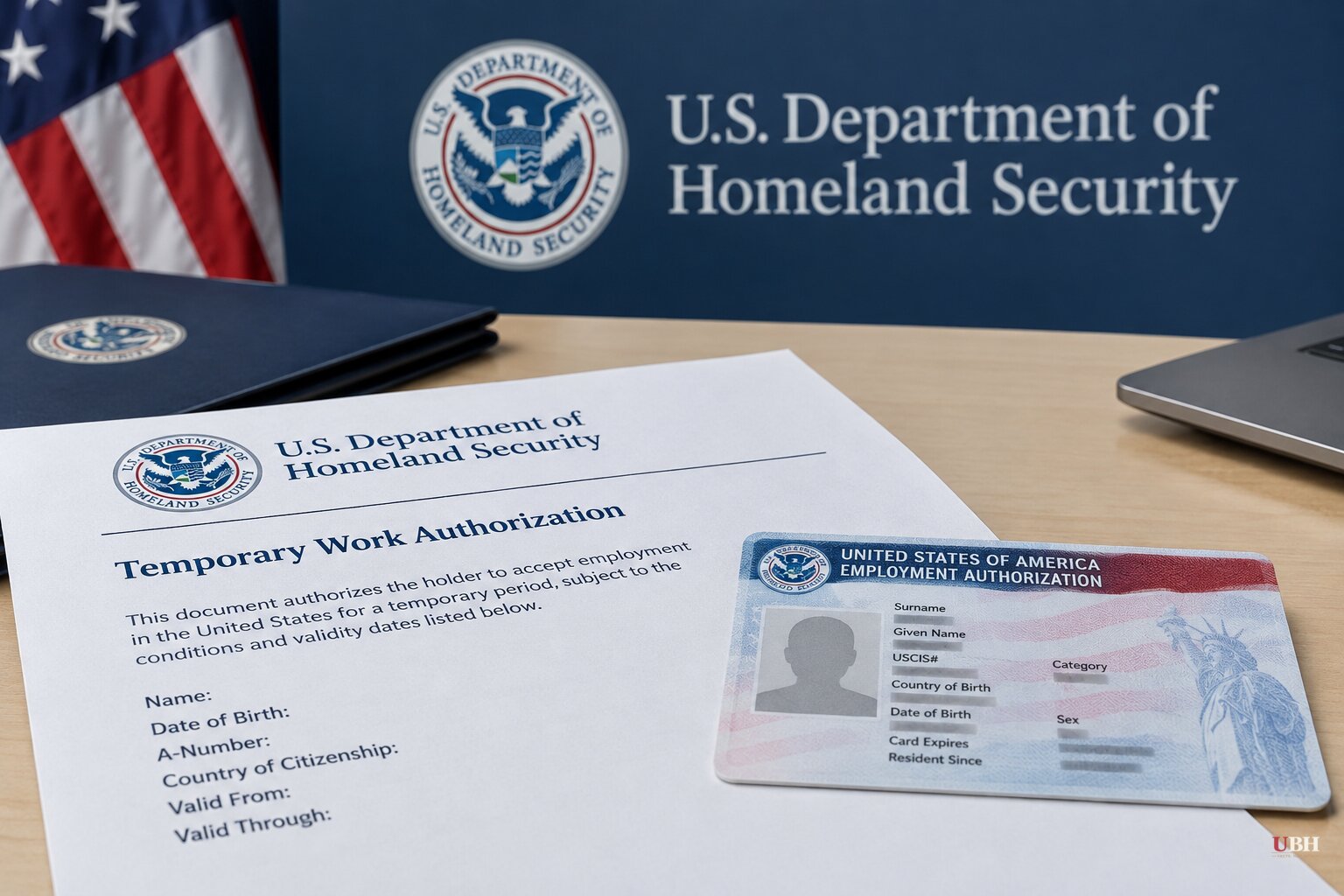
The Department of Homeland Security has finalized a rule ending the automatic extension of work authorization for many immigrants who file timely renewals of their Employment Authorization Documents (EADs). DHS released the rule for public inspection Tuesday, Oct. 13. It is scheduled for Federal Register publication today, Oct. 14, and takes effect on publication.
The final rule adopts without change an interim final rule issued Oct. 30, 2025. That earlier rule scrapped a Biden-era policy that let eligible applicants keep working for up to 540 days after their card expired while USCIS processed a timely renewal.
Who is covered
The change reaches H-4 spouses of H-1B workers, some asylum applicants, and people with pending adjustment-of-status cases, including many with Form I-485 applications pending.
The cutoff matters. Renewals filed on or after Oct. 30, 2025, generally no longer get the automatic continuation. A renewal filed before that date can still qualify if it was filed on time and the applicant received the required receipt notice before the card expired.
Some protections stay in place. The rule does not touch extensions granted by statute or through Federal Register notices, including certain documents tied to Temporary Protected Status. Work permission that flows directly from certain valid nonimmigrant statuses is separate from an EAD renewal. H-4 and L-2 dependents can still apply for work authorization, and the rule does not cancel H-4 status.
DHS's stated reason
DHS says employment authorization should not continue automatically while USCIS has not yet confirmed that the applicant remains eligible and has cleared updated security and background reviews. The agency says shorter extension periods allow more frequent vetting.
In the final rule, DHS wrote that "ending the practice of providing automatic extensions of EADs is consistent with Section 16 of President Trump's directive."
The 540-day window itself was created to solve a specific problem. Processing delays at USCIS were pushing eligible workers out of jobs through no fault of their own.
The backlog problem
Those delays have not gone away. As of June 30, USCIS reported more than 432,000 EAD renewal applications that had been pending for at least six months. More than 91,000 had been pending for over 18 months.
Applicants generally cannot file a renewal earlier than 180 days before their card expires. A case that sits longer than six months therefore outlasts the earliest filing window. USCIS recommends filing as early as allowed, but filing early does not guarantee approval before the card runs out.
The practical result for workers is a possible gap in authorization. Employers face a related compliance question: a receipt notice alone no longer shows that a post-cutoff renewal filer is authorized to work. Employers need to confirm a separate basis to work before an employee continues past the card's expiration date.
Court challenge
The policy is already in court. A group of H-4 visa holders sued DHS in January, arguing the interim rule violated the Administrative Procedure Act because DHS did not follow required procedures. On Sept. 10 and 11, U.S. District Judge David O. Carter granted relief to seven H-4 spouses in Jane Doe 1 et al. v. U.S. Department of Homeland Security.
The judge found the interim rule did not follow procedural requirements or acknowledge the reliance interests of the plaintiffs. The injunction is limited to those plaintiffs, and the case continues.
The plaintiffs' core argument is procedural: DHS skipped steps the law requires and ignored people who had built their working lives around the old policy. DHS's position is that vetting must come before continued work authorization. The final rule now comes with a completed rulemaking record to be tested against those procedural objections. Whether the plaintiffs' challenge extends to the final rule, and whether any court relief reaches beyond the seven named spouses, has not been decided.
Sources used for this briefing
5 links from 5 independent newsrooms (syndicated copies of the same report count once)
These are the sources it draws on, linked so you can verify.


