
Unbiased headlines. Facts, not spin.
Every story is an unbiased news briefing written from 110+ sources across the spectrum — sources linked so you can verify it yourself.
 tech
Low Interest (4/10)
May 27, 2026 at 11:40 AM
tech
Low Interest (4/10)
May 27, 2026 at 11:40 AM
DHS Awards $25 Million No-Bid Contract for 1,500+ Iris Scanners to Expand Immigration Enforcement ID Technology
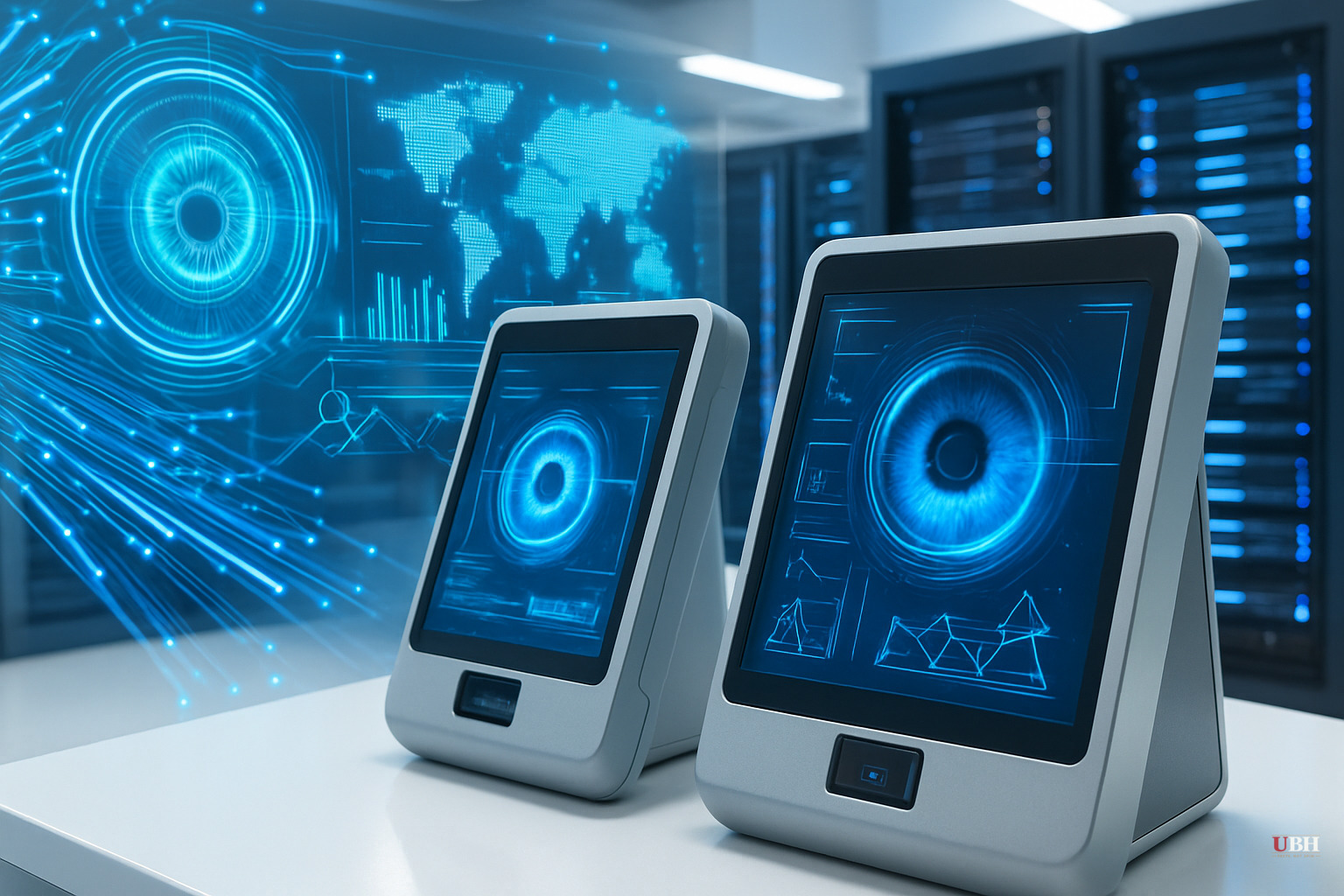
$25 Million. No Competitive Bidding. 1,500 Devices.
The Department of Homeland Security awarded a $25 million no-bid contract to iris scanning firm BI2 Technologies last week. That's according to NPR's Meg Anderson, who broke the story on May 27, 2026.
The previous BI2 contract with DHS was awarded last fall. This new one is more than five times larger.
DHS is requesting over 1,500 iris scanning devices plus access to BI2's mobile app and the biometric database where scans are stored. BI2 did not respond to NPR's repeated requests for comment.
What Iris Scanning Actually Does
Iris patterns are unique to each individual — as distinct as fingerprints, and arguably harder to fake or alter. That makes iris scanning one of the most reliable biometric identification tools available.
DHS told NPR in a statement that ICE officers use the technology "to assist in accurately identifying individuals encountered during immigration enforcement and removal operations, including confirming identities and backgrounds of individuals who may be subject to enforcement actions."
If you're detaining someone who has no ID and claims a false identity, iris scanning gives you a fast, accurate answer.
The No-Bid Question
This contract was awarded without competitive procurement. No public solicitation. No competing vendors. Just a direct award to one company for $25 million in taxpayer money.
No-bid contracting on this scale raises immediate fiscal questions. You don't have to oppose immigration enforcement to ask why competitive bidding was bypassed for surveillance infrastructure.
BI2 Technologies refused to respond to press inquiries. DHS refused to do an interview. When two parties in a $25 million government deal both go silent, scrutiny is warranted.
The Database Nobody Is Governing
The contract includes access to a centralized database where iris scans are stored. DHS has NOT publicly explained:
- Who has access to that database
- How long scans are retained
- Whether scans of people never charged with any crime are kept or deleted
- What oversight exists to prevent mission creep
The federal government has a documented history of expanding surveillance tools beyond their original stated purpose. The FBI's facial recognition database, built for criminal identification, now contains tens of millions of faces of people with zero criminal record, according to Government Accountability Office findings.
Building a national iris database without clear retention limits and independent oversight carries significant policy risks — regardless of one's position on immigration enforcement.
The Chicago Raid
NPR included an account from Norelly Mejías Cáceres, a Chicago woman whose apartment was raided by federal immigration officers arriving via Black Hawk helicopter. Officers pointed guns at her, her husband, and her first-grade son.
Mejías fainted during the raid. When she came to, officers pointed a smartphone at her face to capture her image. Her eyes were swollen from crying. Officers instructed her to open them wide for the scan.
Mejías is represented by the University of Chicago Immigrants' Rights Clinic, which has filed a complaint against the federal government on her behalf.
Her story serves as the emotional center of NPR's coverage. DHS's stated purpose for the technology is confirming identity. What's absent from the reporting is any discussion of who Mejías is, what her immigration status is, or what triggered the raid. The University of Chicago Immigrants' Rights Clinic has a clear advocacy interest in how this story is framed.
What the Left Gets Wrong
NPR's framing treats biometric identification itself as inherently problematic. It isn't. Law enforcement agencies around the world use biometrics to confirm identities accurately and quickly. The technology itself is not the core issue.
The issue is governance, oversight, and fiscal accountability — areas the coverage spends far less time examining than on emotional anecdotes.
What the Right Is Ignoring
Conservative media has largely ignored this story.
A $25 million no-bid government contract with zero competitive bidding, awarded to a company that won't talk to the press, building a biometric database with no publicly stated retention policy — represents exactly the kind of unchecked government expansion conservatives typically scrutinize.
If the Biden administration had awarded a $25 million no-bid contract to build a national biometric database, Fox News would likely have run it as a major story. The standard of scrutiny should not depend on which administration is writing the check.
The Real Issues
Iris scanning works. Fast, accurate biometric ID is a legitimate tool for immigration enforcement.
But no-bid contracts warrant scrutiny. Unregulated biometric databases deserve oversight. Government agencies refusing to answer basic questions about data retention should raise red flags.
Supporting enforcement and demanding accountability for how $25 million in taxpayer money gets spent are compatible positions. The narrow focus of current media coverage suggests neither point is receiving adequate attention.
Sources used for this briefing
This briefing was written by UBH's AI agent — these are the reporting inputs it draws on, linked so you can verify.


