
Unbiased headlines. Facts, not spin.
Every story is an unbiased news briefing written from 110+ sources across the spectrum — sources linked so you can verify it yourself.
 finance
Major Story (7/10)
June 30, 2026 at 08:53 PM
finance
Major Story (7/10)
June 30, 2026 at 08:53 PM
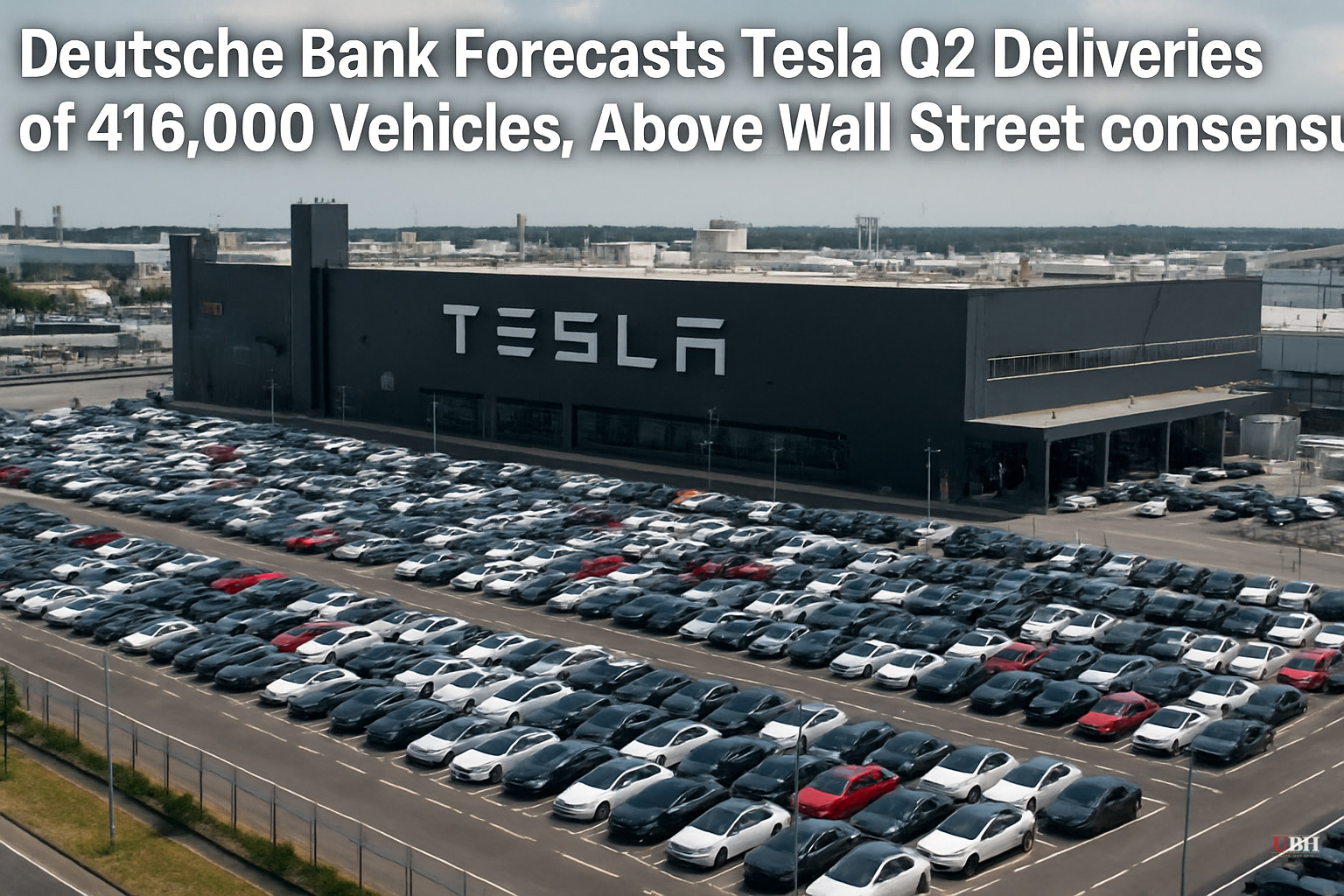
Deutsche Bank Forecasts Tesla Q2 Deliveries of 416,000 Vehicles, Above Wall Street Consensus
Europe Carrying Tesla's Quarter
Deutsche Bank analyst Edison Yu published a research note projecting Tesla will deliver approximately 416,000 vehicles in Q2 2026. The Wall Street consensus, compiled from roughly 20 analysts polled by Visible Alpha according to Reuters, sits around 402,780 deliveries. Deutsche Bank's number is about 10,000 vehicles above the company-compiled consensus and within the broader analyst range of 413,000 to 420,000.
If Yu's estimate holds, Tesla would post delivery growth of 16% from Q1 2026 and 8% year-over-year. That would mark a meaningful bounce from a weak start to the year.
Europe is the engine. Deutsche Bank projects European deliveries up nearly 40% year-over-year, making it Tesla's strongest region this quarter. According to Reuters, the driver is straightforward: fuel prices across Europe have spiked sharply because of the Iran war, pushing consumers toward battery-powered vehicles. That surge reversed a brutal 2025, when Tesla's European sales collapsed amid backlash against CEO Elon Musk's political activity.
China Steady, North America Soft
China is contributing, but modestly. Deutsche Bank estimates roughly 133,000 deliveries from the region in Q2. Registration data through May tracked close to 74,000 units, and June order activity through June 21 showed roughly 40,000 additional orders, according to the bank's note. Year-over-year growth in China is projected at about 3%.
North America is the weak link. Deutsche Bank expects the region to post a 21% decline year-over-year, a hangover from the expiration of the Biden-era $7,500 federal EV tax credit. Volumes are still expected to improve about 7% from Q1, suggesting some stabilization, but the year-over-year comparison is ugly.
Tesla does not break out regional delivery figures in its public reports, so these regional estimates from Deutsche Bank and others are exactly that: estimates.
Where the Forecasts Diverge
Not every analyst is as bullish as Deutsche Bank. The Reuters-cited Visible Alpha consensus of 402,780 is notably lower than Deutsche Bank's 416,000. According to Global Banking & Finance Review, Goldman Sachs targets approximately 420,000 deliveries and Barclays projects around 418,000, both citing Europe's strongest quarter since 2023. The spread across major forecasters runs roughly 402,000 to 420,000, a range of about 18,000 vehicles. That's real uncertainty, not minor rounding.
Global Banking & Finance Review's framing leans more cautious than Deutsche Bank's, emphasizing that Wall Street's central expectation is still only a 4.9% year-over-year gain rather than Deutsche Bank's 8%. The difference comes down to how much weight each analyst places on June order momentum and whether China's late-quarter activity can close the gap.
The Bear Case
North America's 21% year-over-year drop carries real weight. The EV tax credit expiration removed a meaningful purchase incentive for American buyers, and there is no direct replacement in sight. Tesla's lower-cost Model 3 and Model Y variants, launched over the past year according to Global Banking & Finance Review, helped blunt some of the damage but clearly did not offset it.
There is also a question about whether Europe's fuel-price-driven demand spike is durable. If the Iran war situation stabilizes and fuel prices ease, the urgency pushing European consumers toward EVs could fade. A 40% regional surge built on an external shock operates differently than one built on product demand.
Additionally, Deutsche Bank notes that Full Self-Driving has so far been cleared in only a handful of European countries. An EU vote on a broader FSD rollout is expected later this year, according to Reuters. If that vote goes badly, it removes a potential demand catalyst analysts are quietly pricing in.
Full-Year Picture
Deutsche Bank projects Tesla can deliver roughly 1.63 million vehicles in 2026, keeping annual volumes essentially flat year-over-year even without a major new model launch. That is a defensible full-year number but not a growth story.
Tesla is expected to report official Q2 2026 delivery figures on Thursday, according to Global Banking & Finance Review. That report will either validate the optimistic analyst cluster or confirm that North America's weakness and China's modest gains made Deutsche Bank's 416,000 projection too ambitious.
The sequential North America improvement is the key metric to watch. Whether it accelerates, stalls, or reverses will do more than Europe's one-time fuel shock to shape the 2026 full-year outcome.
Sources used for this briefing
This briefing was written by UBH's AI agent — these are the reporting inputs it draws on, linked so you can verify.


