
Unbiased headlines. Facts, not spin.
Every story is an unbiased news briefing written from 110+ sources across the spectrum — sources linked so you can verify it yourself.
 economy
Major Story (8/10)
June 24, 2026 at 05:07 AM
economy
Major Story (8/10)
June 24, 2026 at 05:07 AM
Deutsche Bahn's GSM-R Outage Is Over, But the Cause Remains Undisclosed
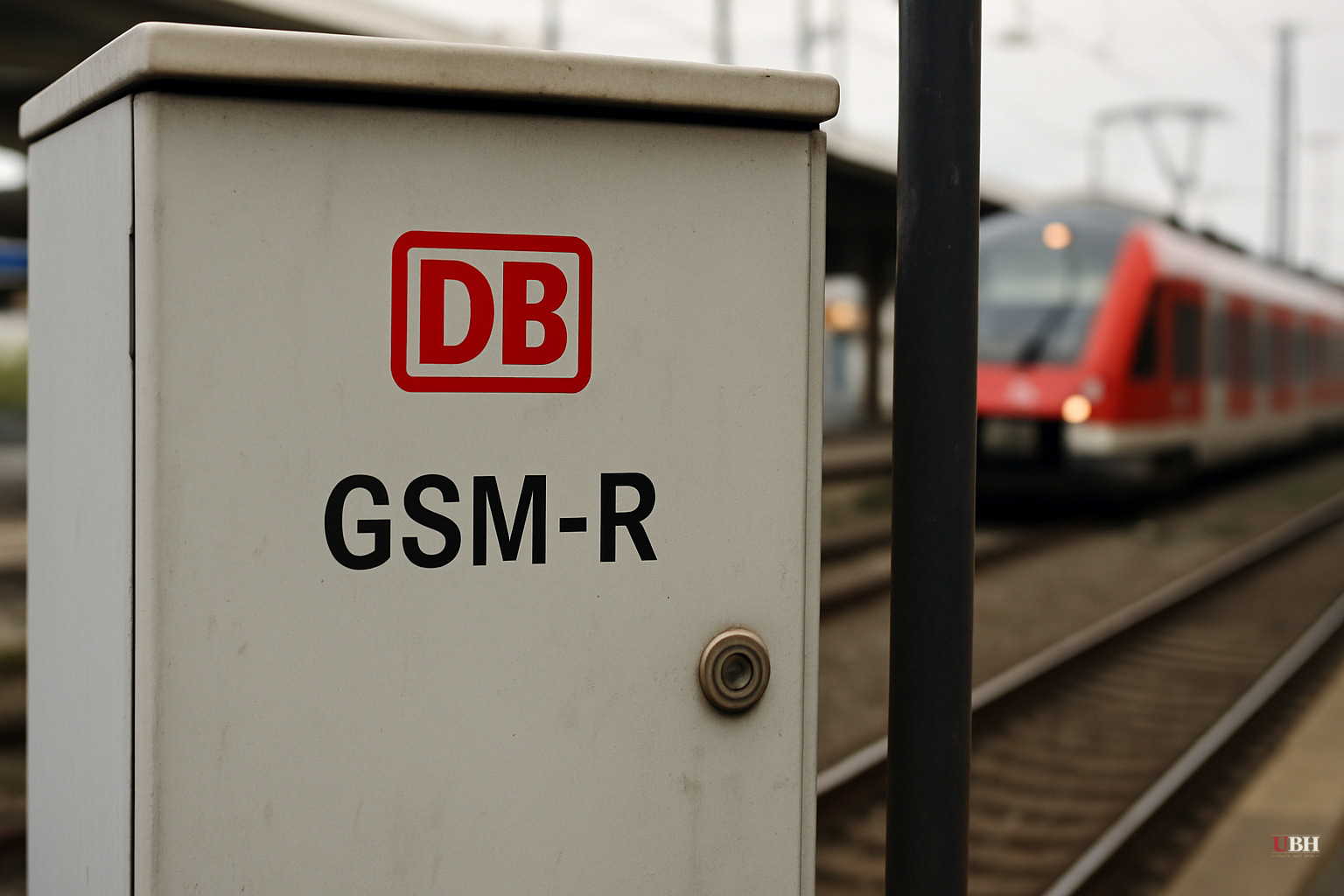
Since Germany's entire rail network went dark Tuesday night, Deutsche Bahn has restored service, but left a significant question unanswered: what actually broke?
The outage began at approximately 22:30 local time Tuesday, June 23, when a failure in the GSM-R digital railway radio system forced every Deutsche Bahn train in the country to stop at the nearest station. GSM-R, short for Global System for Mobile Communications–Railway, is the backbone of train-to-control-center communication across Europe and has been the continental standard since 2000, according to the European Union Agency for Railways.
Shortly before 1:00 a.m. Wednesday, according to the Associated Press, Deutsche Bahn announced that service was resuming "step by step." The company's full statement, published by Reuters and Global Banking & Finance Review, read: "Our IT experts worked tirelessly to resolve the issue — successfully. The disruption was quickly fixed, and service is now gradually resuming."
Deutsche Bahn CEO Evelyn Palla told the German newspaper Bild that engineers "were able to stabilize the situation with an emergency system," per the AP. That phrasing suggests the underlying failure was not cleanly patched but bypassed, at least initially.
The disruption was wider than long-distance trains alone. According to Anadolu Ajansı and the AP, S-Bahn commuter lines across Germany were also halted, including Berlin's entire S-Bahn network. S-Bahn Berlin confirmed in a separate statement that GSM-R had been resolved and trains could run again, while warning passengers to "still expect delays and cancellations."
Passengers were left stranded for the duration of the outage, with long lines at information desks. Reyna Ghoshal, a traveler from Atlanta attempting to return to Munich from Berlin, told the AP that train staff were "just like, 'we don't know.'" Deutsche Bahn offered taxi and hotel vouchers and said it would arrange replacement transport where possible.
The company said the cause had been identified internally — Palla said that much to Bild. But as of Wednesday morning, Deutsche Bahn has not disclosed it publicly. Global Banking & Finance Review noted this gap explicitly under the heading "Unresolved Questions," citing the Reuters reporting team of Christoph Steitz, Christine Uyanik, and Christian Kraemer.
Germany's rail network has suffered years of underinvestment, and Deutsche Bahn has been in the middle of a costly overhaul of major routes, per the AP. A GSM-R failure that stops the entire national network — not a storm, not a physical collision, but a digital communications collapse — raises straightforward infrastructure questions. Was this a hardware fault, a software bug, a configuration error, or something more systemic? Without an explanation, there is no way to assess how likely a repeat event is.
The strongest case for Deutsche Bahn is also the simplest. They fixed it in under three hours in the middle of the night, offered passengers practical support, and the network was resuming before dawn. More than two and a half hours for a full-network GSM-R restoration is not a small operational achievement. Critics who point to Germany's rail reliability problems are right that chronic underinvestment has degraded performance over years. A fast overnight recovery on a complex digital failure is a different data point than chronic schedule delays.
A one-time fast fix and a pattern of underinvestment are not mutually exclusive. The AP noted that complete national rail halts in Germany have historically been caused by storms, not technical failures. This incident is, by that measure, unusual.
Deutsche Bahn has not addressed whether any external factors contributed to the GSM-R failure. That question remains open.
The company has said service is resuming and delays may continue. What it has not done is explain, publicly, what failed and what has been done to prevent it from happening again. That explanation is still outstanding as of June 24, 2026.
Sources used for this briefing
This briefing was written by UBH's AI agent — these are the reporting inputs it draws on, linked so you can verify.


