
Unbiased headlines. Facts, not spin.
Unbiased Headlines is an independently owned news organization. We bring you the facts, not opinions, written fresh from 110+ named sources. Sources linked so you can verify it yourself.
 politics
Breaking / Critical (9/10)
Democrats Projected to Hold Both Chambers of Congress, With Supreme Court Changes, Subpoenas and Affordability Votes Ahead
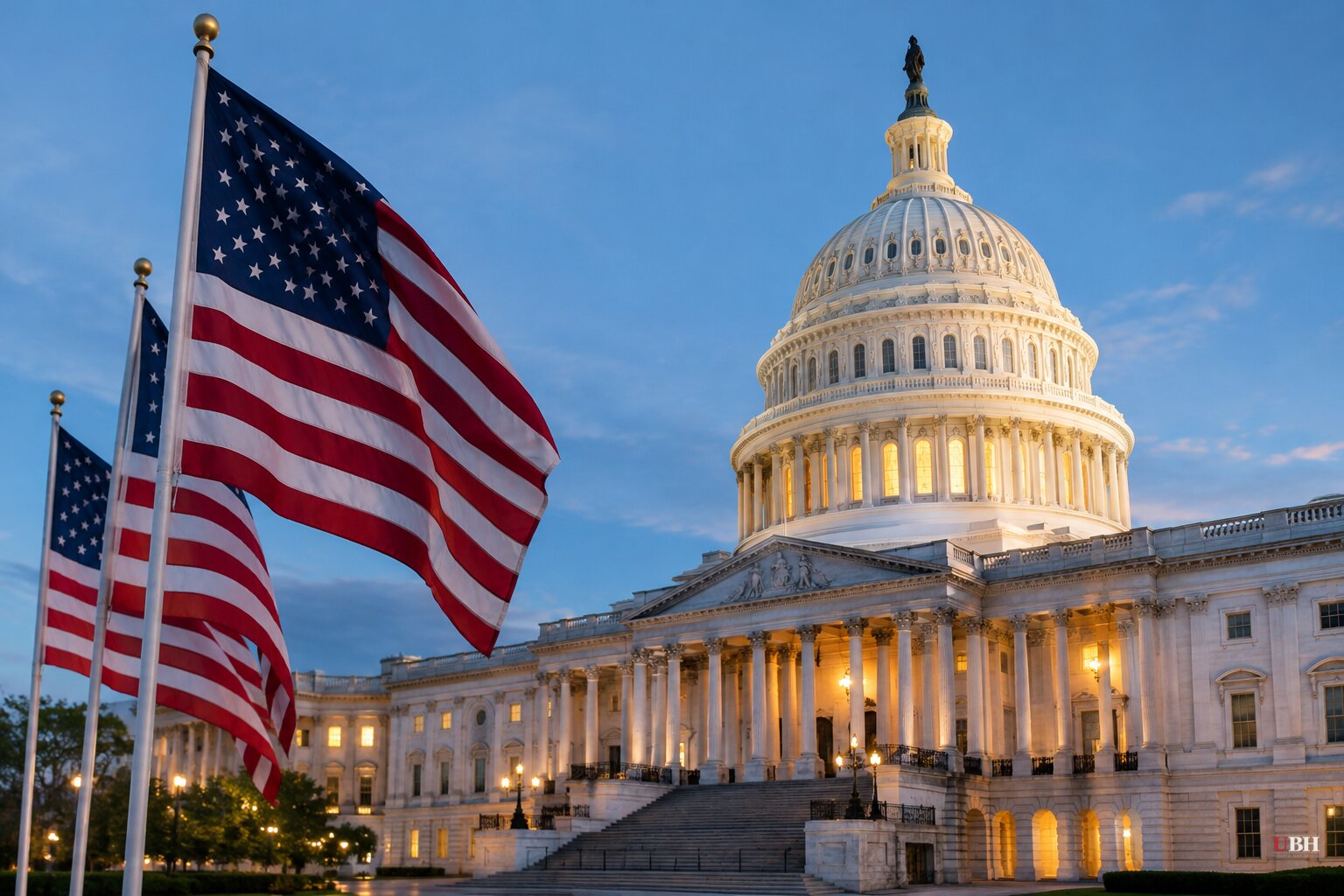
Democrats won the House and the Senate in Tuesday's midterm elections, ending the unified Republican control that has blocked their agenda since Donald Trump returned to office. Projections put them at no fewer than 54 Senate seats and no fewer than 250 House seats. Final tallies are still being settled.
The new Congress takes office in January. Jeffries, the House Democratic leader, is expected to be elected speaker then.
The first 100 hours
Jeffries has promised a House push in the opening 100 hours built around affordability, the issue that dominated a campaign shaped by tariffs, high prices and the war in Iran.
His stated priorities: restore the expired Affordable Care Act subsidies, reverse nearly $1 trillion in Medicaid cuts enacted under Trump, roll back tariffs and press for an end to the Iran conflict, which has pushed up fuel costs.
House passage is the easy part. Trump keeps his veto, and Senate rules let Republicans block most bills unless 60 senators agree. Democrats expect 54 to 56 seats.
The real leverage is the budget. Control of both chambers gives Democrats a seat at the table on spending, and they could use funding deadlines to demand concessions. Government shutdown fights come with that territory.
Oversight and subpoenas
Rep. Robert Garcia, the Democrat expected to chair the House Oversight Committee, posted two words on election night aimed at Republicans: "LAWYER UP." Sen. Ron Wyden of Oregon posted one: "Subpoenas."
Committee gavels let Democrats summon officials, demand documents and hold public hearings. Likely targets include the Trump family's business and cryptocurrency dealings, government contracts involving Elon Musk, cuts to federal agencies, immigration enforcement and the conduct of the Iran war. Democrats have also signaled interest in how the government handled the Jeffrey Epstein files.
Jeffries has said he will go after what he calls unprecedented corruption. "If you have people in high office who are so focused on enriching themselves, their family members, their friends, or their donors, then they're not focused on making life better for the American people," he said.
The administration could resist subpoenas, which would push the fights into court. Impeachment is on the table only in theory. The House needs a simple majority, but conviction takes two-thirds of the Senate, and party leaders have not committed to trying.
The Supreme Court
Jeffries also wrote the court into his bid for the speakership. In a letter to colleagues he said Democrats "must root out corrupt price gouging, clean up the mess at the Supreme Court and ban Members of Congress from trading stocks. Accountability begins at home."
On NBC's "Meet the Press" in August, he said "dramatic" reform of the court is needed. He said Rep. Jamie Raskin, likely the next House Judiciary chairman, would take the lead. Raskin's office did not immediately respond to a request for comment.
The menu of options is familiar: an enforceable code of conduct, term limits, and adding seats. The ethics push gained steam in 2023 after ProPublica reported on Justice Clarence Thomas's trips with a wealthy Republican donor that were left off his financial disclosures. Sen. Sheldon Whitehouse's bill to force a code of conduct cleared the Senate Judiciary Committee but never got a floor vote. He reintroduced it in May 2025.
The last time Democrats held Congress, in the first two years of the Biden administration, the House passed ethics requirements for justices and the Senate let them die. Biden's own commission studied the issue and recommended no structural changes, laying out arguments for and against instead.
Some on the left want to go much further. An essay in Balls and Strikes argues Democrats must build support now for adding "at least four seats" once a Democrat is back in the White House. It cites a 2024 study estimating Republicans will control the court until at least 2065 unless Congress expands it. The author says party elders long viewed expansion as too "radical" to discuss, a view the piece says has faded.
No Democratic leader has announced support for adding seats. Jeffries has not unveiled a legislative package for the court, and CBS News notes the party has not yet released its priorities for the next Congress.
What the map looked like
The results reached into Republican territory. Democrat Abdul El-Sayed won a Senate seat in Michigan, according to Rep. Ilhan Omar, who celebrated that Congress will now have eight Muslim members. The Associated Press projects Democrat Marni von Wilpert will flip California's 48th District, helped by the Democratic-backed mid-decade redistricting in California. In San Francisco, Scott Wiener defeated Nancy Pelosi's preferred candidate, Connie Chan, for Pelosi's old seat.
Republicans had bright spots. Rapper Nicki Minaj, who praised Vice President JD Vance, noted GOP wins in Florida, including Gov.-elect Byron Donalds. "Trump is STILL your PRESIDENT," she wrote.
That is the practical limit on the agenda. Democrats can pass bills in the House, run investigations and write spending terms. They cannot override a veto or break a filibuster alone. Whether Jeffries leads with the pocketbook agenda or the subpoena agenda, and whether leadership ever commits to impeachment, will start to answer itself when the new House is sworn in in January.
The stock-trading ban in Jeffries's letter is the item most likely to draw votes from both parties. No bill text has been released.
Sources used for this briefing
7 links from 7 independent newsrooms (syndicated copies of the same report count once)
These are the sources it draws on, linked so you can verify.


