
Unbiased headlines. Facts, not spin.
Unbiased Headlines is an independently owned news organization. We bring you the facts, not opinions, written fresh from 110+ named sources. Sources linked so you can verify it yourself.
 politics
Major Story (8/10)
Montana Voters Approve Corporate Election Spending Ban, and a Federal Lawsuit Followed Within Hours
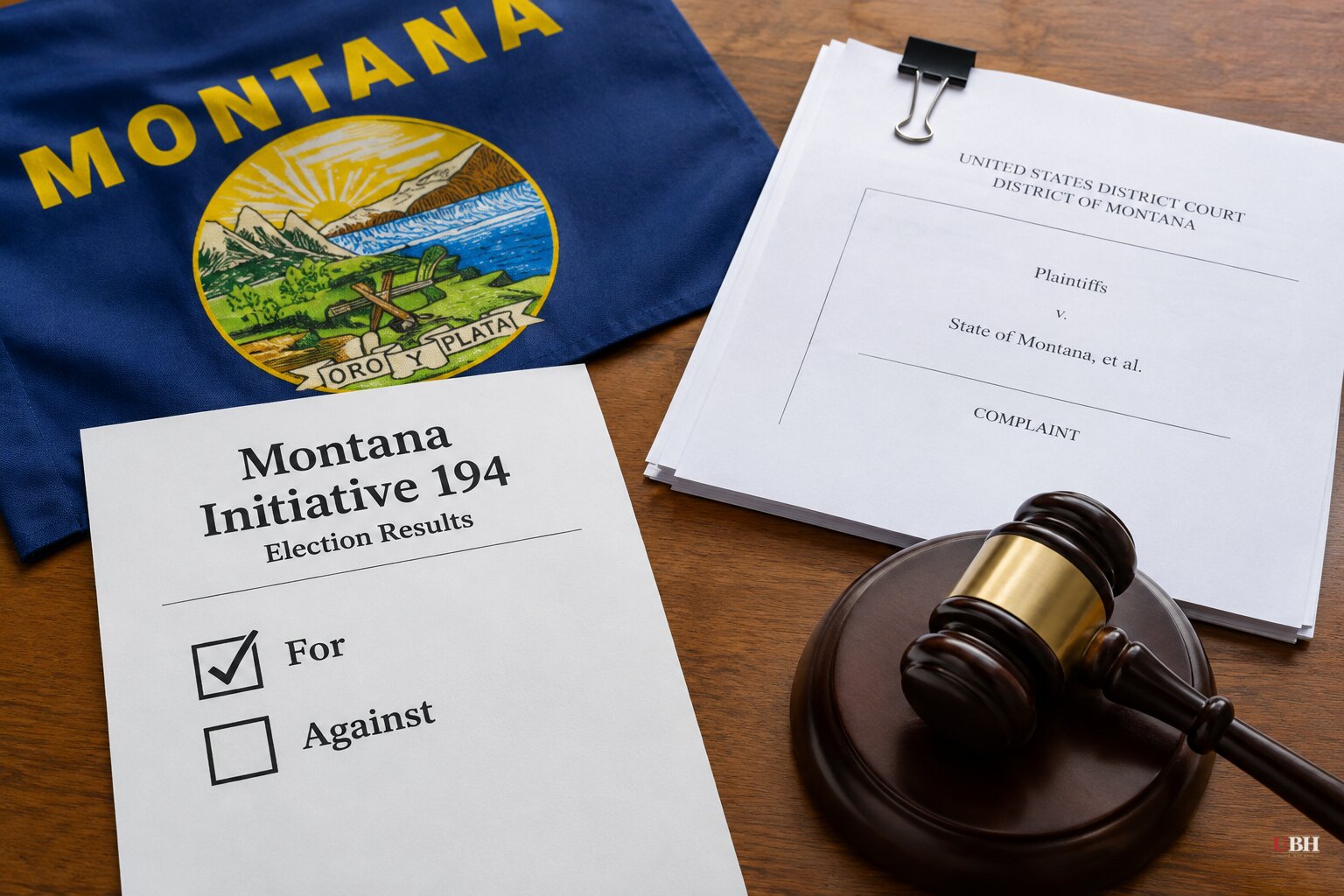
Montana voters approved Initiative 194 on Tuesday, Nov. 3, with roughly 65% voting yes. Associated Press totals with about 97% of the vote counted showed 302,179 yes votes (65.45%) and 159,491 no votes (34.55%).
The measure, called the Montana Plan, is built to get around the Supreme Court's 2010 Citizens United ruling. That decision held that corporate election spending is protected by the First Amendment. I-194 doesn't try to restrict the speech. It goes after the corporate charter instead.
How the Montana Plan works
The legal theory is that corporations may have constitutional rights, but their powers come from the states. Under I-194, corporations, trade associations, labor unions and nonprofits lose the state-granted power to spend money influencing elections.
The enforcement mechanism is the part that bites. Violators risk losing state-granted privileges such as limited liability until improperly spent funds are surrendered and legal conditions are met.
"The argument of the people supporting the initiative is, in theory, trying to be pretty simple," said Kal Munis, a Montana State University politics professor. "Keep your campaign cash out of Montana, or you run the risk of putting your shareholders' personal balance sheets on the line."
It is not only a corporate measure. Unions are covered, and so are politically active nonprofits and trade associations.
Without court intervention, the law takes effect Jan. 1, 2027. Montana's Republican-controlled legislature could amend or repeal it. Proponents have pledged to take the fight back to voters in 2028 if that happens.
The lawsuit
Opponents did not wait for the results. A federal lawsuit was filed at 11:15 p.m. Tuesday, 18 minutes before the AP called the race.
The plaintiffs are the Frontier Institute, the Frontier Action Fund, the Montana Family Institute, the Montana Family Foundation and the Montana Republican State Central Committee. They ask the court to block the law. The defendants are Attorney General Austin Knudsen and Secretary of State Christi Jacobsen.
The complaint alleges violations of the First Amendment rights to speech, assembly and press. "I-194 harms everyone," it states. "It silences organizations, preventing them from sharing information essential to their purposes." It also alleges the initiative's "vague terms" leave it unclear which actions are prohibited.
Those are allegations, and no court has ruled on them. A spokesperson for Knudsen declined to comment, saying the attorney general had not been served as of 11:30 a.m. Thursday. Jacobsen's office had not responded to a request for comment.
Business groups and GOP politicians say the approach collides with the Court's First Amendment precedents and with the "unconstitutional conditions" doctrine, which bars states from making one right depend on surrendering another.
Jason Torchinsky, a campaign finance lawyer at Holtzman Vogel, put it bluntly. "I think these professors who think they're going to try to find some quirk of state law to get around Citizens United are going to find a chilly reception at the Supreme Court," he said. He added that the Roberts court has been particularly protective of First Amendment associational rights.
The opposition to the measure came mostly in the form of op-eds from groups claiming it would prevent local businesses from participating in the political process.
What the architects say
The plan's architect is Tom Moore, a former Federal Election Commission lawyer now at the Center for American Progress. He has said he hopes to set up a Supreme Court test case.
Moore argues that striking down I-194 would carry a "doctrinal price." "They strike down McCain-Feingold and nobody in the Supreme Court majority loses any sleep over it," he said. But if justices must dismantle "fundamental, foundational" parts of state corporation law, "they're going to think twice about that." His summary: "It's states' rights versus Citizens United, and the Supreme Court has equities on both sides of that."
Jeff Mangan, president of the Transparent Election Initiative, the group behind the Montana Plan, said the lawsuit was no surprise. "We expected a lawsuit from day one, and we've been waiting for this moment," he said. "We're confident in the legal foundation of this initiative and ready for the fight ahead."
The political picture
This passed in a state Donald Trump carried by nearly 20 points in 2024. Roughly two-thirds of Montana voters backed it. Former Transportation Secretary Pete Buttigieg traveled to Butte to campaign for it.
The campaign's own pitch was blunt. "It's time to kick the oligarchs out of Big Sky country," the Yes on I-194 campaign said on its website.
The vote came in a cycle that saw a record $11.87 billion in political advertising nationwide, split about evenly between the two parties, according to the tracking firm AdImpact.
Montana is not alone. Hawaii enacted similar legislation in May, and that law is already in litigation. Montana is the first state where voters approved the approach directly, and measures like it are being explored in more than 30 states. Stacy Mitchell of the Institute for Local Self-Reliance noted that both states face court fights.
Critics warn that the same measure that silences a Wall Street-backed PAC also reaches local trade groups, labor unions and community organizations. Whether the state may do that through corporate law rather than a direct speech rule is exactly what the courts must decide.
The next move belongs to the federal judge. The plaintiffs have asked the court to enjoin the law, which is scheduled to take effect Jan. 1, 2027. Knudsen's office had not been served as of Thursday morning.
Sources used for this briefing
7 links from 6 independent newsrooms (syndicated copies of the same report count once)
These are the sources it draws on, linked so you can verify.


