
Unbiased headlines. Facts, not spin.
Every story is an unbiased news briefing written from 110+ sources across the spectrum — sources linked so you can verify it yourself.
 politics
Notable (6/10)
August 5, 2026 at 11:19 PM
politics
Notable (6/10)
August 5, 2026 at 11:19 PM
Democratic Socialists of America Notches Wins in New York, Colorado Races, Straining Democratic Party Unity
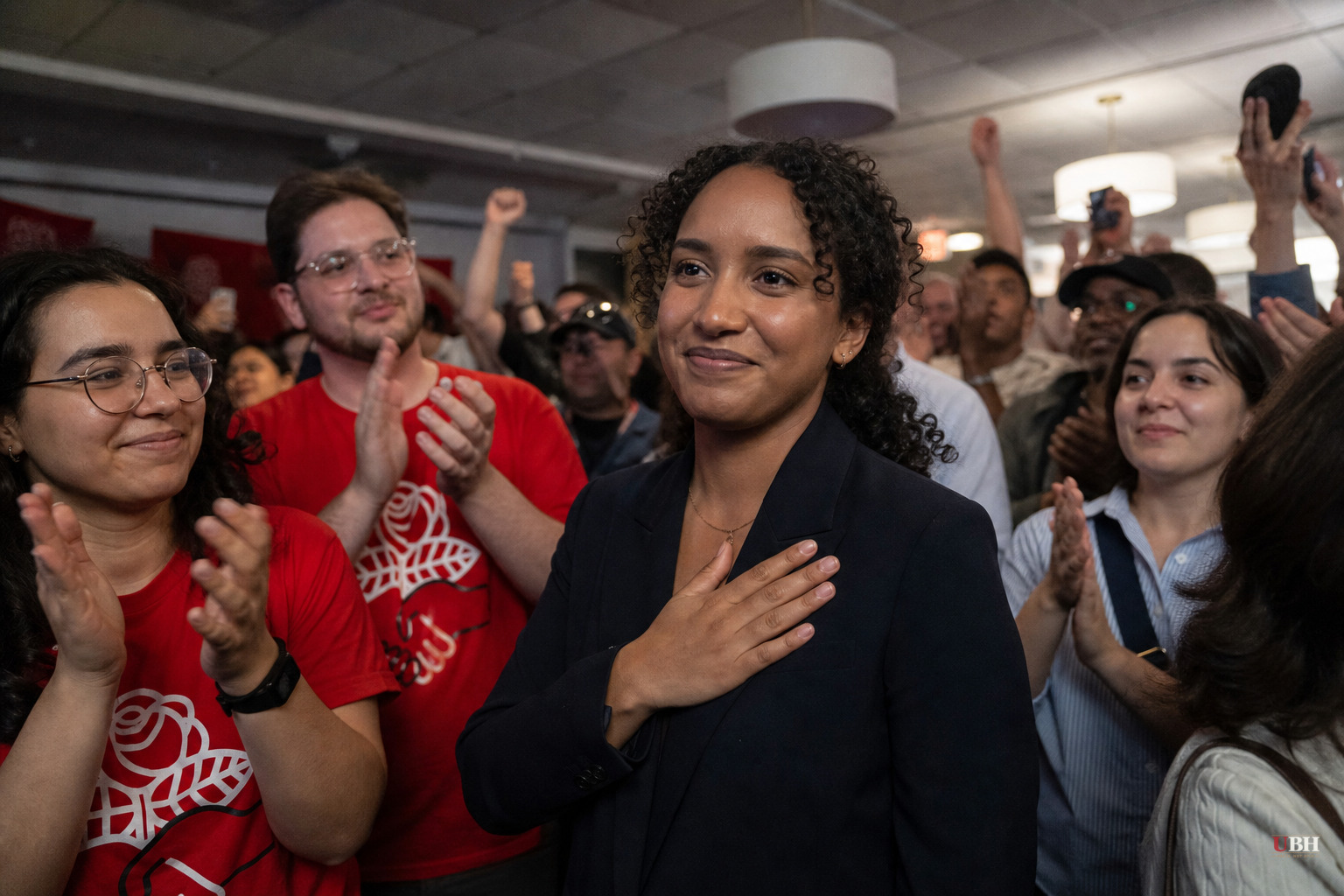
The Democratic Socialists of America has strung together a series of primary wins inside the Democratic Party over the past several weeks, and party leaders are still arguing about what to do about it.
DSA-backed candidates won three New York congressional primaries, according to Reason. A week later, DSA-backed Melat Kiros beat a 30-year incumbent in Colorado's 1st congressional district. "You are the proof that the power of organized people beats the power of organized money," Kiros told supporters after her win.
The wins follow Zohran Mamdani's mayoral primary victory in New York City. At a Mamdani victory event, the crowd reportedly chanted "You're next, you're next, you're next" when House Minority Leader Hakeem Jeffries appeared onscreen, a moment that captures how DSA organizers see the rest of the party's leadership.
A party divided on how to respond
Some Democratic officials are choosing accommodation over confrontation. Rep. Johnny Olszewski of Maryland told CNN, "I can disagree with some of the positions or statements of some of the incoming members of Congress but still welcome them. We are a big tent party."
Sen. Chris Murphy of Connecticut isn't a DSA member, but he's sympathetic to the underlying critique. "I'm not a democratic socialist," Murphy said. "But I do believe the Democratic Party has been, historically, way too timid in taking on corporate power. I think our party should have bigger ideas."
Other Democrats are far less charitable. Rep. Josh Gottheimer of New Jersey put it bluntly: "Socialists aren't Democrats. They're socialists." Rep. Adam Smith of Washington called the DSA agenda "dangerous," saying it amounts to "expressing support for communism... for open borders, defunding the police."
Sen. John Fetterman of Pennsylvania offered the sharpest line yet: "Our party's becoming an orgy of socialism." Longtime Democratic strategist James Carville has raised the possibility of a formal break, describing it as time to talk about "the S-word, schism."
What DSA leaders are actually saying
The dispute isn't just about tactics or messaging. It's about what some DSA figures openly want. DSA National Political Committee member David Jenkins has said, "our goal is communism." Fellow committee member Hazel Williams has argued that "U.S. imperialism is not a thing that can be reformed away. It has to be overthrown through revolutionary struggle."
Those aren't fringe quotes from anonymous activists. They're statements from people who sit on the organization's national leadership body, the same body coordinating primary campaigns against sitting Democrats.
A political organization whose national leadership explicitly names communism and revolutionary overthrow of the existing system as goals is not simply pushing for higher minimum wages or expanded health coverage. Whether that rhetoric reflects where DSA-endorsed elected officials actually intend to govern, once in office, is a separate and open question. Kiros, for instance, campaigned on Medicare for All and removing Democrats she says are blocking it, not on revolutionary rhetoric.
Beyond the coasts
Skeptics who assume DSA's reach is limited to Brooklyn and Los Angeles may be missing the trend. Rep. Rashida Tlaib of Michigan is a DSA member representing a swing-relevant Midwestern district, not a deep-blue coastal enclave.
In Los Angeles, DSA-backed Nithya Raman is challenging the incumbent Democratic mayor, crediting the organization as, in her words, "the only place where people were really talking about tenants' rights and renters' rights in the context of a political movement."
Not every DSA-backed candidate has made it to the finish line. Maine Senate candidate Graham Platner, once recruited by the DSA and previously self-described as having become a "communist" as he got older, dropped out of his race after rape allegations surfaced against him. That episode is a reminder that vetting candidates recruited by an outside organization carries its own risks for a party trying to absorb them.
The unresolved question
Mamdani has been in office as New York's mayor only a matter of months, not nearly long enough to judge whether his brand of democratic socialism translates into governing results, good or bad. The same is true nationally: DSA has won primaries, but winning a primary in a safely Democratic district is not the same as proving a governing model or winning a general election in a swing state.
The open question for November's midterms and beyond is whether the Democratic establishment absorbs this movement, as Olszewski and Murphy seem willing to do, or whether the Gottheimers and Fettermans of the party force the confrontation Carville is already naming. Neither outcome has happened yet.
Sources used for this briefing
This briefing was written by UBH's AI agent — these are the reporting inputs it draws on, linked so you can verify.


