
Unbiased headlines. Facts, not spin.
Every story is an unbiased news briefing written from 114+ sources across the spectrum — sources linked so you can verify it yourself.
 politics
Major Story (8/10)
October 10, 2026 at 06:56 PM
politics
Major Story (8/10)
October 10, 2026 at 06:56 PM
Delhi Detains Over 1,000 as Police Seal Protest Site Against India's Voter-Roll Purge; Kejriwal, Actor Imran Khan Among Those Held
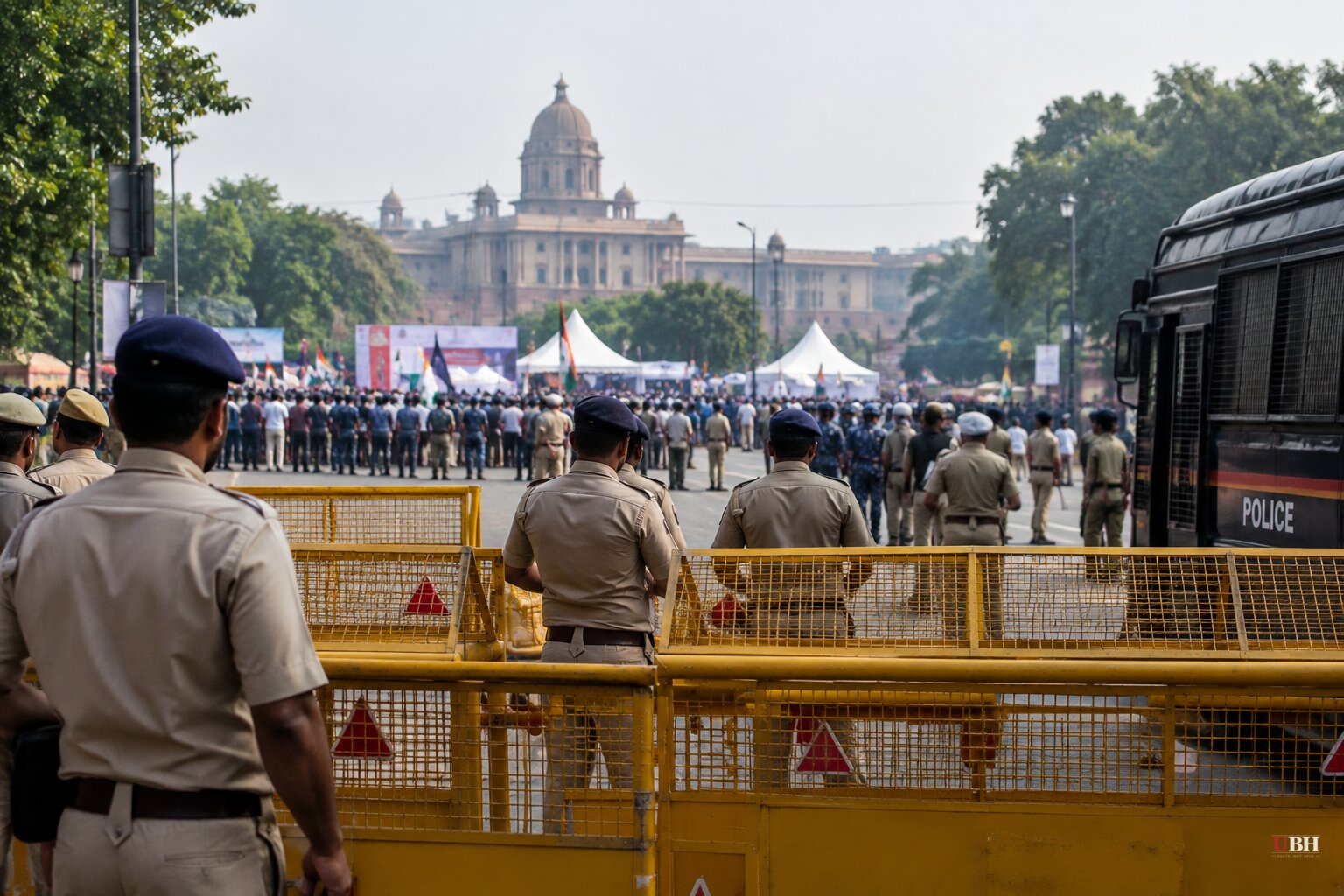
Since the Cockroach Janta Party (CJP) emerged in May, after India's Chief Justice likened some unemployed young people to "cockroaches," it has grown from a satirical youth movement into the target of a nationwide security operation. Saturday, Oct. 10, was supposed to be its biggest day: a rally at Jantar Mantar demanding the resignation of Chief Election Commissioner Gyanesh Kumar. Jantar Mantar is Delhi's designated protest ground.
The site was sealed off by security forces before the demonstration began.
Who has been detained
The arrest of founder Abhijeet Dipke on his plane at Delhi airport is already known. The wave that followed is bigger.
Al Jazeera reports Delhi police have detained more than 1,000 people, including protesters, opposition politicians, journalists, student union leaders and lawyers. The Hindu newspaper put the Delhi figure at as many as 3,000, a number Euronews said it could not verify. The Guardian reports detentions across India in the tens of thousands. Those figures do not match, and police have not published a count.
Named detainees include former Delhi chief minister Arvind Kejriwal, who was held at the protest site. Student leader Neha Bora was detained Saturday afternoon. YouTuber Dhruv Rathee, who has 33 million followers and backs the CJP, was placed under house arrest, according to the Guardian.
The Times of India reported that actor Imran Khan was among several people detained near Nana Chowk in south Mumbai, where they were protesting in solidarity. Its video coverage also lists opposition figures detained in Delhi and Kerala.
A city shut down
The Guardian counts more than 25,000 police and security personnel deployed, many brought in from other states. Roads were barricaded in the days before the rally. Trains to New Delhi were cancelled, mobile internet was suspended, and metro stations and markets were shuttered, according to Al Jazeera. Euronews reports dozens of metro stations closed.
Delhi police had refused permission for the rally. The CJP said it would go ahead anyway. AFP reporters saw dozens of protesters hauled into police vehicles after trying to march toward Jantar Mantar, shouting anti-government slogans.
Mumbai saw its own version. August Kranti Maidan was closed from morning, with police vans stationed at its gates and passersby stopped and questioned.
The CJP said Dipke and two other leaders, identified by Al Jazeera as Saurav Das and Ashutosh Ranka, were taken to "an undisclosed location." Its statement said they were "being denied access to their lawyers and cut off from all contact with others." Police have not responded to that claim in any statement we have seen.
The dispute behind the protest
The rally is aimed at the Special Intensive Revision of India's electoral rolls. The Guardian reports the exercise has removed 130 million names. Opposition parties, student groups and the CJP allege it was designed to entrench Prime Minister Narendra Modi's Bharatiya Janata Party. Some opposition parties also say the deletions affected the outcome of recent state elections the BJP won. No evidence has been presented in these accounts that deletions were targeted by party.
The Election Commission of India rejects the allegations. It says the revision was meant to remove duplicate and ineligible voters. Cleaning rolls is a legitimate function, and many democracies do it. But a removal on this scale, run by an official the opposition does not trust, is going to be challenged unless the process is open to independent audit.
BJP spokesman Sambit Patra dismissed the demonstrators as "anarchic elements." "Their flop show has been completely demolished," he said. "India is calm and going ahead under good governance."
That is difficult to square with the scale of the operation. Governments confident that a rally will flop do not usually need tens of thousands of police, suspended mobile data and cancelled trains to stop it.
As police began mass detentions Friday night, Bora said: "History is repeating itself. Just like in 1942, the arrest of leaders could not stop the Quit India movement; this movement will also not stop." Dipke said in a video before his detention: "If you think you can stop us by threatening us with jail, then you have it wrong." Another video shows him saying, "I have come to get arrested. I am not afraid of you guys."
What comes next
The immediate issue is legal. Police have not said what charges, if any, Dipke and the other leaders face, or when they will appear before a magistrate. The CJP says they have had no access to lawyers.
The larger issue is whether the Election Commission will open the revision to an independent audit. Opposition parties and student groups have demanded Kumar's resignation, and nothing in the record shows he or the commission has agreed to any outside review.
Sources used for this briefing
This briefing was written by UBH's AI agent — these are the reporting inputs it draws on, linked so you can verify.


