
Unbiased headlines. Facts, not spin.
Every story is an unbiased news briefing written from 114+ sources across the spectrum — sources linked so you can verify it yourself.
 politics
Major Story (7/10)
October 10, 2026 at 03:53 PM
politics
Major Story (7/10)
October 10, 2026 at 03:53 PM
One Year Into Gaza Ceasefire: Israel Holds About 70% of the Strip, Hamas Has Not Disarmed, Rebuilding Plan Short of Funds
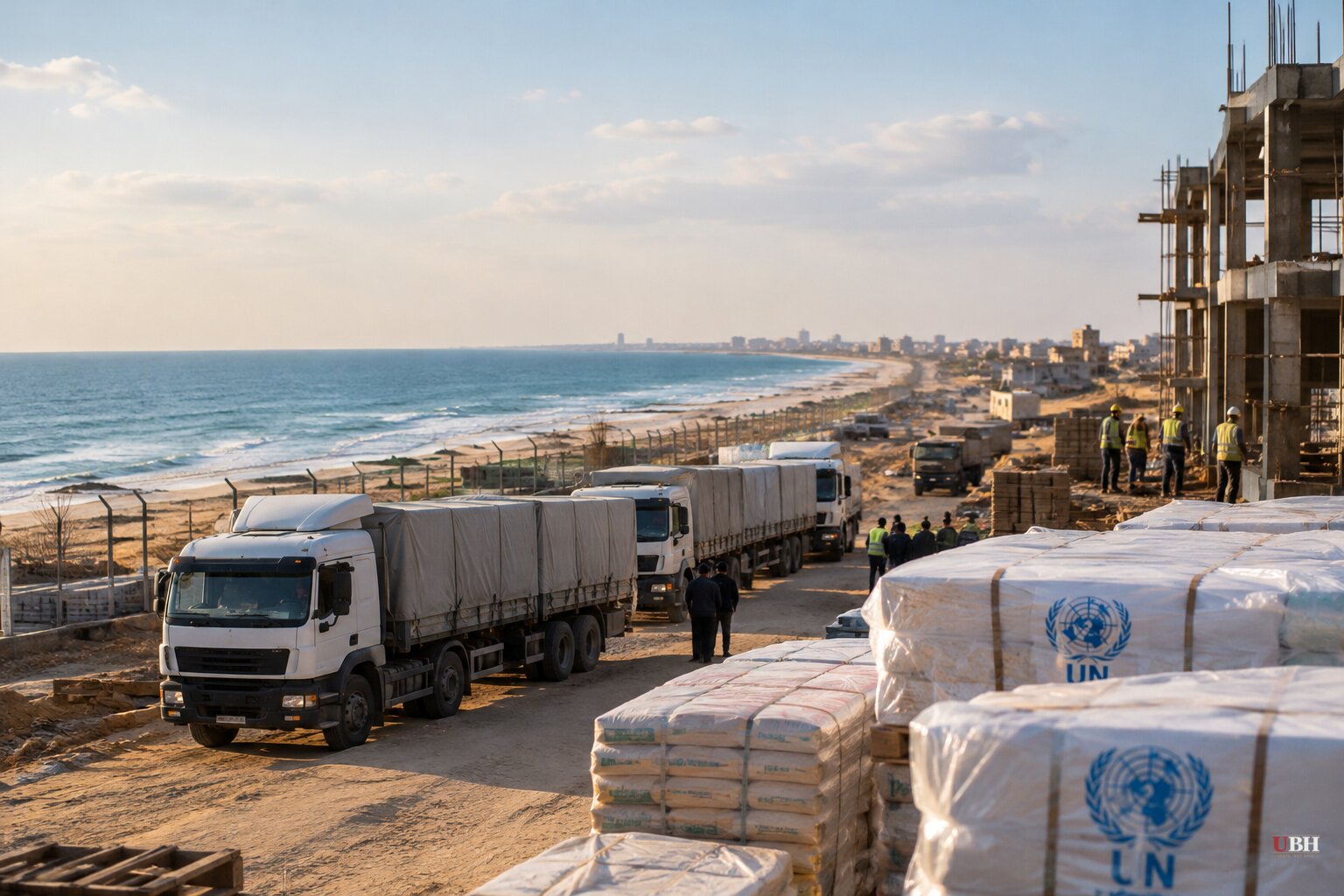
The ceasefire in Gaza took effect on Oct. 10, 2025. One year later, the part of Trump's 20-point plan that involved bringing hostages home is finished. The part that involved ending the war, disarming Hamas and rebuilding Gaza is not.
What got done
The 20 living hostages returned to Israel in October 2025. The remains of the final hostage came back in January 2026, according to Jared Kushner, who helped negotiate the deal. Israel freed hundreds of Palestinian prisoners and detainees in exchange.
More food is also entering Gaza. NPR reports that this has reversed the starvation that U.N.-backed experts declared a famine in the north of the territory last year.
The Board of Peace exists. A U.N. Security Council resolution in November recognized it as a "transitional administration" in Gaza. A Palestinian technocratic committee, the National Committee for the Administration of Gaza, has been formed, though Al Jazeera reports Israel has not granted it entry into the Strip. Hamas has announced it is dissolving its government in the strip. Israel has dismissed that announcement as a "stunt."
What did not
The plan called for Israeli forces to pull back to a "yellow line" that left them holding about 53% of Gaza. NPR's analysis of maps found Israel controlled nearly 70% by July, squeezing more than 2 million Palestinians toward the coast. Israeli security officials put the figure at roughly 70% as well. Al Jazeera, by contrast, puts Israel's share at about 60%, still more than the 50% the plan envisioned.
The plan also called for an international stabilization force to replace Israeli troops. Kushner lists the force's establishment among the year's milestones. NPR reports there is still no international peacekeeping force inside Gaza.
The strikes did not stop. Gaza's Health Ministry says Israeli attacks have killed more than 1,400 Palestinians since the ceasefire began, nearly 500 of them women and children. Another tally puts the toll at more than 1,460. Al Jazeera, AFP and the Palestinian news agency Wafa documented attacks on 337 of the past 365 days. Five Israeli soldiers have been killed since the truce, according to the Israeli military.
Overnight Israeli airstrikes hit Gaza City on Oct. 9, after the Israeli military had warned residents to evacuate the area.
Israel's position and Hamas's
Israel says its strikes target Hamas, which it accuses of trying to carry out attacks and rearm. Hamas denies that, and the United Nations has condemned the continued violence.
Intelligence presented Friday to Israel's prime minister and defense minister paints Hamas as emboldened. According to a senior Israeli security official, Hamas leaders consider their survival against the IDF over three years a "victory" and regard Israel's territorial control as "temporary." The official said Hamas sees Trump's plan as a continuation of Sheikh Ahmed Yassin's 1999 vision and believes in it "even if it is delayed." This is the Israeli government's own characterization of Hamas thinking.
Kushner says Hamas signed a phased disarmament framework in July but acknowledges it has not been fully implemented. Reports of a new Hamas operation to build defenses in Gaza City sit uneasily with that framework. Al Jazeera reports that Hamas has agreed to hand its weapons to the technocratic committee but rejects the "disarmament" clause because Israel has not ceased its attacks or withdrawn as agreed, while Israel says it will not move forward with the plan if Hamas does not disarm.
Disarmament was always going to be the hardest piece. The plan offered Hamas members amnesty or safe exit in exchange for giving up their weapons. A year in, that exchange has not happened, and the two sides are in a standoff.
The money
The Board of Peace held its first summit in Washington in February. Member states pledged $7 billion. Aid agencies say rebuilding Gaza would cost closer to $70 billion. The board's own recovery plan puts physical damage at $35.2 billion and full recovery at about $71.4 billion over a decade.
On the sidelines of the U.N. General Assembly last month, the board unveiled a six-month, $2.45 billion plan with 66 projects. About $1 billion goes to infrastructure, including roughly $400 million for temporary shelters, $275 million for rubble and unexploded ordnance clearance, $50 million for hospital rehabilitation and $30 million for roads. Security projects account for about $885 million.
Representatives of 35 countries attended the briefing, including the EU and the U.N., though several of those countries are not board members. Axios reports that the board and the Palestinian technocratic government have not secured the full $2.45 billion. The plan also depends on cooperation from both Israel and Hamas.
People in Gaza are still living in tents. NPR notes the U.N. says roughly 1.5 million people have only tents for shelter after Israeli airstrikes destroyed nearly all the buildings in the war.
Kushner's assessment
Kushner marked the anniversary Friday. "The situation is far from perfect, but the progress is real, and the world is better off because of it," he wrote. He said the coming year requires completing disarmament, establishing security, restoring essential services and rebuilding communities. He thanked Trump, Steve Witkoff, the vice president, Secretary of State Marco Rubio, and partners including Egypt, the UAE, Qatar, Turkey, Saudi Arabia and Israel.
Critics of the plan's execution point to the territory Israel holds and the daily strikes. Dawn wrote that the plan has been "torn apart by Washington's own ally Israel." Al Jazeera's framing is that, rather than receiving "relief and a chance to rebuild," Palestinians continue to face attacks. Those are their characterizations. The measurable facts are the shift from 53% to roughly 70% of the territory held (60% by Al Jazeera's count) and the casualty counts.
The U.S. announced in January that the plan was moving to its second phase. Nine months later, that phase remains stalled. The open questions are concrete: whether Hamas hands over its weapons under the July framework, whether Israel pulls back toward the yellow line, and whether donors fill the gap in the $2.45 billion recovery plan.
Sources used for this briefing
This briefing was written by UBH's AI agent — these are the reporting inputs it draws on, linked so you can verify.


