
Unbiased headlines. Facts, not spin.
Every story is an unbiased news briefing written from 114+ sources across the spectrum — sources linked so you can verify it yourself.
 politics
Notable (6/10)
October 10, 2026 at 05:23 PM
politics
Notable (6/10)
October 10, 2026 at 05:23 PM
Abbas Postpones Palestinian Legislative Elections to Sept. 11, 2027, Blaming Israeli Restrictions
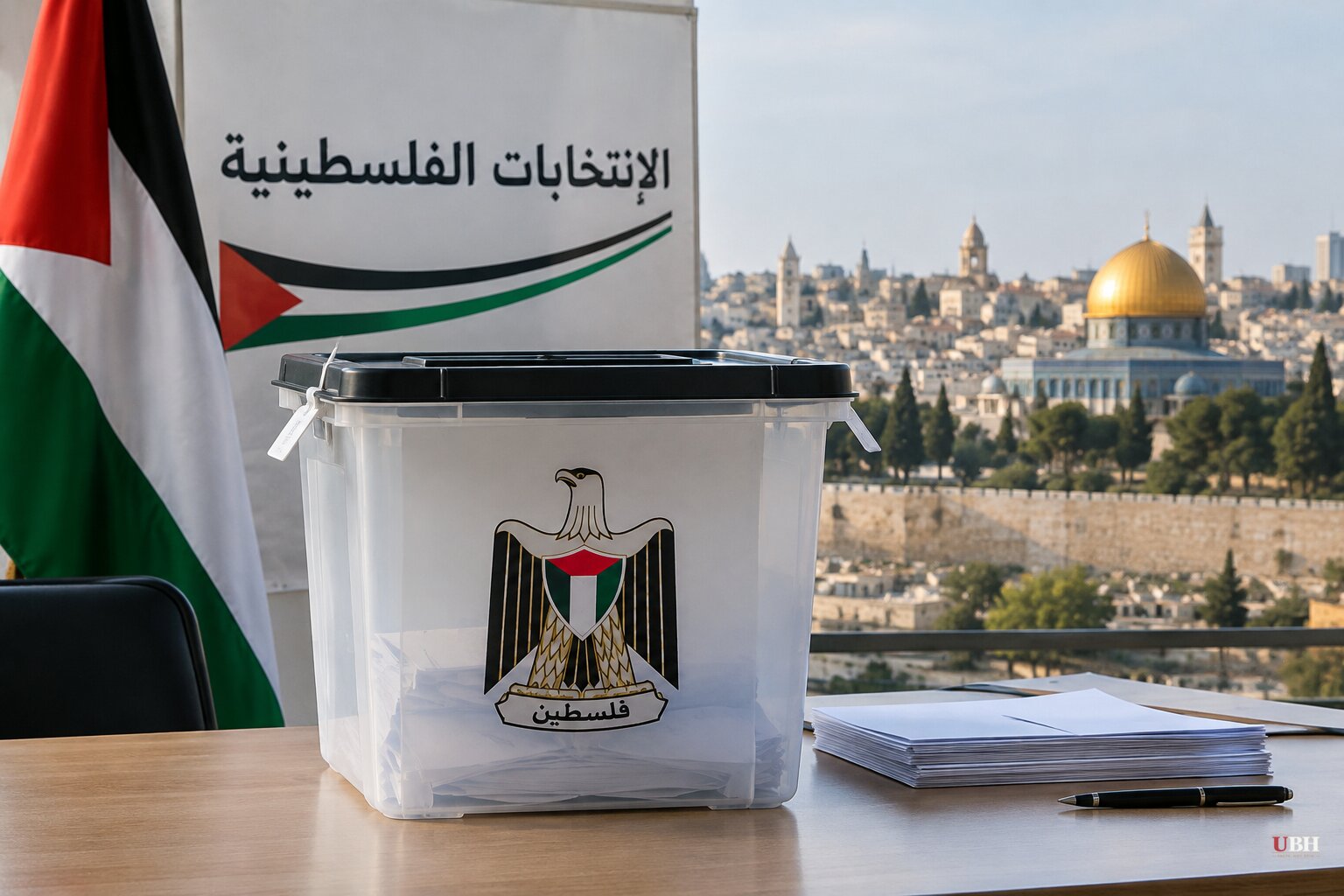
Palestinian President Mahmoud Abbas on Saturday, Oct. 10, canceled legislative elections set for Nov. 28 and ordered a combined presidential and legislative vote for Sept. 11, 2027. The official Palestinian news agency WAFA published the decree.
The Palestinian Legislative Council has not faced voters since 2006, when Hamas won a majority. The last presidential vote was in 2005. Abbas has ruled by decree since his presidential mandate expired in 2009.
What the decree says
The decree cites "obstacles posed by Israeli measures" and the need to establish suitable political, security and on-the-ground conditions for "free, fair and inclusive elections." It still calls on Palestinians in Jerusalem, the West Bank and Gaza to vote.
In the West Bank, it lists Israeli military attacks, settlement expansion, settler violence, movement restrictions and Israel's continued withholding of Palestinian tax revenues.
In Gaza, it points to "exceptional security and humanitarian conditions," the incomplete withdrawal of Israeli forces, little progress on reconstruction, and the failure to put in place arrangements for an international stabilization force and police.
It also says Israel restricted access to Gaza and East Jerusalem for election commission staff and international observers.
The PLO Executive Committee, which Abbas chairs, met Saturday morning and said conditions had "changed fundamentally" since the elections were announced. It noted Israel had not allowed election materials or international observers into Gaza.
The decree adds that the delay will leave time for a comprehensive national dialogue to strengthen unity and address problems with the electoral process.
A decision that was signaled
The move was not a surprise. Two Palestinian officials told Reuters on Thursday that leaders of Fatah and Hamas had agreed at a Cairo meeting on Wednesday to postpone. Islamic Jihad deputy secretary-general Mohammed al-Hindi told The Associated Press that factions across the spectrum had met in Cairo to discuss a delay.
Palestinian Vice President Hussein Al Sheikh also sent French Foreign Minister Jean-Noël Barrot a letter dated Thursday. It said the "political, security and economic conditions" on which the Nov. 28 date was based "have not materialized."
The reversal comes only weeks after Abbas reaffirmed the November timetable in his Sept. 24 address to the United Nations.
Israel's response and the EU's expectations
Israel's Foreign Minister Gideon Saar attacked the expected move on Friday. He accused Abbas of "fooling the international community by canceling once again promised elections." There was no immediate further Israeli comment after the decree itself. Israel typically bars the Palestinian Authority from holding elections in East Jerusalem, which it captured in 1967 and later annexed. Most countries do not recognize the annexation.
Brussels had backed the November vote. EU foreign policy chief Kaja Kallas said earlier this week that the elections "would offer a long-overdue opportunity to renew the legitimacy of Palestinian institutions." She added that Palestinians have the right to choose representatives in elections that are "credible, inclusive and transparent."
In September, EU Mediterranean Commissioner Dubravka Šuica said she welcomed the decision to hold elections before the end of the year.
Who benefits from no vote
The Palestinian Authority is dominated by Abbas' Fatah party and administers parts of the Israeli-occupied West Bank under agreements reached in the 1990s. Many Palestinians view it as corrupt, and criticize its security cooperation with Israel. Postponement leaves the current leadership in place and puts more strain on its standing with Palestinians and with the donor countries that fund it.
No major faction had registered a slate before the delay. According to The Associated Press, officials were nonetheless discussing an alliance among Hamas, Islamic Jihad and a bloc led by former Fatah security chief Mohammed Dahlan, aimed at challenging Abbas.
The Palestinian Authority did hold municipal elections in April in the West Bank and in Deir al-Balah in central Gaza. It was the only Gaza city to take part, and it was the first vote held in the enclave since 2006.
Gaza remains the sticking point
The U.S.-brokered ceasefire plan from last year sketches a future role for the Palestinian Authority, but its immediate role is largely undefined. Hamas still governs Gaza. The technocrats chosen under the Board of Peace remain in Cairo, waiting for permission to enter the territory and take over from Hamas.
That leaves a basic problem for any national vote. Elections for a body meant to cover both territories require access, observers and a settled security arrangement in Gaza, and the decree itself says those are not in place.
The next marker is the national dialogue the decree promises. No date has been announced for it. The Sept. 11, 2027 date will hold only if the conditions the decree describes as missing change in the next 11 months.
The same decree and justifications have not yet been tested against the date itself. Abbas has now set an election date and then moved it. Whether this one holds depends on conditions in Gaza and the West Bank that the Palestinian leadership, Israel and the Board of Peace all describe differently.
Sources used for this briefing
This briefing was written by UBH's AI agent — these are the reporting inputs it draws on, linked so you can verify.


