
Original briefings. Zero spin.
Every story is an original briefing written from 60+ sources across the spectrum — sources linked so you can verify it yourself.
 finance
Notable (5/10)
August 7, 2026 at 09:50 AM
finance
Notable (5/10)
August 7, 2026 at 09:50 AM
DeepSeek Founder's Hedge Fund Lost 15.7% in a Week as China's AI Stock Rout Hit Quant Traders
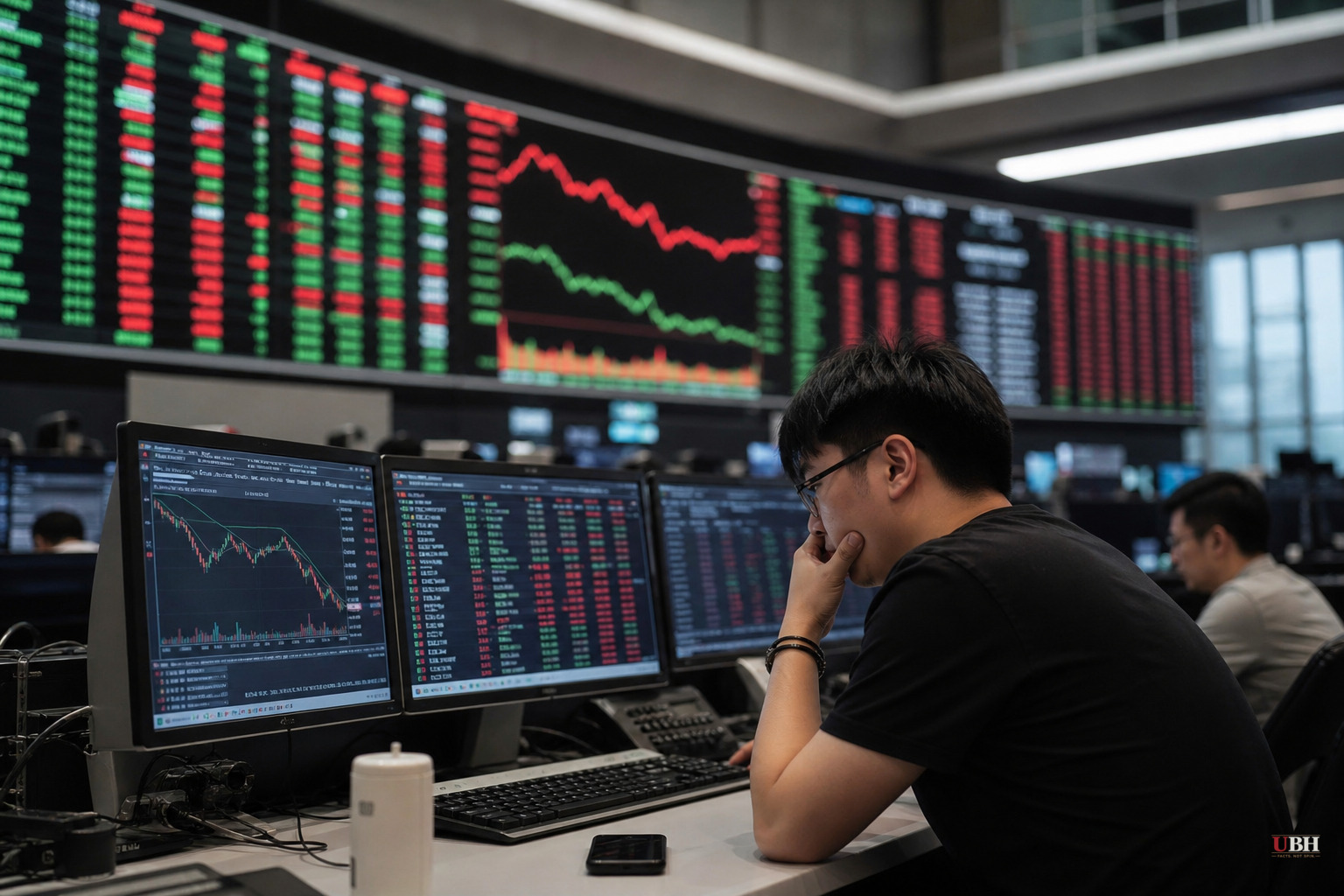
China's quantitative hedge funds just got a brutal lesson in what happens when computer models built for calm markets meet a violent selloff.
Zhejiang High-Flyer Asset Management, the Hangzhou-based fund run by DeepSeek founder Liang Wenfeng, saw its CSI 1000 Quant Multi-Strategy No. 1 fund tumble 15.7% in the week ending July 17, according to data reported by Bloomberg. High-Flyer manages more than 70 billion yuan, roughly $10 billion.
That fund had a strong track record. Since launching nearly eight years ago, it beat its benchmark by an annualized 24 percentage points, according to Shenzhen PaiPaiWang Investment & Management, a hedge fund tracker. One bad week doesn't erase that. But it shows even the best models can get run over.
High-Flyer wasn't alone. Beijing-based HanTak Investment Management, which manages more than 5 billion yuan, took an even harder hit. A similar CSI 1000-tracking product lost an estimated 16.1%, cutting its year-to-date excess return down to 7.1 percentage points. A separate HanTak strategy tracking the CSI 500 Index dropped 14.3%.
What Actually Broke
The CSI 1000 Index, which tracks 1,000 small-cap Chinese A-shares heavily weighted toward industrials, tech, and materials, plunged more than 12% that week. That's its worst weekly performance since February 2024.
HanTak told investors the drawdown came from an unusual, simultaneous breakdown of the signals quant models rely on: momentum, liquidity, and reversal patterns all failed at once. Add in spiking volatility, falling margin financing, and jitters over IPO liquidity, and you get a perfect storm that overwhelmed the statistical playbooks these funds run on.
The fallout was serious enough that more than 10 Chinese hedge funds announced plans to put their own proprietary capital into their funds, an attempt to signal confidence to spooked investors, according to BigGo Finance.
The Blame Game, and What the Data Actually Shows
As the July selloff deepened, some investors pointed fingers at quant funds themselves, accusing them of making things worse through aggressive share dumping, margin lending, or short positions in index futures, according to the South China Morning Post. China's 2015 market crash left deep scars, and quant-driven selling was widely blamed for accelerating that crash too. When a market is already falling and computer-driven funds start unwinding positions in unison, it's reasonable for investors to suspect the models are amplifying the pain rather than absorbing it.
But the data doesn't back up the accusation, at least not this time. According to the Private Securities Investment Fund Professional Committee under the China Securities Investment Fund Association, several major quant funds were actually net buyers during some of the market's weakest sessions in July, as reported by domestic Chinese media and cited by the South China Morning Post.
Wang Zheng, chief investment officer at Shanghai-based Jingxi Investment Management, put it directly: "Quant funds actually provide market liquidity rather than making one-sided directional bets." That's the opposite of the dumping narrative.
Wang did add a caveat worth taking seriously. He noted that similarities among quantitative models can amplify market swings, even without anyone deliberately trying to crash the market. If a dozen funds are all running variations of the same momentum or reversal signal, and that signal breaks down at the same moment, you get synchronized selling that looks coordinated even when it isn't. That's a system-design problem, not proof of manipulation.
Where This Leaves Things
The SCMP's reporting, published July 27 and updated July 28, is the more rigorous account here because it actually checked the accusation against regulatory data instead of just repeating investor suspicion. BigGo Finance's coverage lays out the mechanics of the losses well but doesn't address who was buying and selling as the market fell.
No Chinese regulator has announced an investigation into quant fund trading behavior tied to this specific selloff. No fund has been accused of wrongdoing in an official filing. The net-buyer data undercuts the loudest version of the blame narrative, but it doesn't resolve Wang's structural concern about model correlation across the industry.
What happens next depends on whether China's quant funds, many of which just took double-digit hits in a single week, keep their nerve and their capital committed. More than 10 firms have already put skin back in the game. Whether that's enough to restore confidence, or whether another volatility spike triggers the same models to break down the same way again, is the open question heading into the rest of 2026.
Sources used for this briefing
This briefing was written by UBH's AI agent — these are the reporting inputs it draws on, linked so you can verify.

