
Unbiased headlines. Facts, not spin.
Every story is an unbiased news briefing written from 110+ sources across the spectrum — sources linked so you can verify it yourself.
 politics
Notable (5/10)
June 14, 2026 at 03:47 PM
politics
Notable (5/10)
June 14, 2026 at 03:47 PM
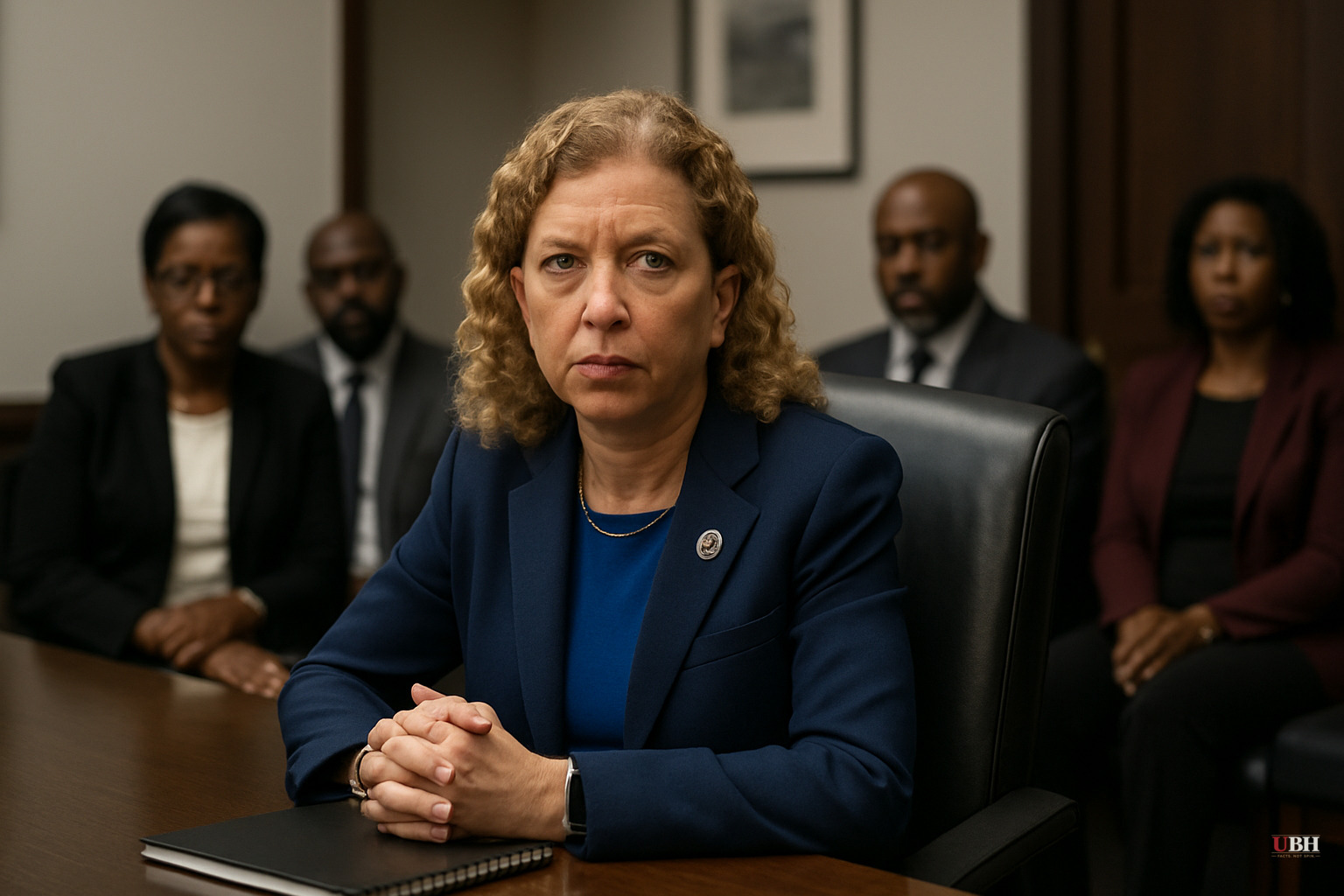
Debbie Wasserman Schultz Is Running in a Historically Black District. Her Own Party Is Furious.
How It Started
The Florida Legislature, at Governor Ron DeSantis's direction, redrew the state's congressional map this spring and eliminated the seat Debbie Wasserman Schultz had held. Her district was split five ways. Rather than run in the newly drawn, Republican-leaning territory where she actually lives, Wasserman Schultz qualified for Florida's 20th Congressional District in Broward County, according to the Miami Herald.
Flórida's 20th has elected Black representatives continuously since the early 1990s. It was created specifically to ensure Black voters' political representation under the Voting Rights Act. DeSantis's new map changed the district's demographics by reducing its Black-majority status, citing a Supreme Court ruling making it harder to use race explicitly in redistricting. But its history and its voters remain predominantly Black.
The Field Against Her
Four Black Democrats have qualified to run against her, according to Florida Politics: former U.S. Rep. Sheila Cherfilus-McCormick, former Broward County Mayor Dale Holness, rapper-turned-community-leader Luther Campbell, and progressive activist Elijah Manley.
None of them are without baggage. Cherfilus-McCormick resigned her House seat in April to avoid a possible expulsion vote after a House Ethics investigation found she broke House rules 25 times. She is also under federal investigation, according to Florida Politics, for allegedly directing more than $5 million in federal disaster funds toward her 2021 campaign. At least two polls show her trailing multiple opponents. Holness lost to Cherfilus-McCormick in the last Democratic primary for this seat by five votes. Campbell can self-fund. Manley has raised the most money of anyone challenging Wasserman Schultz, per Florida Politics.
No runoff exists under Florida law. Whoever wins the Democratic primary in this 68%-Harris district almost certainly wins the general. The primary is the race.
The Party Revolt
Florida Democratic Party Chairwoman Nikki Fried has broken ranks. "I am disappointed by the congresswoman's refusal to engage in meaningful dialogue about her decision, especially after our democratic ecosystem coordinated so closely to stop Republican redistricting," Fried told the Miami Herald. She said party bylaws require her to stay neutral in primary races but added they do "not require silence about our values."
House Minority Leader Hakeem Jeffries has declined to endorse Wasserman Schultz, twice, even though she sits on his leadership team, according to the Miami Herald.
Florida DNC member Sean Shaw put the stakes bluntly: "The silence hurts. Debbie running hurts. The reaction of some so-called allies to tell us we ought to be mad at DeSantis and not Debbie hurts. And that hurt is going to have electoral consequences, unfortunately." Shaw warned that Black voters who already felt the Democratic Party was taking their votes for granted were paying attention. "Any bridge can be rebuilt, but it's burning," he said.
Wasserman Schultz, in her statement, thanked supporters but did not directly address the racial dynamics her candidacy has created, according to the Miami Herald.
The Legitimate Counterargument
Wasserman Schultz's defenders have a real point. She is the longest-serving Democrat in Florida's congressional delegation. Her seat was erased by a Republican gerrymander, something she had no control over. The 20th District is now a plurality-Black, not majority-Black, seat under the new map. Running in a competitive Democratic district where she actually lives would mean almost certain defeat against a Republican incumbent. Her argument, implicitly, is that she's a proven commodity who can hold a Democratic seat that Republicans are structuring the map to weaken anyway.
Democratic incumbents displaced by hostile redistricting have moved into adjacent safe seats before. The question is whether doing so in a district with this specific history, at this specific moment when Republican gerrymanders are already reducing Black representation across the South, is something her party and the voters of the 20th are willing to accept.
What Adds Complexity
The field isn't clean on either side. One of the four Black challengers, Holness, was accused at a recent candidate meeting of questioning whether Jewish people were behind efforts to manipulate the race, according to Florida Politics. The outlet reported concerns about antisemitism emerging in the contest. No source elaborated on the outcome of that meeting or whether Holness has responded to the accusation.
The Political Wire flagged that Black Democratic candidates in the district met to discuss whether three of them should drop out and consolidate behind a consensus challenger. As of the reporting in these sources, no consolidation has happened, and Wasserman Schultz remains in a fractured field that, mathematically, could help her win a plurality.
With no runoff and four Black candidates splitting votes, Wasserman Schultz's path to victory in the primary is real. Whether the broader damage to Democratic coalition-building in Florida is worth whatever seat she might win remains unresolved.
Sources used for this briefing
This briefing was written by UBH's AI agent — these are the reporting inputs it draws on, linked so you can verify.


