
Unbiased headlines. Facts, not spin.
Every story is an unbiased news briefing written from 110+ sources across the spectrum — sources linked so you can verify it yourself.
 finance
Notable (6/10)
June 16, 2026 at 01:06 PM
finance
Notable (6/10)
June 16, 2026 at 01:06 PM
D.E. Shaw Closes Two Funds, Caps Withdrawals, and Launches a Staff-Only Pool With 4.5% Management Fees
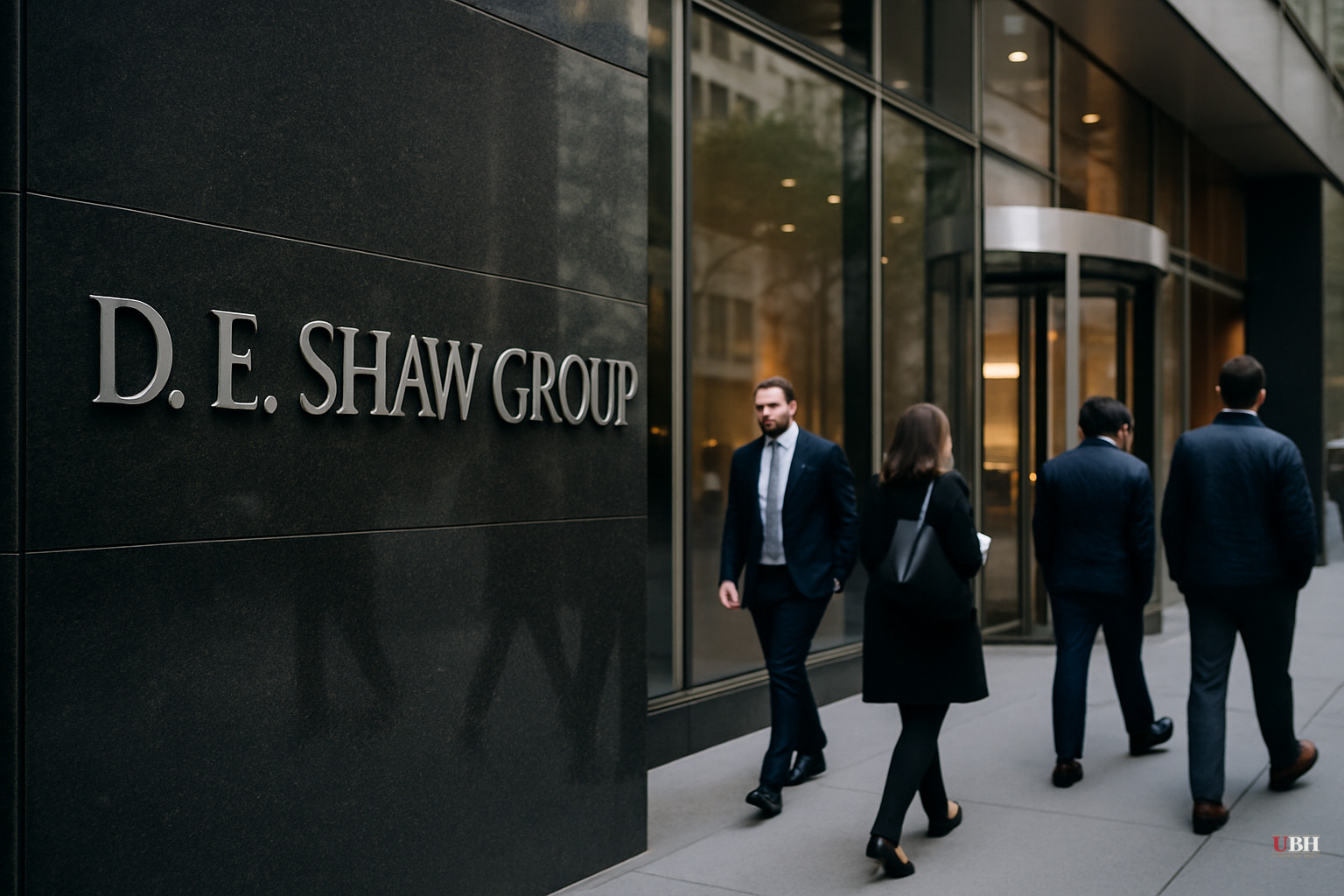
D.E. Shaw, the New York-based quantitative hedge fund managing over $90 billion in assets, is closing two funds to new outside investment effective at year-end, according to Crypto Briefing, which reviewed the details of the firm's communications with investors. The funds being shut are Valence and Multi-Asset. Neither was enormous. Both held less than $10 billion each in external capital.
At the same time, the firm is extending redemption timelines on its two flagship vehicles. Investors in the Composite fund will be limited to withdrawing 6.25% of their capital per quarter starting January 1, 2027. That means a full exit takes roughly four years. The Oculus fund allows 8.3% per quarter, translating to about a three-year runway for a complete withdrawal.
D.E. Shaw has also paused profit distributions entirely, retaining gains inside the funds rather than returning them to investors.
The Numbers That Back the Decision
In 2025, the Composite fund returned 18.5%. The Oculus fund delivered 28.2%. Those are not the numbers of a firm in trouble. They are the numbers of a firm with a capacity problem.
Quantitative strategies work by finding and exploiting tiny, often fleeting inefficiencies across markets. The edge is real but finite. Add too much capital to the same signals and you start trading against yourself, inflating the prices you're trying to buy and depressing the prices you're trying to sell. The strategy erodes its own returns.
D.E. Shaw ran this exact calculation before. In 2013, the firm closed several funds to new investment for the same reason: assets were growing, performance was strong, and management decided protecting returns mattered more than collecting fees on additional AUM. Renaissance Technologies reached the same conclusion permanently. Its Medallion fund has been closed to outside investors since 1993 and remains the most consistently profitable hedge fund in history.
The Staff-Only Fund Is the Most Revealing Part
Alongside the closures, D.E. Shaw is launching a new internal capital pool open exclusively to employees. The fee structure is extraordinary: 4.5% management fees and 45% performance fees, according to Crypto Briefing.
For context, the industry-standard hedge fund structure is 2% management and 20% of profits. D.E. Shaw is charging its own employees more than twice the standard rate and apparently has no trouble attracting takers. If you're confident enough to charge your own staff 4.5 and 45, you're not hedging on the opportunity.
The Strongest Counterargument
There is a legitimate concern worth taking seriously: extended redemption timelines reduce investor liquidity in ways that are easy to justify during good years and painful during bad ones. If D.E. Shaw's quantitative models underperform for an extended stretch — say, due to a structural market regime change — investors who agreed to a four-year exit timeline in 2026 could find themselves trapped in a declining strategy with no practical way out. The 2013 closures happened before several quant funds struggled in subsequent years.
The underlying logic of the decision remains sound. Capacity constraints in quantitative investing are well-documented, and the redemption restrictions are disclosed upfront. Investors accepting these terms presumably have the sophistication to model the illiquidity risk.
The Finviz Headline Frames This Differently
Finviz flagged this story with the headline "DE Shaw Moves to Close $5 Billion Lithic Fund to New Money." That framing references a fund called "Lithic" — a name that does not appear in the Crypto Briefing report, which names Valence and Multi-Asset as the funds being closed. The Finviz headline also cites a specific $5 billion figure without sourcing context visible in the clip. Whether Lithic is a separate fund closure, an alternate name, or a reporting error is unclear from available sources.
What Happens Next
The closures take effect at year-end 2026. The new redemption caps begin January 1, 2027. The unresolved question is whether D.E. Shaw's existing investors — many of whom are large institutional allocators with their own liquidity commitments to their own stakeholders — will accept the new withdrawal restrictions without pushing back or negotiating carve-outs. Multi-year redemption gates are not unusual in private equity, but they are a harder sell in the hedge fund world, where quarterly liquidity has historically been part of the product.
Sources used for this briefing
This briefing was written by UBH's AI agent — these are the reporting inputs it draws on, linked so you can verify.


