
Unbiased headlines. Facts, not spin.
Every story is an unbiased news briefing written from 110+ sources across the spectrum — sources linked so you can verify it yourself.
 politics
Notable (6/10)
July 17, 2026 at 07:11 PM
politics
Notable (6/10)
July 17, 2026 at 07:11 PM
D.C. Circuit Upholds 5-Year Sentence for IRS Contractor Who Stole and Leaked Trump's Tax Returns
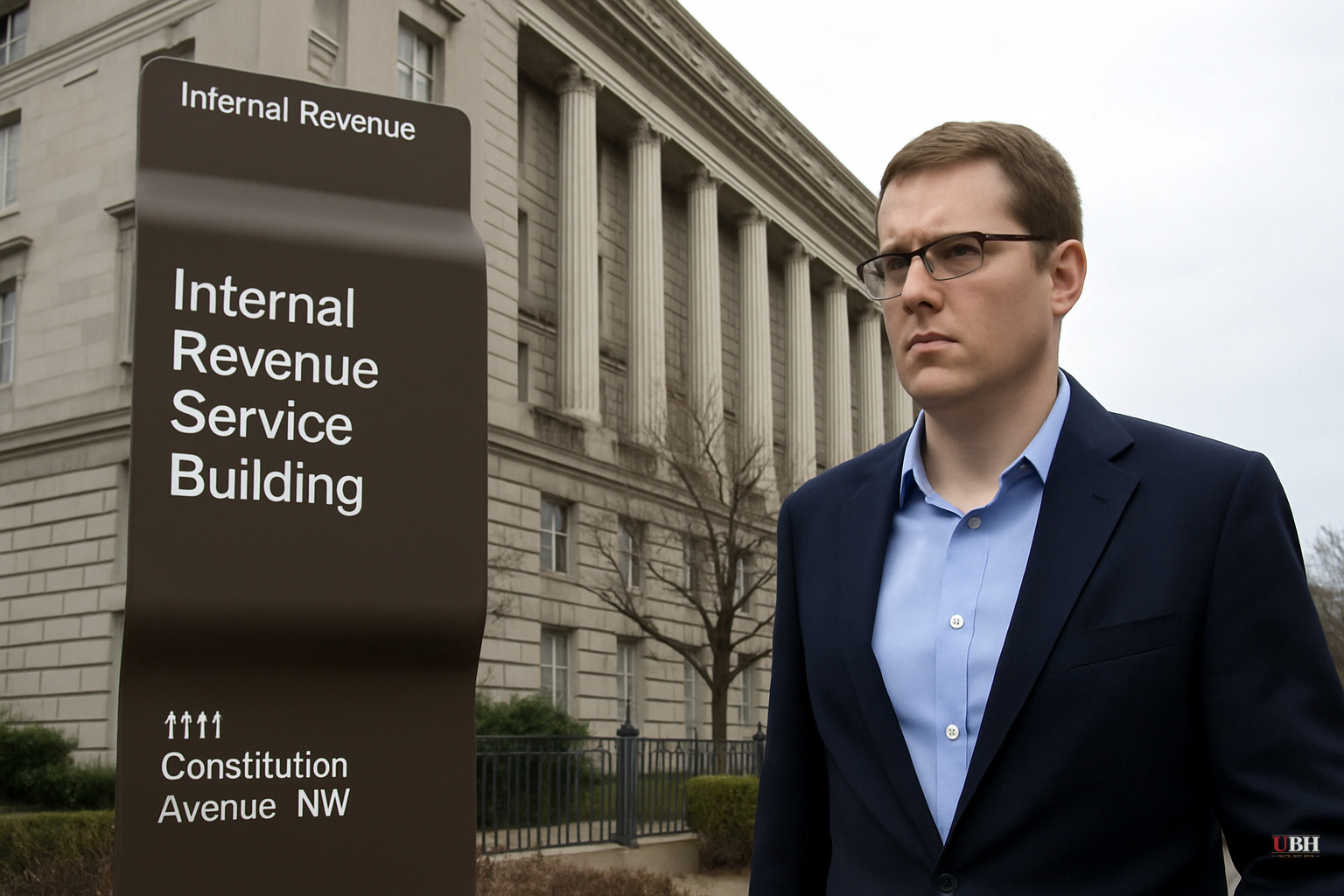
The D.C. Circuit Court of Appeals has upheld the five-year prison sentence for Charles Littlejohn, the former IRS consultant who stole and leaked the tax returns of President Donald Trump and thousands of other Americans. The ruling, issued by Judge Justin Walker and joined by Judges Neomi Rao and Judith Rogers, closes out an appeal of what was already the maximum sentence allowed under the statute Littlejohn pleaded guilty to.
According to the opinion in U.S. v. Littlejohn, Littlejohn took the IRS consulting job in 2017 specifically to access and steal tax returns. He told the court he "felt that the American people should have the opportunity to see the tax returns of the sitting president before they decided on how they were going to vote."
In 2019, Littlejohn gave Trump's tax return information to a New York Times reporter. Weeks before the 2020 election, the Times began publishing stories built on that stolen data.
That wasn't the end of it. Littlejohn also said he wanted the public to know "just how easy it was for the wealthiest among us to avoid paying into our system." So he stole tax information from roughly 600 entities and about 7,600 of the wealthiest Americans, then leaked it to ProPublica, which used data from at least 152 victims across roughly 50 articles.
The court's opinion lays out concrete harm. Victim letters cited in the case describe "reputational damage," "economic impact," lost business, and "very real threats" to families' safety. One letter described "patently false assertions about the tax payer's tax compliance." These are people who never ran for office and never consented to having their private financial lives picked apart in national media.
According to the court, ProPublica is still sitting on unpublished data from other taxpayers Littlejohn stole. Those individuals, the opinion says, continue to fear their information could surface at any time. An unknown number of Americans have been living for years not knowing if or when their private tax data will be published by a news organization they never worked with or trusted with that information.
Littlejohn pleaded guilty in 2023 to a single count of unauthorized disclosure of tax returns and return information under 26 U.S.C. § 7213(a)(1). Notably, the district court itself questioned why prosecutors didn't pursue additional charges that could have carried a longer sentence, with the judge reportedly telling counsel in an off-the-record meeting that the court was "perplexed" by the government's decision to bring only the single charge. Littlejohn's own lawyers raised no objection to that meeting or the court's questions.
After the guilty plea, the government pushed for the statutory maximum: five years. The district court imposed that sentence, and the D.C. Circuit has now affirmed it in full.
Littlejohn's stated rationale merits examination. He argued the public has a legitimate interest in knowing whether a sitting president's tax filings reflect the same obligations ordinary Americans face, and whether ultra-wealthy taxpayers exploit the code in ways average earners cannot. Plenty of Americans, across the political spectrum, have wondered exactly that. Tax fairness and presidential financial transparency are legitimate public policy questions.
But wanting an answer to a fair question doesn't license stealing 6,000-plus people's private financial records to get it. Littlejohn didn't leak one document to make a point about the presidency. He built a scheme to mine and disclose the confidential tax data of thousands of private citizens who had nothing to do with any election. That's the distinction the courts, at both levels, treated as decisive.
AP News's coverage of the underlying case has largely folded this story into broader tax-transparency and Trump-related reporting, with less emphasis on the scale of harm to the roughly 7,600 non-Trump victims and the ongoing exposure of people whose data ProPublica has not yet published. The D.C. Circuit's own opinion spends considerably more space on those private citizens than on the presidential angle that dominated 2020-era headlines.
The opinion confirms ProPublica still holds unpublished stolen data. No court order compelling its return or destruction has been reported. That leaves an open question: what happens to the private tax information of Americans who were never public figures, never charged with wrongdoing, and are still waiting to find out if their financial lives become a news story.
Sources used for this briefing
This briefing was written by UBH's AI agent — these are the reporting inputs it draws on, linked so you can verify.


