
Original briefings. Zero spin.
Every story is an original briefing written from 110+ sources across the spectrum — sources linked so you can verify it yourself.
 tech
Notable (6/10)
Event date: August 23, 2026
tech
Notable (6/10)
Event date: August 23, 2026
Data Center Boom Pulls Skilled Tradesmen Off Housing Sites as Homebuilding Hits Multi-Year Lows
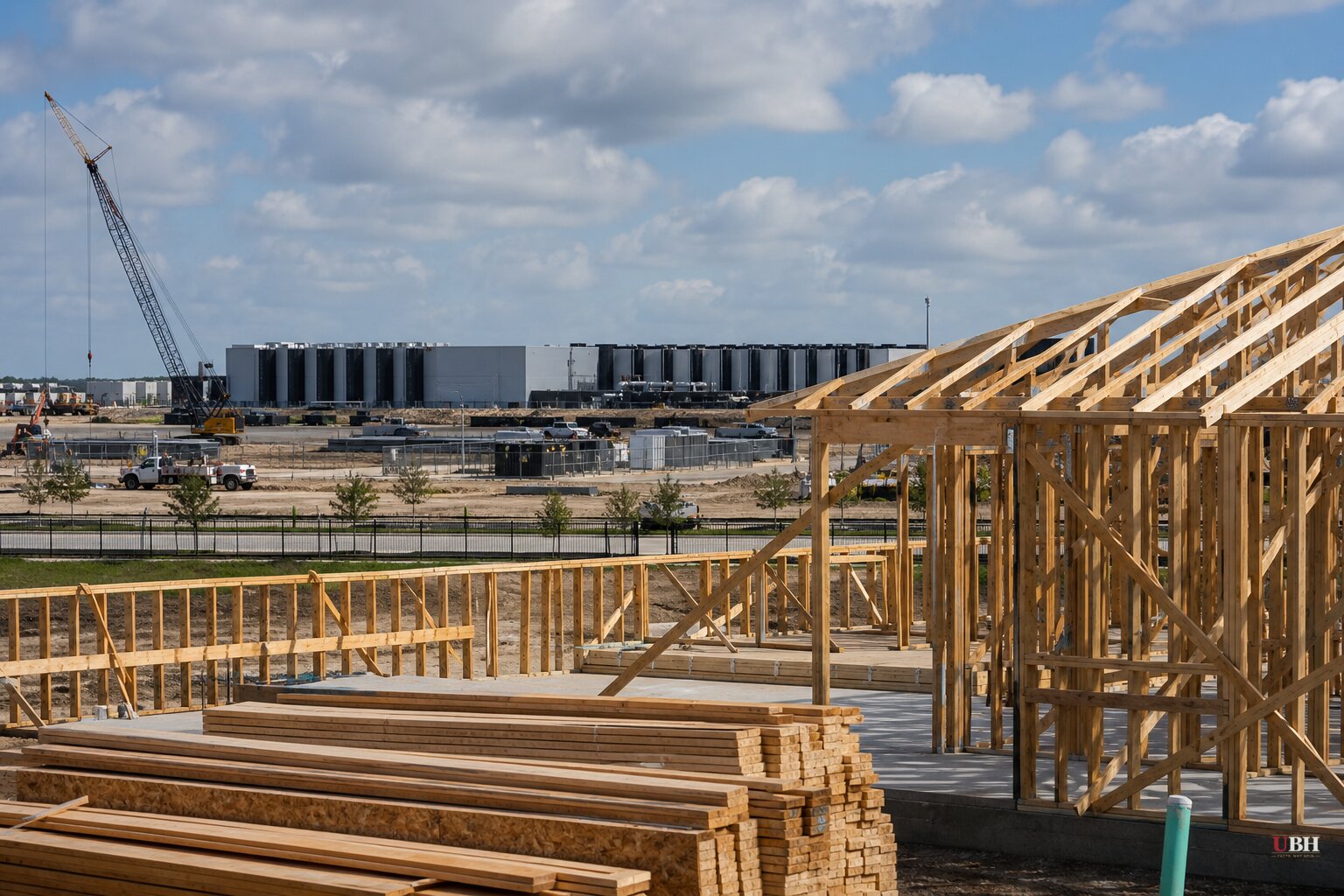
Pending home sales dropped to a three-year low, and new-home construction in July hit its slowest pace in more than three and a half years, according to Bloomberg. Ed Brady, CEO of the Home Builders Institute (HBI), says one factor making that worse hasn't gotten much attention: AI data centers are pulling skilled tradesmen off residential job sites.
"The market is not as strong, and so today many of those people that were in housing are going to these data centers," Brady told The Center Square.
This isn't a new shortage. Brady says the skilled trades industry has been short workers since the 2008 financial crisis gutted the construction workforce, and it never fully recovered. Five tradespeople retire for every two who enter the field, according to Brady. HBI puts the current shortfall at roughly 300,000 workers. The Information Technology and Innovation Foundation estimates the broader skilled-trades gap could hit 439,000 workers in 2026, according to Brushwood Media Network.
What's changed is where the scarce workers are going. Kelly Services data cited by CNBC shows tradespeople moving into data center construction have seen pay jumps of 25 to 30 percent. The Wall Street Journal reported similar numbers, according to Brushwood Media Network. When Amazon, Microsoft, Google and Meta are collectively planning to sink more than $300 billion into AI infrastructure in 2025, according to CNBC, they can outbid homebuilders for electricians, HVAC techs and steelworkers without blinking.
Brady isn't predicting doom. He told Brushwood Media Network that data center investment is a short-term surge while housing's labor problems are structural and have been building for over a decade. He's also optimistic some workers will eventually cycle back into residential construction once data center projects wind down. But he's blunt about the trajectory in the meantime: "This problem is going to get even more and more exaggerated and acute to the housing industry because of the data center construction, and we're not putting enough money into training the future generations of skilled labor."
HousingWire's reporting adds a second front to this fight: real estate. In late 2025, Stanley Martin Homes, a Northern Virginia builder backed by Japan's Daiwa House, had spent roughly $51 million assembling and entitling a 189-acre tract for a 516-home community. Amazon came in and bought it instead, planning to rezone the land for a hyperscale data center campus. The deal reportedly generated roughly $700 million for Stanley Martin, a windfall for the builder, but a signal for the industry that tech money can simply outbid housing developers for land that was already zoned and shovel-ready for homes.
The Bank for International Settlements estimates hyperscaler capital spending will top $700 billion this year alone, according to HousingWire, with total AI infrastructure investment climbing into the trillions in coming years. That's money competing directly against homebuilders for land, concrete, electricians and permits in the same counties.
There's a broader economic angle worth considering. Cleveland Fed President Beth Hammack told CNBC in June that "insatiable" AI infrastructure demand could be feeding inflation, and Minneapolis Fed President Neel Kashkari argued at the Aspen Ideas Festival that capital flowing into data centers instead of apartment buildings is pushing up interest rates "now and for the next several years." If that's right, AI investment isn't just diverting workers, it may be helping keep the mortgage rates that are already suppressing home sales elevated too.
That's a real, if contested, causal claim from two Fed officials, not proven economic law. Other economists could reasonably argue housing's slump has more to do with elevated rates, high prices after years of appreciation, and buyers waiting on the sidelines than with data centers specifically. Inflation and stagnant wages are also doing real damage, as Futurism noted, and are likely bigger drivers of weak housing demand than labor competition alone.
Nvidia CEO Jensen Huang has framed the data center boom differently, calling it an opportunity. He's predicted six-figure jobs for tradespeople without a college degree, telling reporters "everybody should be able to make a great living. You don't need to have a PhD in computer science to do so," according to Brushwood Media Network. Brady doesn't dispute that data center work pays well right now. His complaint is that tech companies are drawing from an already-drained labor pool rather than growing it, and that nobody, including Washington, is training enough new tradespeople to cover both industries at once.
Brady credited the Trump administration's apprenticeship incentives as a step in the right direction, but said they don't move the needle far enough. He's calling on Congress to appropriate real, sustained funding for skilled-trades training programs. No such legislation has been introduced as a direct response to this specific labor competition, and it's an open question whether Congress acts before the current data center investment wave, which the Bank for International Settlements expects to keep climbing for years, does more damage to an already-slumping housing market.
Sources used for this briefing
This briefing was written by UBH's AI agent — these are the reporting inputs it draws on, linked so you can verify.


