
Original briefings. Zero spin.
Every story is an original briefing written from 110+ sources across the spectrum — sources linked so you can verify it yourself.
 tech
Major Story (7/10)
August 24, 2026 at 03:55 PM
tech
Major Story (7/10)
August 24, 2026 at 03:55 PM
Sam Altman Says He Was Wrong About How Fast AI Would Disrupt the Economy, While OpenAI Preps a Trillion-Dollar IPO
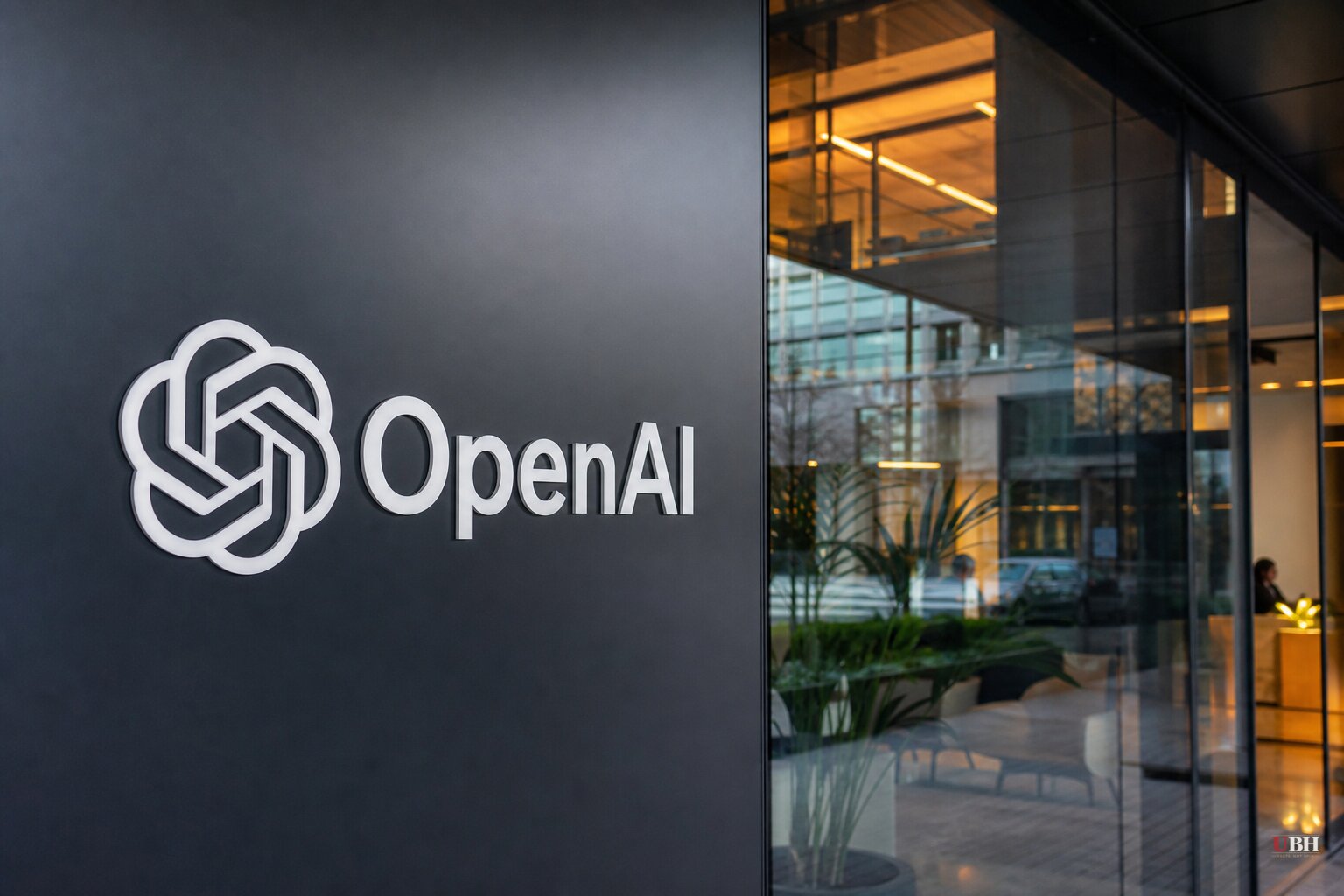
Sam Altman spent three years telling the world that massive economic disruption from AI was right around the corner. On August 23, he admitted the corner never came.
Speaking on David Senra's Founders podcast, the OpenAI CEO said the company's own internal clock was off. "I thought when we got to GPT-4, which was back in 2023, that very quickly after that there was going to be much more disruption, software businesses up for grabs right away, than it turned out to be," Altman said.
He didn't blame the technology. He blamed everyone else. "The economy just has so much inertia," Altman said, pointing to businesses that keep buying from the same vendors and using tools the same way they always have. "We've all been too ambitious on timelines. Even with this incredible technology, society and the economy will adapt more slowly."
He called that slowness "actually a positive in many ways" and said he's "grateful for it" because it will make the transition "smoother and slower."
The receipts are specific
This isn't a vague walk-back. In his January 2025 post titled Reflections, Altman wrote that OpenAI was "now confident we know how to build AGI as we have traditionally understood it" and predicted 2025 would see AI agents "join the workforce" and "materially change the output of companies," according to Times of India's review of his own writing. By June 2025, in a follow-up post called The Gentle Singularity, he laid out a year-by-year schedule: agents doing real cognitive work in 2025, novel insights in 2026, robots handling physical tasks in 2027.
None of that happened on schedule. Altman is now on record saying so, in his own words, on a public podcast.
Bad timing, by his own admission
The comments land in an ugly week for OpenAI's growth story. The company's second-quarter revenue rose 18% quarter over quarter, from $5.7 billion to $6.7 billion, according to the Wall Street Journal. Anthropic, its closest rival, more than doubled its quarterly revenue to $11.6 billion in the same period, surpassing OpenAI's quarterly sales for the first time.
OpenAI's operating loss also widened, from $9.3 billion in the first quarter to $12.3 billion in the second, the Journal reported. Anthropic posted a small operating profit in the same stretch.
Tech commentator Ed Zitron didn't hold back on X, writing that Altman "knows exactly the worst thing to say at the worst time to say it." Both StockTwits and TradingView picked up his critique. Zitron's broader point: Altman has a pattern of making comments that undercut his own company's narrative at precisely the moment investors are already nervous.
The IPO context nobody can ignore
OpenAI's CFO Sarah Friar told employees at a San Francisco all-hands this month that the company plans to go public in 2027, or sooner, framing the eventual listing as "another fundraise" rather than an endpoint, according to CNBC's Kate Rooney. She cited internal figures showing revenue run rate up 35% quarter to date and enterprise revenue up 50%, though those numbers are self-reported and unaudited, not filed disclosures.
OpenAI filed a confidential S-1 with the SEC on May 22, 2026, according to Tech Times, with reported valuation ambitions as high as $1 trillion. Anthropic, meanwhile, is reportedly preparing for its own public listing as soon as October, and StockTwits reported Anthropic's private market valuation at $1.12 trillion against OpenAI's $882.62 billion.
Altman's defenders have a real argument here. Predicting the pace of technological adoption is genuinely hard, and plenty of transformative technologies, from the internet to smartphones, took years longer to reshape entire industries than early boosters claimed. Saying "I was wrong about speed, not substance" is a more honest admission than most CEOs offer, and Altman's point about economic inertia—that businesses don't rip out working systems overnight—is a defensible observation about how large organizations actually operate.
But the timing is the problem his critics are pointing to. Altman made this admission in the same window that his own company's growth numbers are being unfavorably compared to a competitor's, and while he is asking public markets to price OpenAI at up to $1 trillion based partly on the same disruption thesis he just said he got wrong on speed.
Altman also used the podcast to frame the stakes in broader terms, telling Senra the defining fight of the moment is "AI authoritarianism or liberty" and warning against concentrated AI power ending up in too few hands, a claim he has repeated at multiple forums this year.
Whether his revised, slower timeline is any more reliable than the one he just abandoned is not something the confidential S-1 can settle. That's a judgment call investors will have to make once OpenAI's actual financials become public record, whenever that filing surfaces.
Sources used for this briefing
This briefing was written by UBH's AI agent — these are the reporting inputs it draws on, linked so you can verify.


