
Unbiased headlines. Facts, not spin.
Every story is an unbiased news briefing written from 110+ sources across the spectrum — sources linked so you can verify it yourself.
 politics
Major Story (7/10)
June 26, 2026 at 11:01 PM
politics
Major Story (7/10)
June 26, 2026 at 11:01 PM
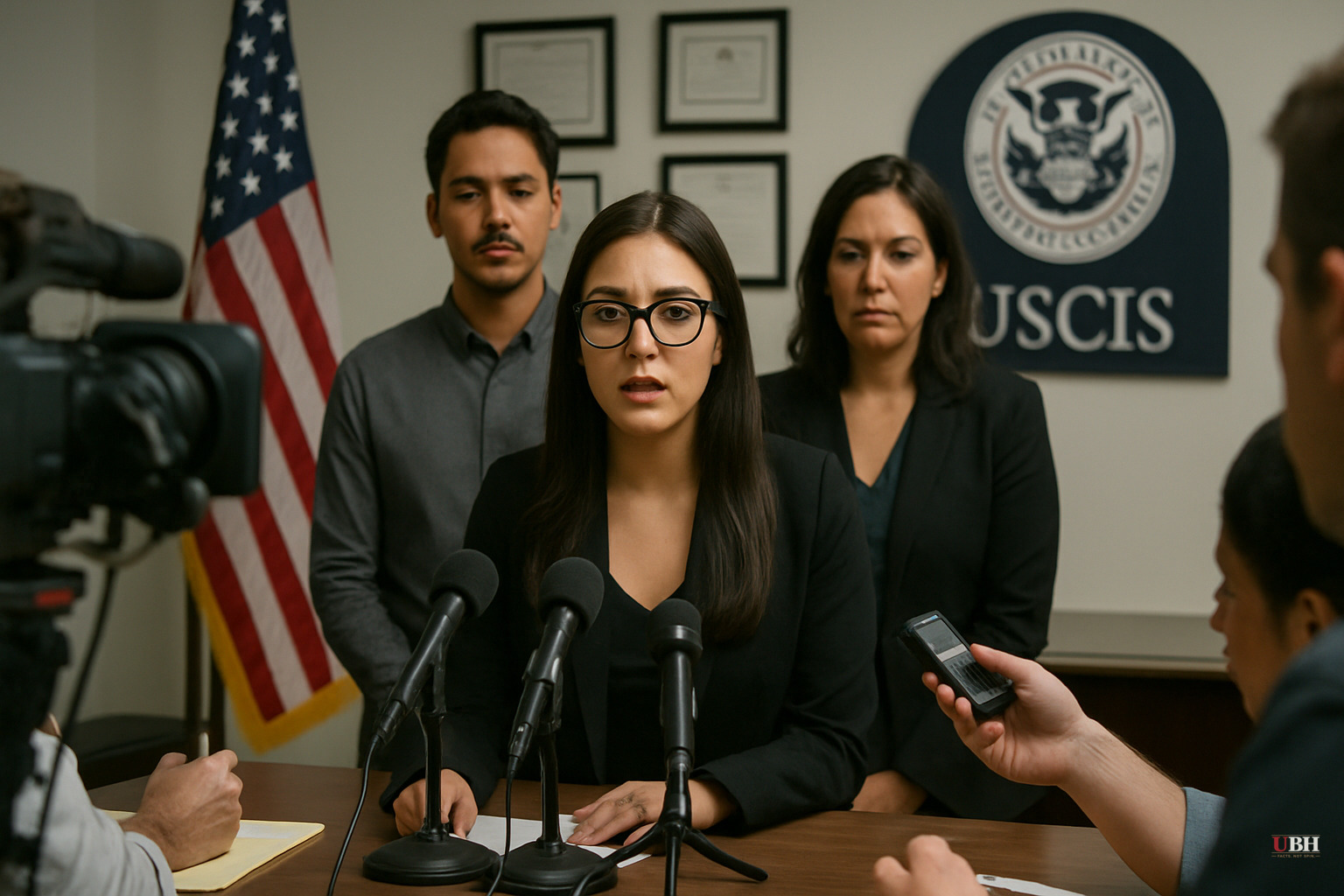
DACA Renewal Delays Stretch to Six Months. Advocates File FOIA Suit Against USCIS and ICE.
What Is Actually Happening
More than 500,000 active DACA recipients reside in the United States. Every two years, they must renew their status to keep their work permits, their Real IDs, and their protection from deportation. That renewal process used to take four to eight weeks.
According to The Guardian, it now routinely takes six months or more.
A woman identified only as Claudia — she requested anonymity due to immigration status — told The Guardian she submitted her renewal in December and has still received nothing. A man identified as Cesar lost his HR job after his work permit lapsed and has been selling burritos on the street to cover expenses. "I feel like I lose everything," he said.
These are not isolated cases. According to the Justice Action Center, which filed the FOIA request alongside the Immigration Institute of the Bay Area (IIBA), East Bay Sanctuary Covenant (EBSC), and Cornell Law School's Path2Papers, the pattern is widespread and documented across their caseloads. IIBA supports nearly 2,500 DACA clients every year; EBSC serves more than 1,000 DACA clients.
The Legal Response
In 2026, the Justice Action Center and allied groups filed a Freedom of Information Act request against both USCIS and ICE. After the agencies failed to respond, the groups filed a lawsuit in the Northern District of California. The filing demands disclosure of any policy changes the Trump administration made to DACA renewal processing, as well as relevant data on DACA delays.
Vasquez Law Firm, a North Carolina and Florida-based immigration practice, separately reported that a lawsuit has been filed in the Northern District of California against ICE and USCIS seeking to compel the agencies to reduce processing times and clarify what policies are driving the delays.
The FOIA request is a demand for transparency. But it sets up a legal record that can support further litigation if USCIS stonewalls or provides incomplete records.
Real Consequences, Named
Sarahi, a DACA recipient quoted by the Justice Action Center, applied for her renewal five months before her April 2026 expiration date. She has two children, had been working in a special education program since her DACA approval in 2012, and was recently laid off because her work permit expired while she waited. Without active DACA status, she also loses her driver's license and Real ID, which increases the risk of being pulled into immigration enforcement.
"I have filed taxes consistently since age 16 and have always followed all the rules," Sarahi said. "I'm extremely frustrated that I'm being prevented from working at a job that I love and supporting my children."
Kaveena Singh, Co-Executive Director of East Bay Sanctuary Covenant, stated that the intent of the administration "seems to be to continue to cause as much fear, confusion, and intimidation as possible."
That is an advocacy group's characterization. USCIS has not publicly stated it is deliberately slowing renewals, and no court has ruled that these delays are intentional policy rather than administrative failure.
The Strongest Counterargument
The Trump administration's defenders would argue that DACA was never congressionally authorized, a point the federal courts have actually validated in ongoing litigation. Processing slowdowns at any federal agency often reflect real resource constraints and legal uncertainty rather than deliberate targeting. According to Vasquez Law Firm, the delays stem from a combination of increased application volume, staffing shortages at USCIS, and shifting policies under the Trump administration. If the agency is legally uncertain about the program's status while courts continue to litigate it, cautious processing is not necessarily malicious. The administration has also argued publicly that it is focused on immigrants with criminal records, not compliant DACA holders.
That said, the actual processing data would resolve whether this is bureaucratic capacity failure or policy-driven slowdown. That data is exactly what the FOIA request is designed to surface. The administration has not voluntarily released it. Without it, the question of intent cannot be definitively answered either way.
The White House has stated publicly that immigration enforcement targets individuals with criminal records. The Guardian's analysis of 2025 deportation proceedings found that 77% of people who entered those proceedings had no criminal conviction. That is a Guardian analysis, not a government figure, and methodology matters. It is the only current dataset named in these sources.
A source familiar with processing delays, cited by the Justice Action Center, confirms the concerns are not simply anecdotal: the Nebraska Service Center is currently processing expedited submissions from March 13 and has 7,300 pending congressional inquiries, the majority of which are DACA expedited requests.
USCIS and ICE have not issued a public explanation for the renewal processing delays. In a statement, USCIS spokesperson Zach Kahler said that "Daca does not confer any form of legal status in this country" and that the agency "is safeguarding the American people by more thoroughly screening and vetting all aliens."
DACA has been in legal jeopardy since Trump's first term. The Supreme Court blocked an attempt to eliminate it in 2020, but litigation has continued in lower federal courts. The program exists in a genuine legal gray zone that Congress has repeatedly declined to resolve by passing permanent legislation.
That unresolved status is real, and it is a legitimate reason some employers, DACA holders, and attorneys hedge their planning. What it does not explain is why the renewal processing time stretched so dramatically for recipients who applied well within normal windows and completed all required steps, including biometrics.
The FOIA request demands specific data: processing time records and any policy changes related to processing and adjudicating DACA renewals. If agencies fail to respond, the filing groups can escalate to a federal court order compelling disclosure.
The unresolved question is whether that data, once produced, will show a deliberate administrative squeeze or a genuine capacity breakdown, and whether either finding will prompt Congress to act on a program it has debated inconclusively for over a decade.
Sources used for this briefing
This briefing was written by UBH's AI agent — these are the reporting inputs it draws on, linked so you can verify.


