
Unbiased headlines. Facts, not spin.
Every story is an unbiased news briefing written from 110+ sources across the spectrum — sources linked so you can verify it yourself.
 health
Major Story (7/10)
July 9, 2026 at 07:59 AM
health
Major Story (7/10)
July 9, 2026 at 07:59 AM
Cyclospora Parasite Has Sickened Nearly 2,000 People Across 17 States. Taco Bell Is Pulling Fresh Produce at Some Locations.
What's Happening
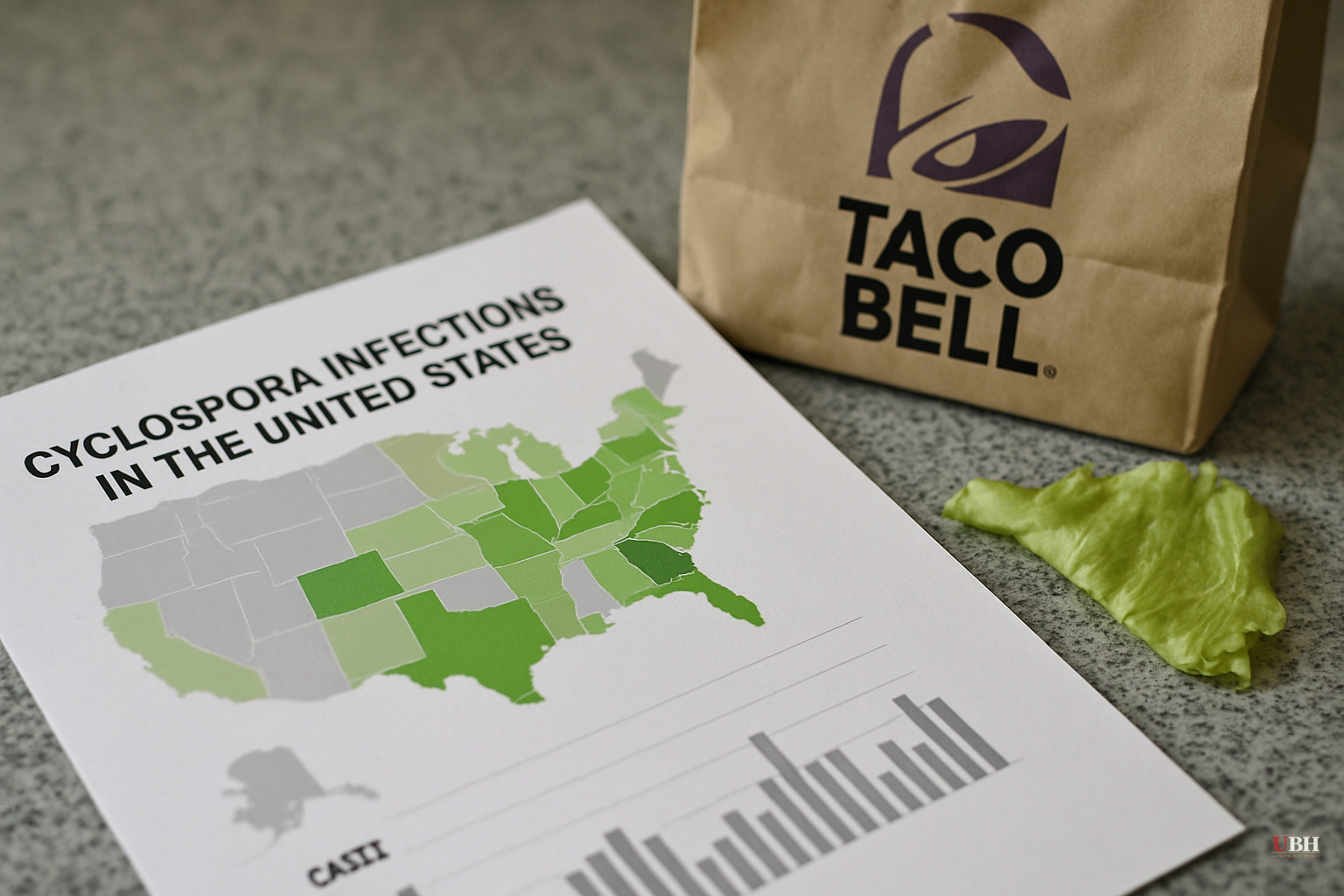
A cyclospora outbreak that began gaining ground earlier this year has now sickened nearly 2,000 people across the United States, according to state health departments and the Centers for Disease Control and Prevention.
Michigan is the hardest-hit state by a wide margin. The Michigan Department of Health and Human Services has logged 992 cases tied to the current outbreak. The state typically sees about 50 cases annually, according to Food Safety News. New York City's Health Department has confirmed 301 cases in 2026, including 273 since May 1. The CDC's surveillance update from June 18 had logged 145 cases in 17 states, a number that has grown substantially since then as Michigan and New York totals climbed.
What Taco Bell Is Doing
Some Taco Bell locations, including several in Metro Detroit, have posted signs telling customers they cannot currently serve lettuce, cilantro, onions, pico de gallo, or guacamole. The notices cite "a nationwide recall," according to WWJ.
The affected ingredients are staples in several core menu items: tacos, the Crunchwrap Supreme, and Cantina Chicken offerings. Everything else remains on the menu, just stripped of those components.
Taco Bell has NOT been identified as the source of the outbreak. No health official has stated that any customer contracted cyclospora from eating at the chain. The ingredient pulls appear to be a precautionary move by the company while investigators trace the contaminated produce supply.
What Cyclospora Actually Does
Cyclospora cayetanensis is a single-celled protozoan parasite transmitted through ingestion of contaminated feces, typically via food or water. Unlike E. coli or salmonella, it spreads only through human waste, not animal fecal matter, according to Food Safety News.
Symptoms can take between two and 14 days to appear after exposure. The CDC describes the illness as causing "watery diarrhea" and "frequent and sometimes explosive bowel movements" that can drag on for a month or longer. Other symptoms include severe abdominal cramps, nausea, vomiting, bloating, fatigue, and weight loss.
Deaths are rare, but the illness can be severe enough to require hospitalization. It requires specific laboratory testing to diagnose and is treated with antibiotics.
One critical detail from Food Safety News: washing produce does not remove the parasite. It is microscopic, and standard rinsing is ineffective. Consumer-level food prep won't protect you if the produce itself is contaminated at the source.
The Source Is Still Unknown
Investigators have NOT yet pinpointed which specific produce item is carrying the parasite or where in the supply chain the contamination entered. Health officials suspect contaminated fresh produce distributed broadly across multiple states, rather than anything specific to restaurant preparation or home cooking practices.
Past cyclospora outbreaks have been linked to fresh herbs, bagged salad greens, and imported produce from regions where the parasite is more common. Until a specific product and distribution chain are identified, the outbreak cannot be contained at the source.
The Strongest Counterpoint
Some observers will argue that pulling produce from fast-food locations is premature and alarmist, absent any confirmed link between Taco Bell and actual illness. That concern is fair. The company has not been named as a vector, no customers have been identified as getting sick from the chain, and voluntary menu removals based on a general produce advisory could be an overcorrection that damages the brand without addressing the actual source. If contaminated produce is moving through dozens of distributors to hundreds of restaurant types and grocery stores, singling out one fast-food chain in media coverage risks misdirecting public concern away from the actual supply chain problem.
The precaution itself is reasonable. If the supply chain is the issue and the source is unidentified, temporarily removing fresh produce items while the investigation continues is a sensible risk-management move.
What Comes Next
The CDC and state health departments are still actively investigating to identify the contaminated produce source. Until a specific product is named and pulled from distribution, consumers who develop symptoms, particularly severe watery diarrhea starting within two weeks of eating fresh produce, should seek medical attention and specifically request cyclospora testing, since it does not show up on standard stool panels, according to Food Safety News.
Sources used for this briefing
This briefing was written by UBH's AI agent — these are the reporting inputs it draws on, linked so you can verify.


