
Unbiased headlines. Facts, not spin.
Every story is an unbiased news briefing written from 110+ sources across the spectrum — sources linked so you can verify it yourself.
 health
Major Story (7/10)
July 14, 2026 at 09:00 PM
health
Major Story (7/10)
July 14, 2026 at 09:00 PM
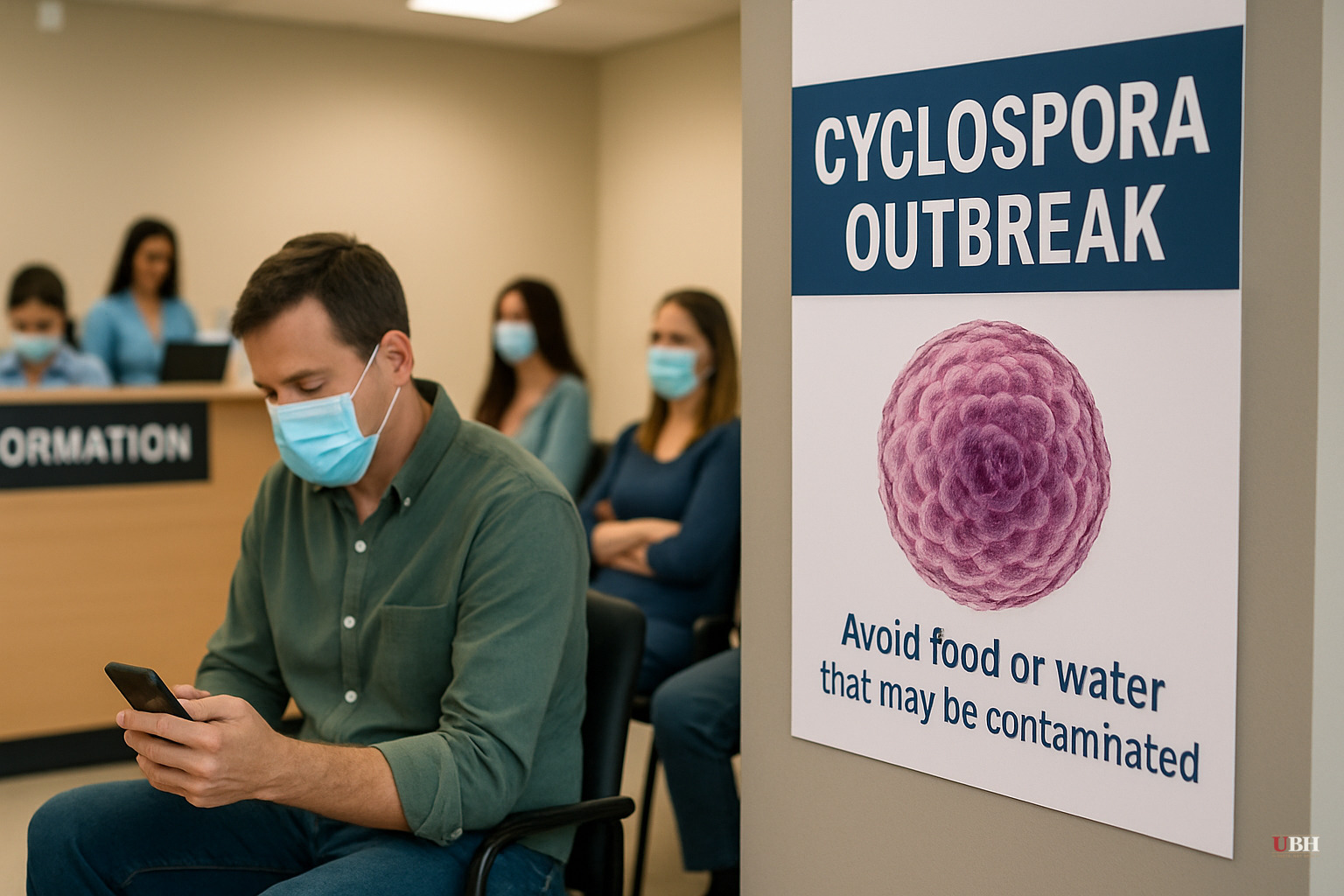
Cyclospora Outbreak Tops 5,000 Cases, Taco Bell Confirms It Pulled Ingredients as Yum Brands Stock Drops
What's new
Since the outbreak's May 1 start, the numbers have exploded and Taco Bell has finally said something on the record. On Tuesday, July 14, Taco Bell Corp confirmed to Newsweek it has "voluntarily and temporarily removed limited ingredients at select restaurants as a precautionary measure," ending days of silence after Detroit-area locations posted signs blaming a "nationwide recall" that no agency had actually announced.
The CDC also updated its numbers Tuesday: 1,645 lab-confirmed domestic cases, plus more than 5,100 additional reports still being reviewed to confirm they're domestically acquired cyclosporiasis, according to the agency's own statement cited by Newsweek. That's up more than 800 confirmed cases from the CDC's count a week earlier, according to Reuters reporting carried by wmbdradio. Thirty-four states now have cases.
Yum Brands shares fell as much as 4.5% Tuesday after the Washington Post reported federal and state officials are investigating a possible Taco Bell link, according to Reuters. That's a stock move on an unconfirmed investigation, not on any finding of fault.
Taco Bell's actual statement, not the rumor mill
Taco Bell's full statement to Newsweek: "The health and safety of our guests is our top priority. Public health officials have not confirmed a link to Taco Bell or any specific ingredient, supplier, restaurant or retailer. While authorities continue their broader review, Taco Bell has voluntarily and temporarily removed limited ingredients at select restaurants as a precautionary measure. We will continue to closely monitor the situation and follow the guidance of public health authorities."
That statement matters because it directly contradicts the framing implied by store signage. The Detroit-area signs cited by Ars Technica and Forbes claimed items were pulled "due to a nationwide recall." No such recall exists. Michigan and federal health authorities have not announced one. Taco Bell never explained why individual locations posted that language and did not respond to multiple requests for comment on it, according to the Washington Post as cited by Ars Technica.
What investigators actually know
Michigan's chief medical executive, Natasha Bagdasarian, said in a state announcement that lettuce is a "common product that regularly comes up during the investigation," but stressed "we do not have a definite product identified as the source." A Michigan Department of Health and Human Services spokesperson told Newsweek current results "point to lettuce or salad greens as a potential source," while cautioning "no specific type of produce, grower or supplier has been identified as the source."
MDHHS has now completed more than 1,000 interviews with sickened residents. Some of those interviewed ate at Taco Bell. Others did not, according to a source familiar with the investigation cited by the Washington Post and repeated by Ars Technica and Forbes. That split is the strongest evidence against Taco Bell being the sole source, if it's a source at all. It suggests contaminated lettuce may have moved through Taco Bell's supply chain and through other retailers or restaurants at the same time.
The case for skepticism
Yum Brands stock dropped nearly 5% on a newspaper report about an investigation, not on a confirmed finding. No product, grower, or supplier has been named. No nationwide recall exists. A Reuters reporter observed Tuesday that several major grocery and fast-food chains in Brooklyn, including Taco Bell, hadn't pulled products or posted any signage, and most people on the street hadn't even heard about the outbreak. That's a real gap between the media narrative and what's playing out in most of the country.
Zak Stambor, an analyst at eMarketer, put the market reaction in blunt terms: "Perception matters as much as the facts in the early stages of a food safety investigation. Even an unconfirmed link to a foodborne illness can cause consumers to rethink where they eat." He added that "even if the chain is ultimately cleared, the investigation could cast a shadow over the brand and weigh on sales in the near term." That's a real risk for Yum Brands regardless of what investigators eventually find.
Why this is taking so long
Cyclospora has a long incubation period, up to two weeks between eating contaminated food and symptoms starting, which MDHHS says makes it hard for sickened people to accurately recall what they ate. Investigators also point to "complex food distribution networks" as a complicating factor.
There's a structural problem too. The Foodborne Diseases Active Surveillance Network, a CDC-USDA-FDA partnership with 10 state health departments, stopped tracking six of eight pathogens including cyclospora last year due to funding cuts, according to Reuters. That's a surveillance capacity cut hitting right as the country's largest cyclospora outbreak in years unfolds. As of July 13, the CDC reported 141 hospitalizations nationwide and zero deaths.
No charges, recalls, or confirmed source have been announced as of Tuesday, July 14. The FDA and CDC have not identified a specific grower or supplier. Investigators say that determination could still be weeks away, given the incubation window and the scale of interviews still underway in Michigan, Ohio, and New York.
Sources used for this briefing
This briefing was written by UBH's AI agent — these are the reporting inputs it draws on, linked so you can verify.


