
Unbiased headlines. Facts, not spin.
Every story is an unbiased news briefing written from 110+ sources across the spectrum — sources linked so you can verify it yourself.
 health
Notable (5/10)
July 11, 2026 at 07:55 AM
health
Notable (5/10)
July 11, 2026 at 07:55 AM
Cryptosporidium Parasite Is Hitting Canada and Europe Through Contaminated Produce
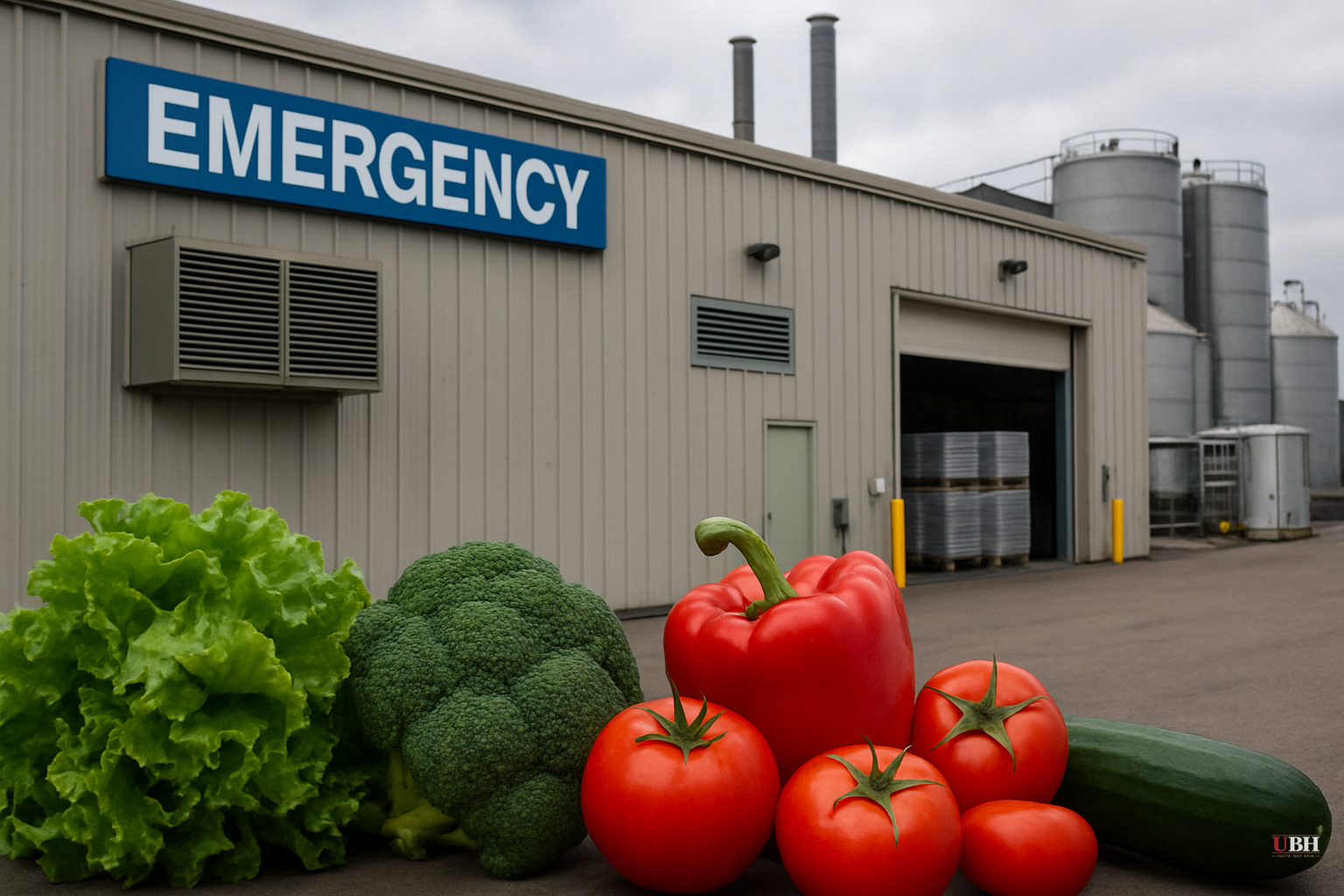
A separate parasitic illness — Cryptosporidium — has been circulating on parallel tracks in Canada and Europe. These outbreaks share a strikingly similar epidemiological fingerprint: contaminated fresh produce, international supply chains, and no clear answer on where the contamination starts.
Kingston, Ontario: 114 Cases, Source Unknown
Southeast Public Health in Kingston, Ontario, has investigated 114 cases of cryptosporidiosis over the nine weeks preceding its June 5, 2026, report. This volume is dramatically above baseline.
Dr. Ethan Toumishey, deputy medical officer of health at Southeast Public Health, described the case count as "a very significant signal." In his words: "The common experience of cryptosporidiosis in Ontario is sporadic cases that people might be exposed to in more limited numbers."
Investigators have looked at Kingston's water treatment plant as a possible source, since Cryptosporidium can survive standard chlorine disinfection in water systems. Food pathways are also under examination. As of the June 5 report, no source had been confirmed.
Symptoms — nausea, vomiting, fever, and severe diarrhea — typically begin two to ten days after exposure and can last up to two weeks. Southeast Public Health warned that some patients recover temporarily and then relapse. People who test positive are urged to stay out of pools, hot tubs, and splash pads for two full weeks after diarrhea resolves.
Europe Found the Same Parasite in Produce
What happened in Denmark and Sweden offers a preview of where the Kingston investigation may eventually land.
In Denmark, the Statens Serum Institut registered 11 cases of a specific subtype, Cryptosporidium parvum IIzeta, during an outbreak period in June and July. Patient interviews revealed that several of those infected had eaten at different canteens operated by the same catering company. Investigators from SSI and the Danish Veterinary and Food Administration traced the likely source to flat-leaf parsley imported from Italy, according to Food Safety News.
That subtype, IIzeta, was first detected in Denmark in May 2024. It has so far been reported nowhere else in the world. A study published in the journal Emerging Microbes and Infections found that most Danish patients had no travel history outside the country, suggesting domestic transmission through local food supply rather than importation of the illness by travelers.
Sweden's outbreak, documented in a peer-reviewed study published in PMC, traced 60 cases between December 15, 2023, and January 1, 2024, to grocery store salad bars. The implicated food item was kale mix salad. Trace-back identified kale producers in Sweden, Belgium, and Spain, but investigators could not pinpoint a single grower. No food samples remained available for lab testing by the time the investigation was complete.
The Swedish case-control study found that people who consumed salad bar items were 58 times more likely to be a case than controls. Kale mix specifically showed an adjusted odds ratio of 3.6.
Why This Pattern Keeps Repeating
Cryptosporidium is difficult to eliminate through standard food washing. It can survive on produce that looks and smells perfectly fine, and has chlorine tolerance that makes it harder to kill than common bacteria.
The Swedish PMC study identified the causative subtype as Cryptosporidium parvum IIγA11, described as "previously undetected" in the published literature. Novel subtypes appearing in geographically dispersed outbreaks tied to international produce supply is not a coincidence. It's a surveillance gap made visible.
The Counterargument Worth Hearing
Public health skeptics of aggressive regulatory intervention will note that these outbreaks, while real and miserable for those affected, remain relatively small in absolute numbers. Sixty cases in Sweden, 11 in Denmark, 114 in Kingston. The Danish SSI itself cautioned that its data should be "interpreted with caution" because not all clinical microbiology departments in Denmark report Cryptosporidium-positive samples, meaning the true count is likely higher. This also means the denominator for risk calculations is genuinely uncertain.
Surveillance quality shapes case counts. Better testing finds more cases. It doesn't necessarily mean more people are getting sick than before.
But the European data points another direction. Denmark only adopted national Cryptosporidium surveillance in 2023, and Sweden has documented that novel subtypes are appearing in produce-linked outbreaks. If surveillance was that incomplete until recently, the historical "rarity" of these outbreaks may simply reflect how little anyone was looking.
The Open Question for Kingston
The Kingston investigation faces the same structural problem as the Swedish one: time. Produce moves fast. By the time investigators link cases to a specific food, the implicated batch is gone and no samples are available for microbiological confirmation.
Dr. Toumishey said his team would "keep trying to work as many angles" as possible, including water sources. Whether Kingston's outbreak traces to water infrastructure or imported produce, Southeast Public Health has not yet said. Until they can answer that question, 114 confirmed cases — likely an undercount given that many infected people never seek testing — remain without an identified source.
Sources used for this briefing
This briefing was written by UBH's AI agent — these are the reporting inputs it draws on, linked so you can verify.


