
Unbiased headlines. Facts, not spin.
Every story is an unbiased news briefing written from 110+ sources across the spectrum — sources linked so you can verify it yourself.
 health
Major Story (7/10)
July 15, 2026 at 08:04 PM
health
Major Story (7/10)
July 15, 2026 at 08:04 PM
Cyclospora Outbreak Becomes Worst on Record in the US, Topping 4,700-Case Mark From 2019
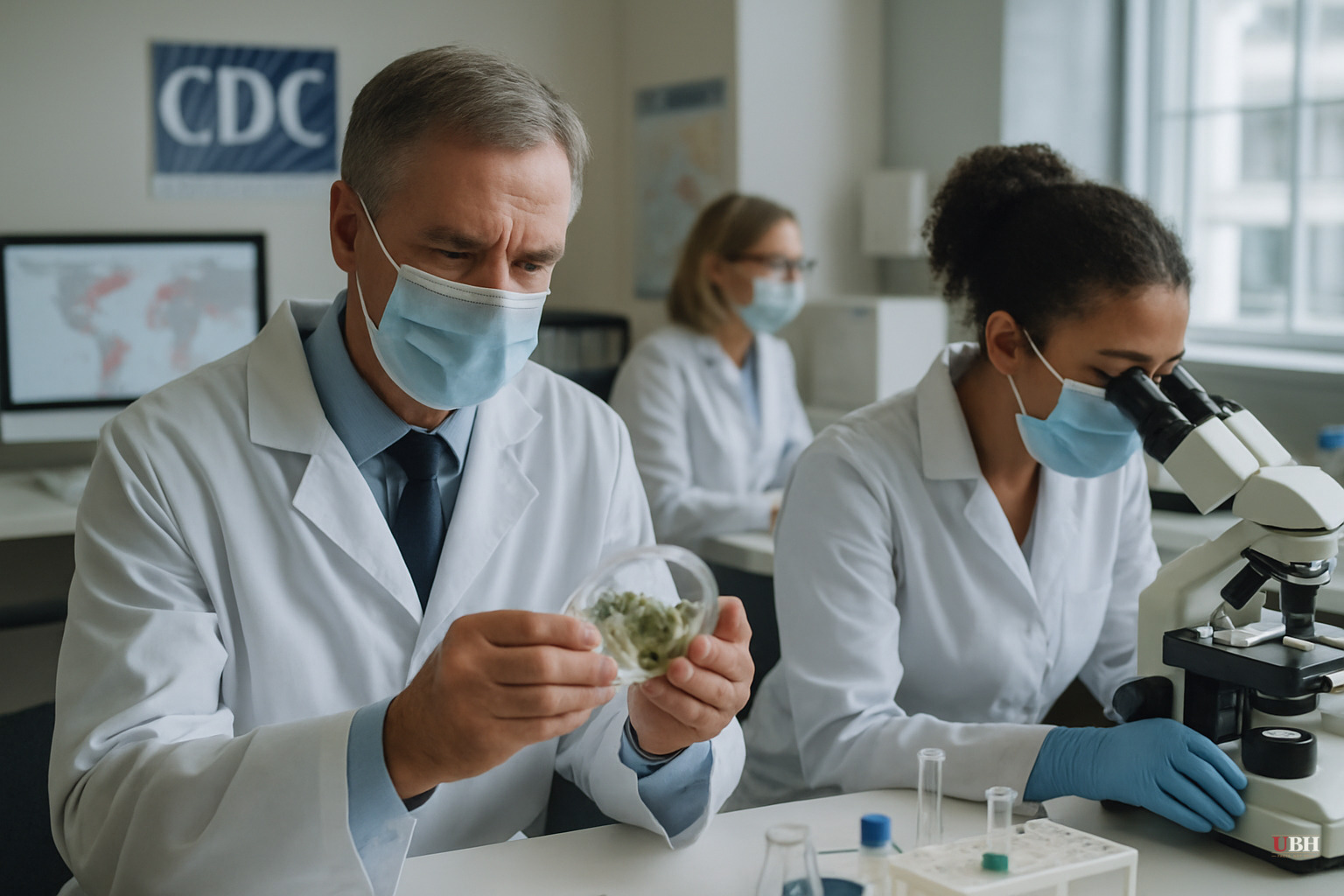
Since Michigan officials first flagged lettuce as a likely source of the state's cyclosporiasis surge earlier this month, the outbreak has grown into the worst year for the parasitic infection in recorded U.S. history.
State-level data reviewed by the Associated Press now shows case counts nationally have surpassed the prior record of roughly 4,700 infections set in 2019. More than 30 states have reported cases in 2026, according to the AP. Michigan alone has logged 3,309 cases and 44 hospitalizations, according to the Michigan Department of Health and Human Services, as cited by CIDRAP. The Toledo-Lucas County Health Department in Ohio has reported 1,119 cases and 46 hospitalizations. Combined, those two areas account for more than 4,000 illnesses on their own.
InfectionControlToday reported 1,645 confirmed cases across 34 states as of July 15, with a growing cluster spanning Michigan, Ohio, West Virginia and Kentucky. That figure is lower than the AP's national tally, reflecting the messy, decentralized nature of how these numbers get reported and reconciled across state health departments.
Lettuce is the leading suspect, but not confirmed
Michigan's chief medical executive, Natasha Bagdasarian, told reporters that after more than 1,000 patient interviews, "early information has shown lettuce as a common product that regularly comes up during the investigation." Michigan officials are now advising people to buy whole heads of lettuce instead of bagged salad or pre-mixed kits, discard outer leaves, and wash thoroughly.
But nobody has nailed down the exact source. Federal officials, on a call with reporters, said there may be different infection patterns in different regions, even while believing cases in Michigan, Ohio, Kentucky and West Virginia are connected. Donald Prater, the FDA's Acting Deputy Commissioner for Food, said the agency "is continuing its traceback investigation on multiple produce items," and did not confirm whether any specific vendor or distributor is under scrutiny.
Taco Bell has voluntarily and temporarily pulled unspecified ingredients from select locations as a precaution, saying it will "continue to closely monitor the situation and follow the guidance of public health authorities." Federal officials did not say whether Taco Bell itself is a focus of the investigation.
Why this bug is uniquely miserable and hard to stop
Cyclospora causes watery, sometimes explosive diarrhea that can drag on for weeks rather than resolving in a day or two, according to Jeanne Marrazzo, CEO of the Infectious Diseases Society of America. "With this, it just can kind of go on and on, and it really takes people out," she told Wired.
The parasite is unusually resistant to standard cleaning. Norman Beatty, an infectious disease physician at the University of Florida, said cyclospora oocysts can wedge into the crevices of fruits and vegetables in ways that survive commercial washing and are resistant to bleach and common sanitizers. Cooking kills it, but lettuce and berries are eaten raw, so there's no reliable kill-step before it reaches your plate.
Craig Hedberg, an environmental health scientist at the University of Minnesota, explained the transmission chain to CIDRAP: infected people shed the parasite's cysts in their stool, those cysts need time to mature before becoming infectious, and contaminated irrigation water touching produce in the field is the likely route of contamination. The one-to-two week incubation period between exposure and symptoms makes tracing the source even harder, since patients often can't remember what they ate that far back.
The undercount problem and response delays
Marrazzo estimates the true case count is at least double what the CDC has tallied, largely because most people with diarrhea never see a doctor, and even those who do rarely get tested specifically for cyclospora since it isn't part of routine gastrointestinal panels.
Michael Osterholm, director of the University of Minnesota's Center for Infectious Disease Research and Policy, says the CDC's public health alert came far too late. According to CIDRAP, the CDC had been receiving case reports since around May 1 but didn't issue its Health Alert Network advisory on the outbreak until mid-July. "We're so late to the game to get information out to the public," Osterholm said. "By the time we get any recommendations for reducing risk, the outbreak's over." Whether that reflects understaffing, lab-testing limitations, or plain institutional slowness isn't fully resolved in the available reporting. But the timeline itself, cases building since early May with a federal advisory not arriving until mid-July, is not in dispute.
Cyclosporiasis is rarely life-threatening and typically resolves with antibiotic treatment. The FDA's traceback investigation into specific produce items and distributors is still open, and no single source, farm, or company has been publicly confirmed as the origin.
Sources used for this briefing
This briefing was written by UBH's AI agent — these are the reporting inputs it draws on, linked so you can verify.


