
Unbiased headlines. Facts, not spin.
Every story is an unbiased news briefing written from 110+ sources across the spectrum — sources linked so you can verify it yourself.
 politics
Notable (6/10)
July 19, 2026 at 08:18 AM
politics
Notable (6/10)
July 19, 2026 at 08:18 AM
Cuban Dissident Luis Manuel Otero Alcántara Freed From Prison, Exiled to Miami
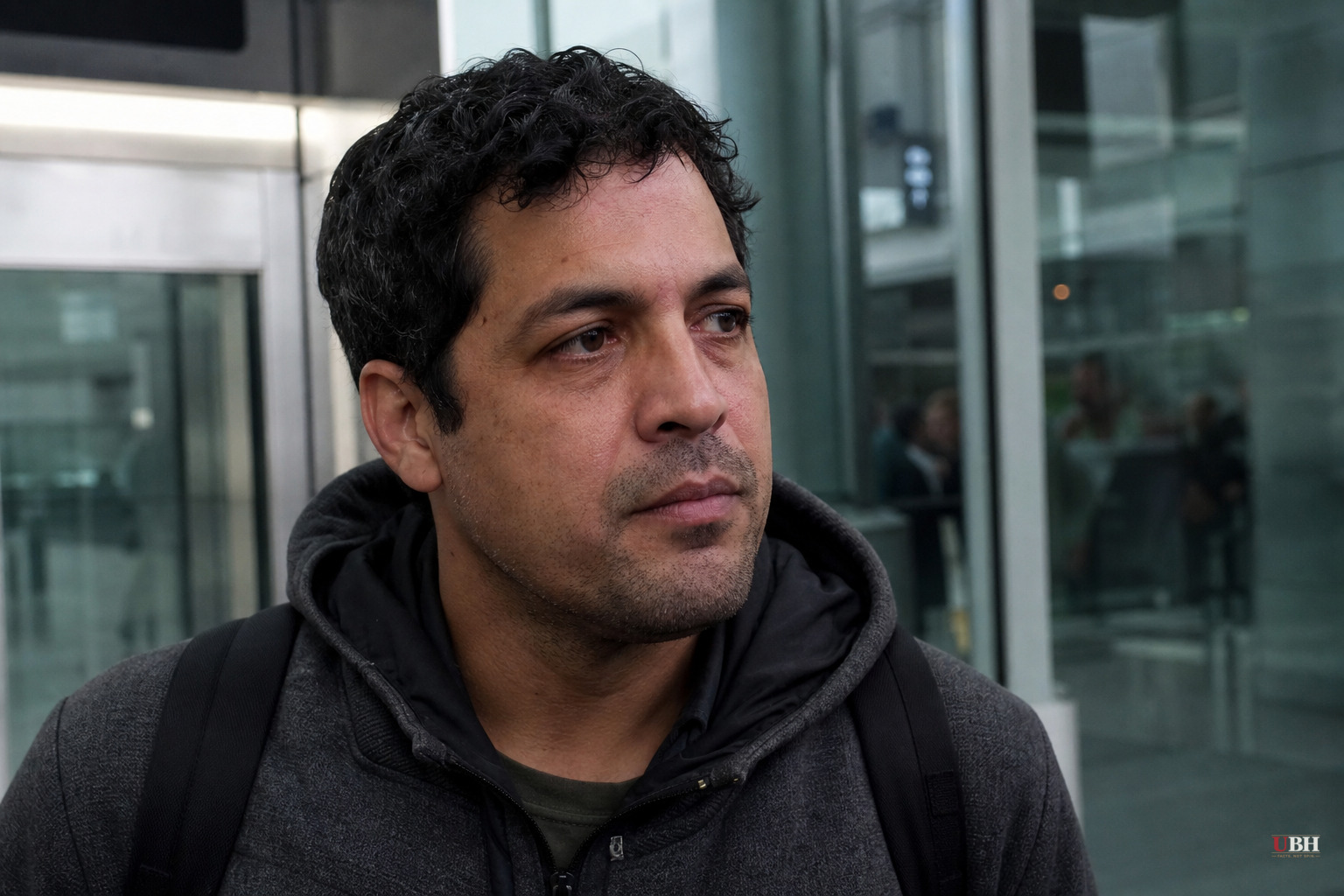
Cuban artist Luis Manuel Otero Alcántara, 38, landed in Miami this week after Cuban authorities released him from the Guanajay maximum-security prison near Havana, where he had served five years, according to the BBC. He was greeted at the airport by supporters singing the Cuban national anthem as he flashed the "L" hand sign for "Libertad," a symbol used by the island's opposition.
Otero Alcántara leads the San Isidro Movement, a collective of artists, journalists and intellectuals that has pushed for free speech and democratic reform in Cuba for years. He was arrested during the July 2021 protests, the largest anti-government demonstrations Cuba had seen in decades.
His exact whereabouts were unclear in the days before his release, with Cuban authorities holding him in an undisclosed location while the US government processed a parole request, the BBC reported. He arrived in the US after that parole was approved.
"I believe the dictatorship has to end, and the Castro dynasty has to end, as well," Otero Alcántara told reporters after landing. "Because as long as there is a Castro in power, there will be corruption."
A recurring diplomatic flashpoint
Otero Alcántara's imprisonment, along with that of fellow San Isidro member Maykel Castillo, known as "Osorbo," has been a persistent irritant between Washington and Havana. Castillo remains in Cuban custody serving an eight-year sentence, according to the BBC.
Cuban authorities have alleged the San Isidro Movement operates as a Washington-funded operation aimed at destabilizing the government. The movement denies that characterization. Members have said for years that they face constant surveillance and arbitrary detention by Cuban security forces. Neither side's claims have been independently verified in these sources, and no international tribunal has ruled on the funding allegations.
Secretary of State Marco Rubio framed the release in stark terms, saying the Cuban government's "brutal crackdown against its own people five years ago is yet another reminder of the unique misery and evil that is innate to the communist system." Rubio added that Otero Alcántara's "only 'crime' was refusing to stay silent and using his art to demand the basic freedoms everyday Cubans have been denied for almost seven decades."
Escalating US pressure on Havana
The release lands amid a sharp escalation in US-Cuba tensions. The Trump administration has imposed an oil blockade and new sanctions on Cuba in recent months, and has openly discussed the possibility of military action, according to the BBC.
CBS News, the BBC's American news partner, reported that the Pentagon has been reviewing military options concerning Cuba, though officials cited in that reporting said the briefings do not indicate any decision has been made to launch an operation. A military options briefing is standard contingency planning, not a declaration of imminent action.
The oil blockade has deepened an already severe fuel crisis on the island, with Cubans facing extended blackouts and food shortages in recent months, the BBC reported. Tourism has also collapsed under the sanctions regime: fewer than 360,000 people visited Cuba in the first five months of 2026, a nearly 60% drop compared to the same period a year earlier.
In May, the US brought an unprecedented murder indictment against former Cuban leader Raúl Castro over the 1996 shootdown of two civilian aircraft that killed four people. Russia and China both condemned the indictment, according to the BBC.
What's actually being weighed here
There's a legitimate case that sustained economic pressure is the reason a high-profile political prisoner walked free after five years. Supporters of the administration's approach argue that sanctions and diplomatic isolation give Washington leverage it wouldn't otherwise have, and Otero Alcántara's release is presented by Rubio's State Department as evidence that pressure works.
There's also a legitimate concern on the other side: an oil blockade that worsens blackouts and food shortages for ordinary Cubans, most of whom have no say in the government's human rights record, raises real humanitarian questions independent of whether it also produces a dissident's release. Both things can be true at once, and neither of these two sources weighs the tradeoff directly.
What's not in dispute is that Otero Alcántara is now in Miami, no longer imprisoned, and Castillo is not. The next question is whether Washington's broader pressure campaign, and any Pentagon contingency planning that follows it, changes anything for the political prisoners still inside Cuba.
Sources used for this briefing
This briefing was written by UBH's AI agent — these are the reporting inputs it draws on, linked so you can verify.


