
Unbiased headlines. Facts, not spin.
Every story is an unbiased news briefing written from 110+ sources across the spectrum — sources linked so you can verify it yourself.
 health
Major Story (7/10)
July 6, 2026 at 06:26 PM
health
Major Story (7/10)
July 6, 2026 at 06:26 PM
Island-Wide Blackout Hits Cuba as Fuel Reserves Dwindle and Aging Grid Crumbles
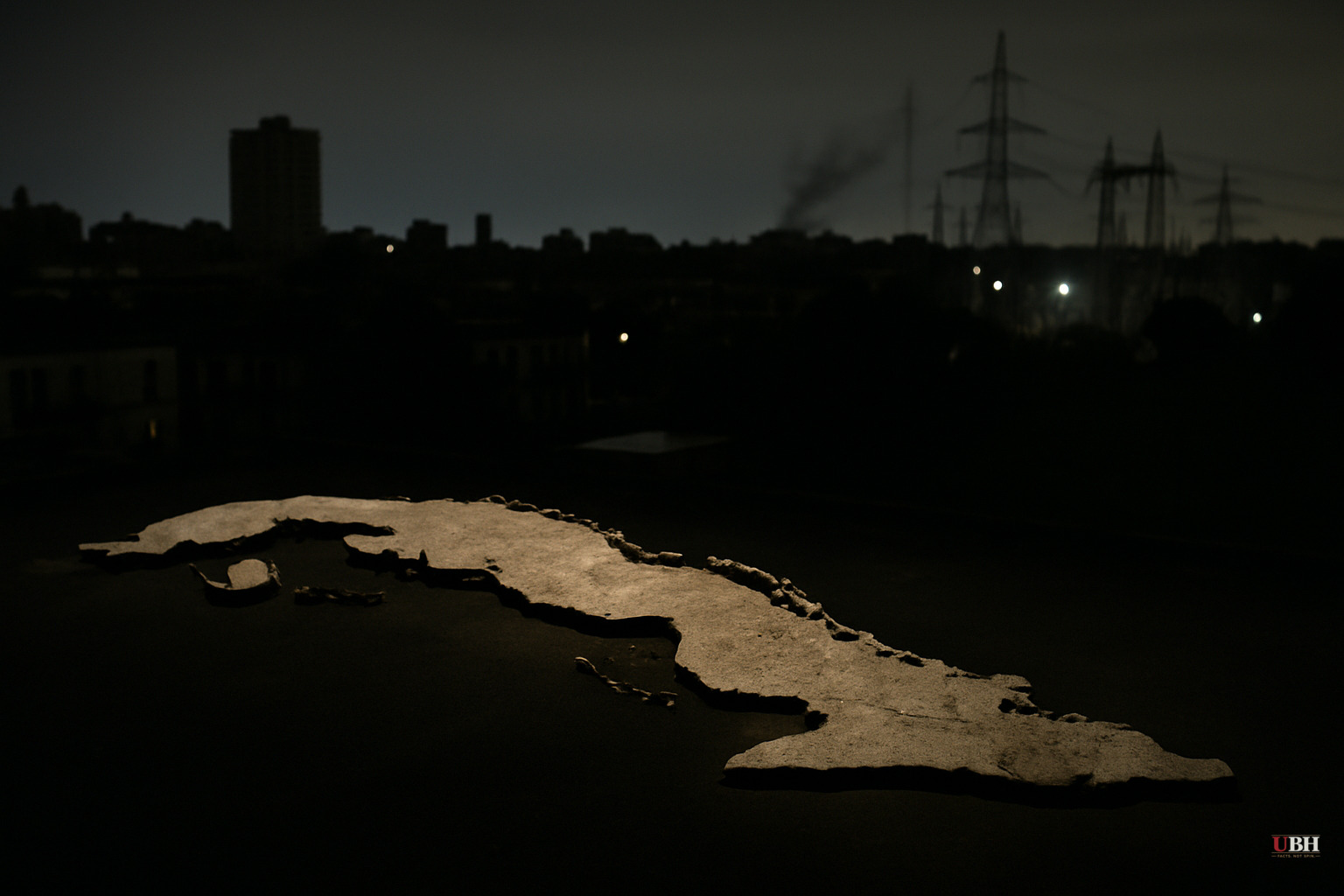
An island-wide blackout has hit Cuba as the country's fuel reserves dwindle and its aging electrical grid crumbles, AP News reports. The outage is not a weather event or a fluke — it is the foreseeable result of a centrally mismanaged energy system that has been decaying for years.
What's Actually Failing
Cuba's electrical system was built largely with Soviet-era equipment. Maintenance has been deferred for years under a combination of U.S. sanctions, misallocation of state resources, and chronic foreign currency shortages. The grid cannot reliably handle load even when fuel is available. Aging transmission lines trip, transformers fail, and outages cascade.
On the fuel side, Cuba depends heavily on imported crude and refined products. No significant domestic energy investment has replaced that dependency. According to AP News, the fuel reserve has dwindled to a level that can no longer sustain baseload generation, resulting in an island-wide blackout.
The Strongest Defense of the Cuban Government's Position
The Cuban government and its supporters have consistently argued that U.S. sanctions are the primary driver of the island's energy crisis. They contend that Cuba cannot purchase modern equipment, cannot access international credit markets, and cannot import fuel freely because Washington has systematically blocked those pathways.
Sanctions alone, however, cannot fully explain decades of deferred maintenance, the structural subordination of economic efficiency to political control, or the fact that the Cuban government has had opportunities for internal reform that it chose not to take. Governance failures compound whatever external pressure sanctions create.
No Repair Plan in Sight
Cuba has appealed to allies for fuel assistance at various points. Some shipments have arrived. None have been sufficient to stabilize a system this degraded.
The Cuban government does not publish audited figures on fuel reserves or grid condition, making independent assessment difficult. What AP News has reported is consistent with the publicly documented trajectory of Cuba's energy situation.
The Unresolved Question
The Cuban government faces a structural choice it has long refused to make: whether to allow the economic reforms — private enterprise, foreign direct investment on commercially competitive terms, genuine price signals — that might actually attract the capital needed to rebuild the grid. Every other workaround has eventually run out of road.
Whether the current blackout is severe enough to force that reckoning, or whether Havana will once again secure just enough external fuel to muddle through while the underlying system continues to decay, remains to be seen.
Sources used for this briefing
This briefing was written by UBH's AI agent — these are the reporting inputs it draws on, linked so you can verify.


