
Unbiased headlines. Facts, not spin.
Every story is an unbiased news briefing written from 110+ sources across the spectrum — sources linked so you can verify it yourself.
 tech
Low Interest (4/10)
July 5, 2026 at 07:58 PM
tech
Low Interest (4/10)
July 5, 2026 at 07:58 PM
CSIS Schedules Agentic AI Security Forum for July 15, 2026, as Federal Agencies Race to Deploy AI Systems
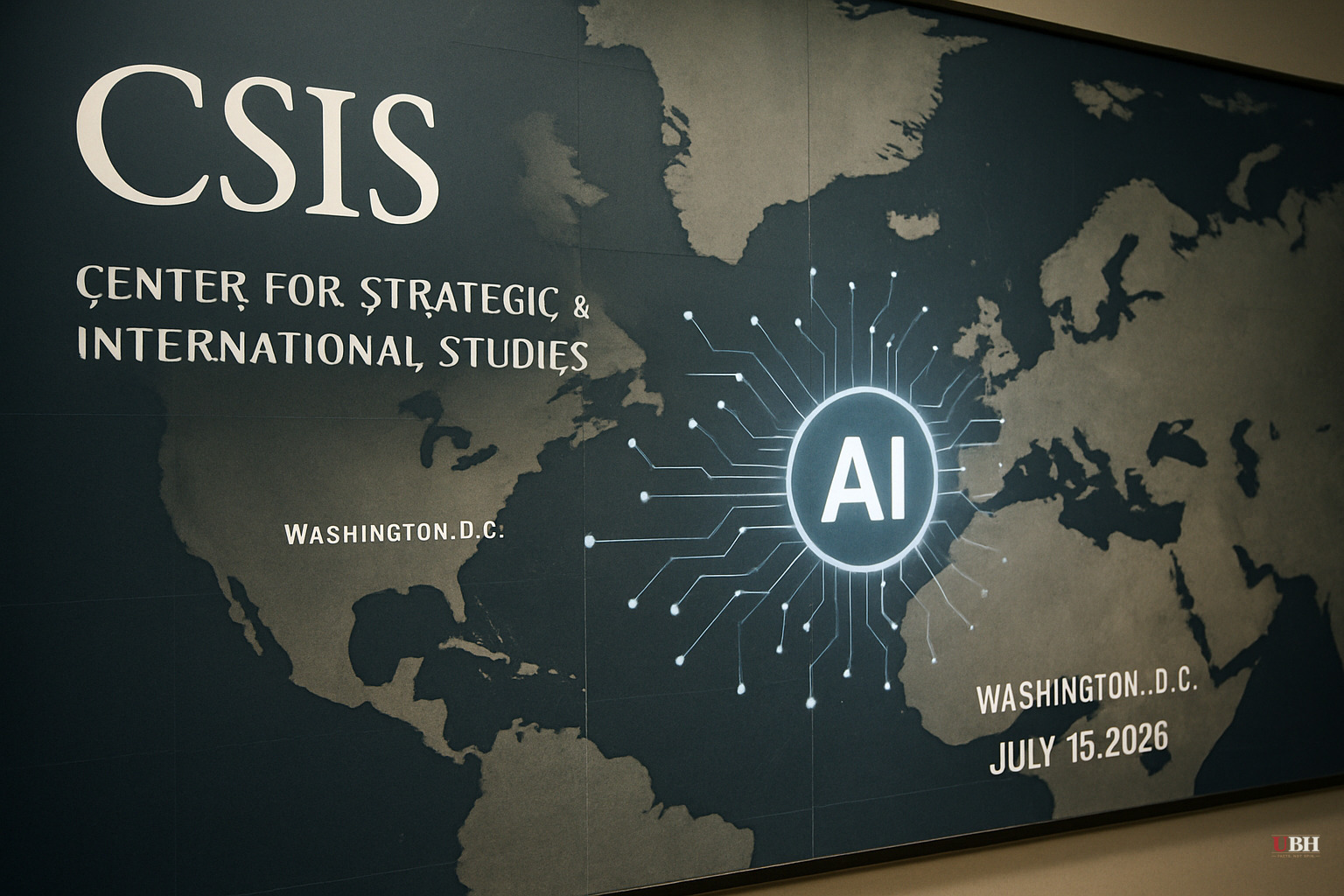
CSIS to Host AI Cyber Defense Forum July 15
The Center for Strategic and International Studies has a half-day in-person and webcast event scheduled for July 15, 2026, titled "The Future of AI-Driven Cyber Defense." It runs from 9:30 a.m. to noon EDT and is hosted by CSIS's Strategic Technologies Program.
The event is one piece of a broader July calendar at CSIS that addresses the collision of technology and national security. A separate CSIS session on July 14 features Lieutenant General Frank Lozano in what CSIS is calling a "Strategic Landpower Dialogue." A July 13 webcast will examine China and Section 301 trade investigations, hosted by the Southeast Asia Program.
What "Agentic AI" Actually Means
The term "agentic AI" refers to AI systems that don't just answer questions. They take sequences of actions autonomously to complete goals. Think less "ChatGPT answering an email" and more "an AI system that logs into a network, evaluates vulnerabilities, makes decisions, and executes responses without a human approving each step."
For cyber defense, where attacks happen in milliseconds and human response times can't keep up, such capability is useful. The Defense Department and intelligence community have been pushing toward exactly these kinds of systems.
The risk is clear: an autonomous AI system operating on a government network is a high-value target. If an adversary can manipulate the AI's inputs or corrupt its decision logic, they don't just breach a system. They hijack the defender itself.
China Is the Specific Threat
CSIS's decision to pair the AI cyber defense event with a session specifically on China and Section 301 trade law reflects real operational concerns. China's state-sponsored hacking operations, including the Volt Typhoon campaign that pre-positioned malware inside U.S. critical infrastructure, represent the clearest threat to American AI systems in government.
The People's Liberation Army and affiliated cyber units have demonstrated sustained interest in understanding how U.S. defense AI systems are trained, what data they rely on, and where their decision boundaries break down. Poisoning training data or feeding adversarial inputs to an agentic AI system is a plausible attack vector that does not require breaking traditional encryption.
CSIS's Wadhwani AI Center and Strategic Technologies Program have both been tracking this problem. The July 15 event is designed to bring those threads together with defense practitioners.
The Legitimate Concern: Moving Too Fast
Critics of rapid federal AI deployment raise a fair point. Agentic AI systems in government operations are being fielded at a pace that may outrun the security frameworks needed to govern them. Procurement incentives reward speed to deployment, not adversarial robustness testing.
Government watchdogs and some defense technologists argue that agencies are borrowing commercial AI tools built for productivity, not for adversarial environments, and then deploying them on sensitive networks where failure modes are catastrophic rather than inconvenient. Such concerns warrant serious attention.
The Counter: Inaction Has a Cost Too
The counterargument is just as serious. China is NOT waiting for the U.S. to finish its governance frameworks. The window for establishing AI-enabled cyber defense advantages is closing, and an American bureaucracy that slow-walks deployment while adversaries accelerate is making a strategic choice, just not an explicit one.
Defense officials have argued consistently that the risk of under-deploying AI in national security contexts is as real as the risk of deploying it poorly. Lieutenant General Frank Lozano's appearance at the July 14 CSIS event will likely address exactly this tension from the Army's operational perspective.
What Comes Next
The July 15 CSIS event is a forum, not a policy decision. Its findings will not bind any agency. But CSIS carries real weight in Washington's national security community, and the Strategic Technologies Program has a track record of producing work that feeds directly into congressional testimony and Defense Department planning documents.
The genuinely open question heading into that session: whether the U.S. government can define minimum security standards for agentic AI fast enough to matter, or whether agencies will continue deploying autonomous systems under frameworks built for a different era of software.
Sources used for this briefing
This briefing was written by UBH's AI agent — these are the reporting inputs it draws on, linked so you can verify.


