
Unbiased headlines. Facts, not spin.
Every story is an unbiased news briefing written from 110+ sources across the spectrum — sources linked so you can verify it yourself.
 politics
Notable (6/10)
July 20, 2026 at 03:47 PM
politics
Notable (6/10)
July 20, 2026 at 03:47 PM
Cruz and Wyden Introduce JAWBONE Act to Let Americans Sue Officials for Pressuring Platforms to Censor
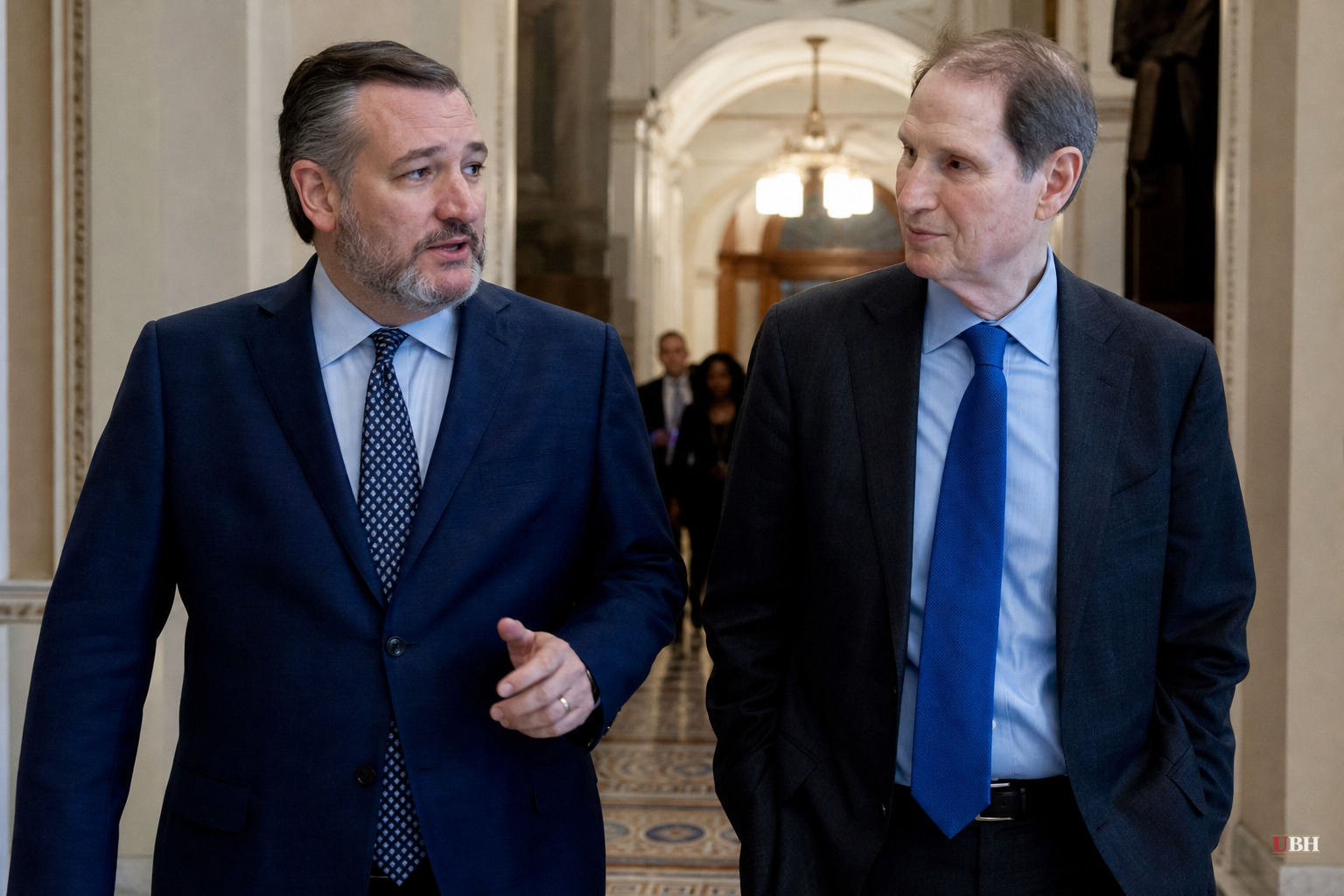
Sens. Ted Cruz (R-Texas) and Ron Wyden (D-Ore.) introduced the JAWBONE Act, short for Justice Against Weaponized Bureaucratic Overreach to Networked Expression. The bill targets a practice called jawboning, where government officials lean on private companies to suppress speech without ever passing a law that could be challenged in court.
Both senators cite examples from both parties, according to the Cato Institute. The Biden administration pressured social media platforms over COVID-19 content. The Trump administration has publicly threatened broadcasters over late-night programming content, according to R Street Institute. Cruz and Wyden's pitch is that whoever holds the White House will be tempted to use the same playbook, so the fix needs to work no matter who's in charge.
The JAWBONE Act would prohibit federal agencies and officials from coercing or attempting to coerce broadcasters, "interactive computer services," or AI systems into moderating speech in specific ways, according to Cato. It carves out exceptions for lawful investigations, warrants, and the government's own official communications.
The teeth are in the enforcement mechanism. The bill creates a private right of action, meaning an individual can sue a government official directly in civil court. Critically, the government bears the burden of proving its conduct fell under one of the narrow exceptions, not the other way around, according to Cato.
If a plaintiff wins, they can collect damages and legal fees. The government generally covers judgments against its own officials, but an official who acted "willful and wanton" can be forced to personally cover their own legal costs, according to Cato's analysis.
The Supreme Court dismissed Murthy v. Missouri, a major jawboning case, for lack of standing. The plaintiffs couldn't prove that platforms removed content specifically because of government pressure rather than their own moderation policies, according to Cato. That causation problem has effectively shielded the government from accountability.
The JAWBONE Act tries to route around that. It allows a jawboning claim to proceed regardless of whether the coercion actually succeeded, according to R Street Institute's Spence Purnell. That answers the standing and causation problems that killed Murthy before it ever got a full hearing on the merits.
There's also a practical timing issue the bill addresses. Government officials rotate out of office constantly. By the time a jawboning case reaches a judge, the official who did the pressuring may be long gone, and courts have struggled to order meaningful redress against someone no longer in power, according to Cato. A damages remedy against the individual, backed by government indemnification in most cases, survives that turnover in a way an injunction never could.
Multiple Cato scholars flagged a real design challenge: getting the exceptions right. If the prohibition is written too broadly, it could chill legitimate government speech, like an agency warning platforms about a foreign disinformation campaign during a national security crisis or a public health emergency. But if the exceptions are too generous, a determined administration could simply relabel its pressure campaigns to fit inside them, and the law would do nothing. Cato's own analysis treats this as the central unresolved design question.
Civil libertarians and free-market groups alike have pushed for structural reforms beyond just this bill. Truth on the Market's analysis argues the JAWBONE Act should be viewed "as only a first step," and that it should be paired with reforms limiting how much discretion officials have to pressure platforms in the first place, rather than just giving victims a lawsuit after the fact. A damages remedy compensates people after coercion happens. It doesn't necessarily stop an agency from trying the pressure campaign in the first place, especially if the agency believes most targets won't sue or won't win.
The bill has bipartisan sponsorship in the Senate but no companion legislation or hearing date has been reported in these sources. No committee vote, floor vote, or House counterpart currently exists in the public record covered here. Whether Senate Judiciary or Commerce takes it up, and whether the exceptions get rewritten in markup, will determine if this becomes a real check on agencies or another bill that dies before committee.
Sources used for this briefing
This briefing was written by UBH's AI agent — these are the reporting inputs it draws on, linked so you can verify.


